Selangor is positioning rail transportation as a strategic pillar of its future economy, with state leadership recognising the sector's substantial capacity to generate skilled employment and drive regional competitiveness. The state currently hosts between 63% and 67% of Malaysia's rail operations and corporate headquarters, giving it disproportionate influence over an industry poised for expansion across the peninsula. This concentration of rail infrastructure creates both opportunity and responsibility for Selangor to cultivate the technical expertise necessary to sustain growth.
Mentri Besar Datuk Seri Amirudin Shari articulated this vision while addressing participants at Universiti Tun Hussein Onn Malaysia in Sungai Buloh on Wednesday, 19 August. His remarks reflected a deliberate policy shift toward treating rail not merely as transport infrastructure but as a sophisticated employment pathway capable of attracting talent and investment. By framing the sector as high-value, the state government is signalling that rail careers offer intellectual challenge and financial rewards comparable to other professional sectors, potentially reshaping perceptions among school-leavers and graduates considering vocational pathways.
Central to Selangor's approach is a commitment to developing homegrown expertise rather than relying on imported skills or external consultants. The state has established the Selangor State Rail Council, a governance mechanism designed to map the industry's structural needs, identify skill gaps, and coordinate responses across government, educational institutions, and private operators. This institutional architecture suggests a recognition that effective workforce development requires sustained dialogue between stakeholders who understand both the technical requirements of modern rail systems and the educational capabilities available within the state.
The timing of these initiatives reflects Malaysia's broader transport ambitions. Selangor is home to multiple rail projects in various stages of development and operation, including the LRT3, ECRL, and MRT networks. Each system demands workers with specialised knowledge spanning engineering, operations, maintenance, safety management, and customer service. Rather than treating these demands as isolated challenges, the state is constructing an integrated educational ecosystem to address them systematically.
A critical milestone came with the rebranding of Metro System Academy (MSA UTHM) to RailX, signifying an expansion of focus beyond mass rapid transit toward the broader rail ecosystem. MSA UTHM operates as a partnership between UTHM and Mass Rapid Transit Corporation, functioning as a professional certification and upskilling hub for workers and students. The rebrand reflects ambitions to position the academy as a gateway institution serving the entire sector rather than a single transit operator's training arm.
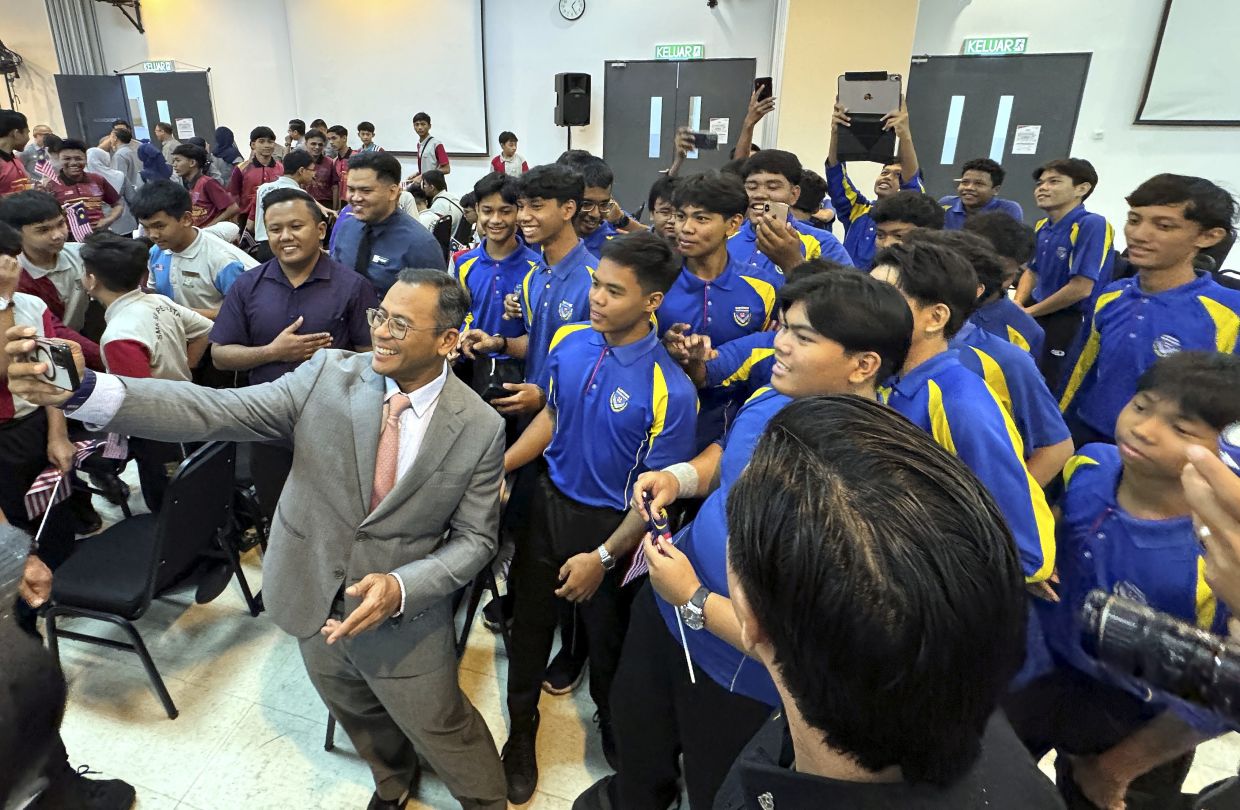
To engage younger cohorts and cultivate long-term interest in rail careers, RailX has launched a treasure hunt programme involving secondary schools from ten districts across Selangor. Students will visit MRT stations spanning Gombak, Petaling, Hulu Langat, Sepang, Klang, Sabak Bernam, and Kuala Selangor, gaining interactive exposure to operational environments and career possibilities. This grassroots engagement strategy recognises that sustainable workforce development begins with awareness and interest-building among teenagers, before they make educational and career choices.
Amirudin positioned such initiatives within the Malaysia Education Plan 2026–2035, presenting rail sector engagement as aligned with national strategic objectives. This framing helps secure government support and legitimacy for what might otherwise appear to be a narrow sectoral concern. By connecting school engagement programmes to national education frameworks, Selangor argues that developing rail expertise serves broader societal goals including economic resilience, technical literacy, and competitive advantage in regional markets.
The state has also constructed a comprehensive pathway from basic technical training through to advanced qualifications. The Selangor Technical Skill Development Centre (STDC) serves as an entry point for workers seeking foundational competencies in mechanical, electrical, or operational disciplines. Graduates can then transition into diploma and bachelor's degree programmes at UTHM, creating what the Mentri Besar describes as a complete technical education ecosystem. This vertical integration prevents workers from reaching a ceiling in their progression and enables continuous upskilling as technologies and industry standards evolve.
The collaboration mechanism emphasises what governance literature calls the triple helix model, bringing together government policy-makers, universities conducting training and research, and industry partners including MRT Corp and Rapid Rail. Each institution contributes distinct capabilities: government provides regulatory clarity and strategic direction; universities deliver pedagogy, research, and credential legitimacy; operators offer real-world operational knowledge and employment pathways. By formalising this partnership, Selangor aims to avoid the misalignment between training content and actual industry needs that sometimes afflicts vocational programmes.
For regional observers, Selangor's approach offers a template for how state governments might leverage concentrated infrastructure assets to build comparative advantage in high-skill sectors. The emphasis on local talent development also reduces reliance on foreign expertise and currency outflows, strengthening long-term economic sustainability. As Southeast Asian nations compete for regional transport hub status and investment, states capable of demonstrating consistent commitment to workforce quality gain credibility with international operators and investors.
The rail sector itself presents advantages that other vocational pathways may lack. Rail operations demand rigorous safety standards, necessitating continuous professional development and certification. This creates ongoing demand for training services and justifies premium wages for certified workers. The sector's capital intensity and long asset lifecycles mean employment tends toward stability compared to more cyclical industries. These characteristics make rail an attractive focus for government investment in technical education.
Implications for Malaysia's broader economic strategy are substantial. If Selangor successfully builds a reputation as a rail expertise hub, the state could attract ancillary industries including engineering consultancies, manufacturing of rail components, and technology development firms. Workers trained through the state's ecosystem might form the foundation for export of technical consulting services to other Southeast Asian nations developing their own transit systems. What begins as domestic workforce development could evolve into a competitive advantage in regional markets.
Amirudin's emphasis on local talent also addresses political economy concerns. Rail projects sometimes trigger criticism regarding employment of foreign workers, with local communities questioning whether infrastructure investment translates to local opportunity. By making workforce development explicit policy, Selangor's government demonstrates responsiveness to these concerns and creates mechanisms through which economic benefits can be distributed more widely. This political dimension, alongside economic logic, helps explain why state leadership has invested sustained attention in this sector.

