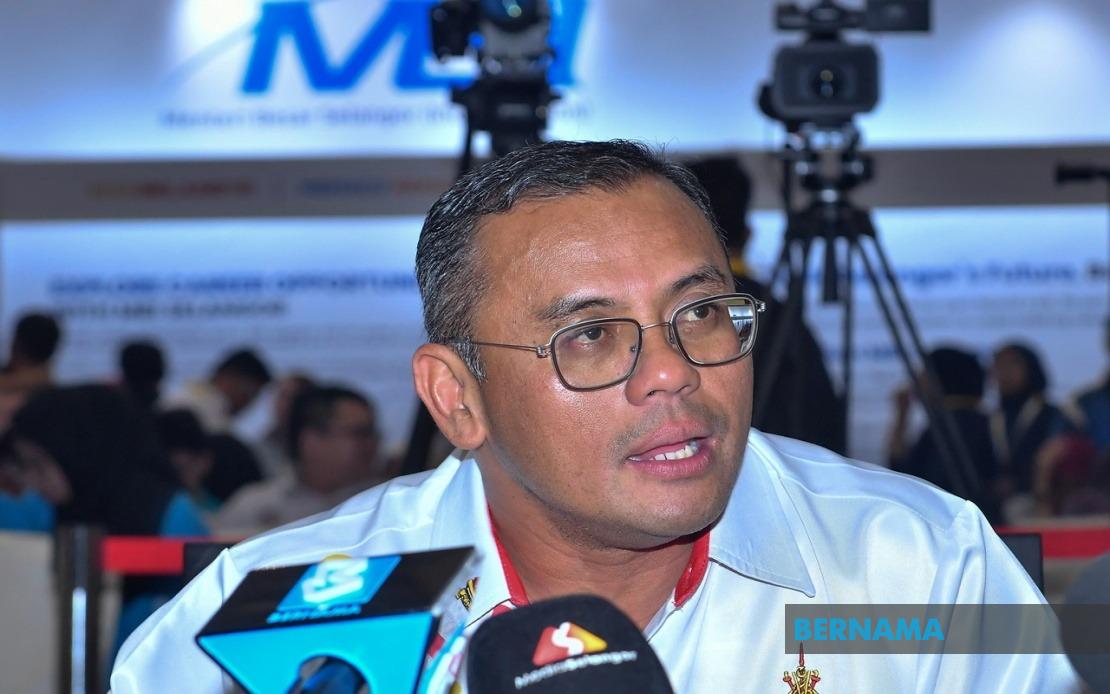
The Selangor state government is mobilising resources to cushion the impact of a significant factory closure that will displace several hundred workers from the electronics manufacturing sector. State Menteri Besar Datuk Seri Amirudin Shari announced that officials will engage directly with employees affected by Panasonic AVC Networks Kuala Lumpur Malaysia's decision to halt television production operations, with substantive discussions scheduled for the coming week. This proactive stance reflects growing concern about industrial job losses in Malaysia's key economic heartland and signals the state's commitment to managing employment transitions through structured intervention.
The meeting will be spearheaded by V. Papparaidu, chairman of the State Human Resources, Poverty Alleviation, Indigenous & Minority Affairs Committee, working alongside representatives from the Social Security Organisation (PERKESO). This collaborative approach underscores the multi-agency coordination required to address redundancies affecting approximately 400 workers when Panasonic Malaysia Sdn Bhd completes its operational wind-down by the end of March 2026. Rather than treating the closure as purely a corporate matter, the state administration is positioning itself as a facilitator between displaced workers, social safety mechanisms, and employment opportunities.
Beyond immediate crisis management, the Selangor government has outlined a layered support strategy that begins with tangible relief measures and extends into long-term employment assistance. Papparaidu indicated that food baskets and similar provisions would be distributed to affected families, acknowledging the immediate financial strain that job loss creates. However, state officials are equally focused on helping workers transition into new roles, recognising that many have spent formative years in manufacturing and possess transferable skills valuable to other employers. This dual approach—combining welfare provision with active job placement—reflects lessons learned from previous industrial restructuring episodes across Southeast Asia.
The involvement of PERKESO introduces a financial safety net that has recently been expanded to provide staged income replacement for retrenched workers. Under the enhanced scheme, displaced employees receive 80 per cent of their previous salary during the first month of unemployment, tapering to 50 per cent in the second month and 30 per cent thereafter, functioning essentially as a job-seeking allowance. This mechanism is particularly significant for Selangor residents who may face extended periods of job searching, especially if they need to acquire new certifications or skills to transition between sectors. The insurance-like structure provides temporary economic stability while workers navigate the labour market, reducing the immediate desperation that can lead to accepting unsuitable or exploitative employment.
Contextually, the Panasonic situation reflects broader structural shifts in Malaysia's electronics manufacturing landscape. Consumer electronics assembly and television production have become increasingly commoditised, with manufacturers repositioning operations toward higher-margin segments or consolidating facilities to achieve economies of scale. Panasonic's decision to cease localised television production is consistent with global rationalisation trends affecting multinational electronics firms across Asia. For Selangor specifically, which has traditionally served as a manufacturing hub attracting substantial foreign direct investment, such closures underscore the necessity of economic diversification and the vulnerability of assembly-dependent industrial strategies.
The timing of this announcement coincides with Selangor's launch of the Mega Jobcare 2026 initiative, a large-scale recruitment and career development programme that appears deliberately calibrated to address employment transitions. The fair assembled 147 employers offering more than 11,000 job vacancies, with roughly 62 per cent of positions offering monthly compensation exceeding RM3,000—substantially above the statutory minimum wage and representative of skilled and semi-skilled roles in diverse sectors. The programme's geographic concentration in Shah Alam, where the Panasonic facility operates, suggests strategic alignment with known unemployment challenges. By hosting the jobcare event alongside workforce engagement regarding the Panasonic closure, state administrators are attempting to create a direct pipeline from redundancy to reemployment.
The employment landscape revealed by Mega Jobcare 2026 demonstrates that Selangor's labour market contains sufficient opportunity to absorb Panasonic's displaced workers, provided effective matching mechanisms exist. With over 11,000 openings spread across 147 employers, mathematical absorption of 400 redundant workers is theoretically feasible. However, successful transitions depend on factors beyond raw vacancy numbers: skills alignment, geographic accessibility, wage expectations, and worker preferences all influence actual placement outcomes. The Selangor government's decision to engage directly with affected workers—rather than allowing market forces alone to determine outcomes—reflects acknowledgment that industrial closures create friction and human costs that statistical job availability figures obscure.
The programme's age eligibility threshold of 18 to 60 years is inclusive but recognises that workers approaching retirement may face distinct challenges in finding equivalent employment. Older manufacturing workers often encounter age-related discrimination and may lack exposure to digital tools or contemporary workplace technologies. Selangor officials will likely need to develop targeted support for workers in their 50s, potentially including early retirement incentives coordinated through PERKESO or targeted reskilling programmes emphasising their accumulated expertise and reliability rather than technical novelty.
Regionally, the Panasonic situation carries implications for Malaysia's positioning within global electronics supply chains and its capacity to retain manufacturing operations facing automation and consolidation pressures. Unlike closures driven by labour cost considerations, which might relocate to lower-wage jurisdictions, Panasonic's restructuring appears driven by product-level rationalisation decisions. This distinction matters for policy response: competitive wage adjustment may not prevent future closures if they reflect strategic corporate reorientation rather than location-specific cost disadvantages. Selangor's emphasis on worker support and active labour market policy implicitly acknowledges that state-level intervention cannot prevent all closures but can substantially mitigate their human consequences.
The coordination between state government, PERKESO, and private employers visible in the Panasonic response represents an emerging model for managing industrial transitions in middle-income Southeast Asian economies. Rather than treating retrenchment as purely individual hardship to be absorbed through family networks and informal mechanisms, the state apparatus is institutionalising support pathways. This approach potentially reduces social costs associated with unemployment—including family stress, deferred healthcare, and reduced consumer spending—while preserving human capital by keeping displaced workers engaged in active job search rather than labour force withdrawal.
Moving forward, the critical variable will be implementation quality. The stated intentions—rapid worker engagement, financial support coordination, and active job placement assistance—represent best-practice labour market policy. Translating these commitments into tangible outcomes depends on adequate resourcing, staff capacity, and sustained attention beyond the initial crisis period. Selangor's track record of coordinating multi-agency employment initiatives will substantially influence whether the Panasonic closure becomes a case study in effective industrial transition management or merely demonstrates the gap between policy rhetoric and operational capacity.

