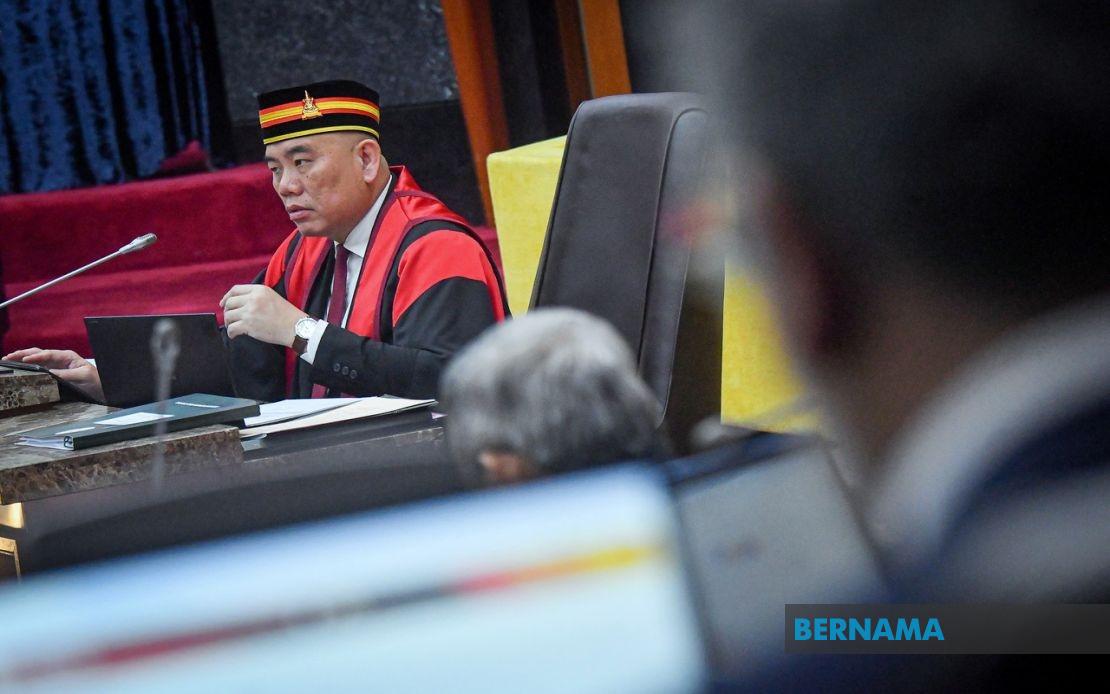
The process of determining whether any seats in the Selangor State Legislative Assembly should be declared vacant remains under active review, according to Speaker Lau Weng San, who is methodically examining the attendance records and status of all 56 state assemblymen regardless of their political affiliation. The comprehensive audit, undertaken from the Speaker's office in Shah Alam, represents a crucial administrative exercise that will ultimately shape the composition of the legislature and potentially trigger by-elections in constituencies where vacancies are formally confirmed.
Lau's deliberate and cautious approach reflects the constitutional complexities surrounding seat vacancy declarations in Malaysia's largest state by economic output. Under the Selangor State Constitution, an assemblyman faces automatic disqualification if he or she fails to attend assembly sittings for six consecutive months without explicit permission or formal notification to the Speaker—a provision designed to ensure active participation and prevent prolonged absences that would effectively nullify representation. However, the Speaker stressed that his current evaluation extends beyond simple attendance tallies, requiring careful consideration of each legislator's circumstances and the validity of any justifications submitted for non-attendance.
The review's scope encompasses assemblymen from both the ruling Pakatan Harapan coalition and opposition benches, an impartiality that Lau emphasized as essential to maintaining institutional credibility. This inclusive approach signals that the Speaker is not targeting any particular party but rather fulfilling his constitutional duty to monitor compliance with statutory requirements. Several assemblymen have already submitted formal correspondence explaining their absences, citing health complications, family emergencies, and other legitimate reasons—documents that the Speaker is methodically evaluating to determine whether these justifications align with constitutional provisions and established parliamentary practice.
The timing of this administrative review has generated considerable political interest, particularly as Menteri Besar Datuk Seri Amirudin Shari indicated that a conclusive determination regarding at least one seat's status would likely materialize within the same week. This timeline suggests that certain cases may be approaching resolution, though the Speaker deliberately declined to specify which constituencies might be affected or when individual rulings would be announced. Amirudin's public statement that the state government was awaiting official notification from Lau before referring the matter to the Election Commission demonstrates the sequential procedural requirements that must be satisfied before any by-election can be scheduled.
The potential activation of by-election mechanisms carries substantial implications for Selangor's political landscape, which has witnessed considerable turbulence since the 2023 general election. A by-election would consume significant financial and administrative resources while providing opposition parties with opportunities to contest constituencies where they might gain ground against the Pakatan Harapan administration. Conversely, should the government's component parties retain targeted seats, such victories would validate their grassroots support and reinforce their legislative dominance within Malaysia's most economically significant state.
Lau's cautionary remarks regarding the two assemblymen who were absent from today's sitting underscore the distinction between temporary non-attendance and breaches warranting formal action. He noted that single or occasional absences do not automatically indicate constitutional violations, and observers should refrain from speculating about underlying causes without access to complete information. This measured communication style appears designed to temper political speculation and media-driven narratives that might prematurely prejudge the Speaker's forthcoming decisions or misrepresent the status of individual legislators.
The state legal adviser's preparation of formal documentation represents a critical preparatory step within the bureaucratic machinery. Once the Speaker formally notifies the government of any seat vacancy determination, the legal apparatus must ensure that all technical requirements are satisfied before referring the matter to the Election Commission. This documentation phase allows for final verification that constitutional procedures have been properly followed and creates an official record that can withstand potential legal challenges from affected assemblymen or political parties contesting the validity of vacancy declarations.
From a regional perspective, Selangor's internal legislative mechanics hold broader significance for understanding how Malaysian states navigate constitutional provisions governing parliamentary conduct. The thoroughness with which Lau is conducting this review may establish precedents influencing how similar situations are handled in other state assemblies, particularly regarding the balance between strict constitutional interpretation and administrative pragmatism when evaluating assemblymen's attendance and justifications for absences.
Politically, the outcome of this review process will influence Selangor's power dynamics over the remainder of the current legislative term. Any seats declared vacant would reduce the government's numerical strength unless the subsequent by-elections result in victories for government-backed candidates. Conversely, opposition parties hope that any electoral contests emerging from this process might provide platforms to recover lost ground or demonstrate popular dissatisfaction with current governance.
The Speaker's refusal to provide a specific completion timeline reflects both the genuine complexity of evaluating numerous cases individually and the political sensitivity surrounding assembly composition. Premature announcements could invite accusations of bias or political motivation, while delayed decisions might generate frustration among those awaiting resolution. Lau appears committed to prioritizing accuracy and constitutional compliance over speed, a defensive posture that protects the Speaker's office from credibility challenges regardless of which assemblymen ultimately face adverse determinations.
As this administrative process unfolds behind the scenes, the wider Selangor political establishment and civil society remain focused on whether the Speaker will deliver his promised updates and how swiftly the Election Commission might subsequently organize any by-elections. The convergence of constitutional procedure, administrative competence, and political calculation will ultimately determine whether this review concludes as a routine maintenance exercise or becomes a pivot point in Selangor's legislative configuration.

