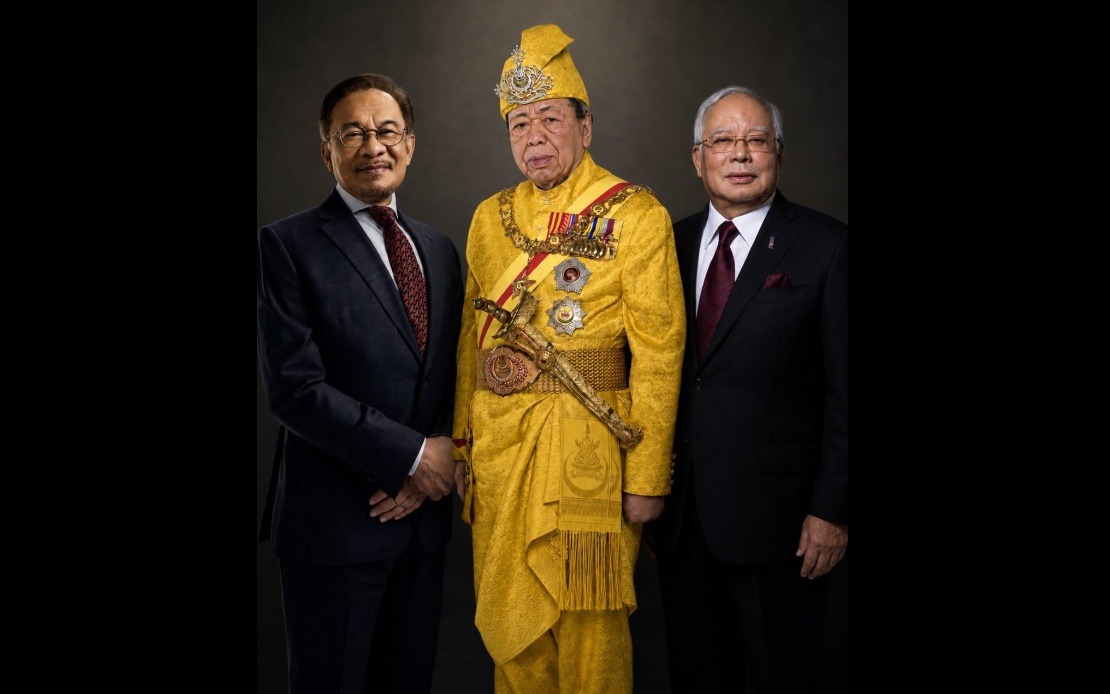
The Sultan of Selangor, Sultan Sharafuddin Idris Shah, has publicly acknowledged Prime Minister Datuk Seri Anwar Ibrahim's role in bringing the Shah Alam Line LRT3 to completion, with services beginning on Monday. In a formal statement released in Shah Alam, the Sultan expressed gratitude for Anwar's commitment to advancing the project through to operational status, particularly noting the government's decision to reinstate five stations that had previously been axed from the plan.
Since assuming the dual portfolios of Prime Minister and Finance Minister in 2022, Anwar's administration has made several critical decisions to salvage the project. Beyond reactivating the cancelled stations, the government has also championed affordable housing development adjacent to LRT3 stations, a move the Sultan characterised as enhancing convenience for ordinary Malaysians. The Sultan's statement explicitly called for an end to any obstructive behaviour from external parties, underscoring his desire for the project to proceed without further impediment.
The genesis of the LRT3 concept reflects practical governance responding to citizen grievances rather than grand ambition. The Sultan revealed that the project emerged from public complaints, particularly from homemakers who described their husbands' frustration with severe traffic congestion preventing timely returns home. This human-centred perspective explains why the Sultan insisted the scheme was fundamentally about addressing everyday transport challenges rather than constructing a prestige megaproject. The need for improved connectivity between Klang, Shah Alam and Kuala Lumpur was evident from the city's infrastructure limitations, with only two bridges spanning the Klang River creating severe bottlenecks during peak hours.
The Sultan also acknowledged his predecessor in office, former Prime Minister Datuk Seri Najib Tun Razak, for initially heeding the call to construct a rail link serving these congested corridors. During Najib's tenure, the government implemented interim traffic relief measures, including the abolition of the Batu Tiga and Sungai Rasau toll plazas in 2018. These moves represented immediate responses to congestion while longer-term infrastructure solutions were developed, demonstrating that successive administrations, despite political transitions, recognised the project's importance.
The LRT3's journey to completion has been arduous, marked by multiple setbacks spanning years. Following the 2018 change of government, the project experienced a 18-month delay before subsequently facing an additional 19-month disruption caused by the COVID-19 pandemic extending into 2021. Throughout these interruptions, successive modifications were made to the original design specifications. Station dimensions were reduced, the number of train carriages in the fleet was trimmed, and five stations originally proposed along the route were eliminated to contain costs and accelerate construction.
These modifications reflect the practical realities facing any large infrastructure programme navigating extended delays and cost pressures. Rather than abandoning the project entirely or indefinitely postponing completion, decision-makers opted to maintain the core functionality while reducing scope. For commuters in the Klang Valley's western corridor, even a modified LRT3 delivering functional service represents a significant improvement over the status quo ante.
The Sultan's statement contained a notable assertion that transcends partisan politics. He explicitly stressed that LRT3's successful implementation should not be attributed to any single individual or political party, emphasising instead that the project represents the product of sustained planning, commitment and inter-administration cooperation spanning several government cycles. This framing acknowledges that infrastructure development typically requires longer timeframes than single election cycles, and that multiple administrations may contribute meaningfully to any major project's completion.
This perspective carries particular relevance for Malaysia, where infrastructure programmes frequently span decades and multiple electoral cycles. Projects initiated by one government are often inherited, modified and completed by successors. The Sultan's insistence on recognising contributions across administrations reflects a mature understanding that attributing all credit to current leaders while blaming predecessors for all delays represents political theatre rather than historical accuracy. For Malaysian readers accustomed to intense partisan claims and counter-claims regarding infrastructure achievements, this measured approach offers a refreshing reminder that complex projects benefit from sustained, cross-party effort.
The operational commencement of the Shah Alam Line addresses specific transportation challenges affecting hundreds of thousands of daily commuters. The line connects key economic and residential nodes across the Klang Valley, potentially reducing journey times and easing road congestion for residents of Klang, Shah Alam and surrounding municipalities who previously depended entirely on road networks. For working professionals and their families, the availability of a faster, more comfortable and safer transport alternative represents tangible improvement in daily quality of life.
The Sultan expressed hope that the operational LRT3 would catalyse broader economic development, enhance overall living standards and reinforce connectivity between Kuala Lumpur, Petaling Jaya, Shah Alam and Klang. These four municipalities represent important nodes within Malaysia's economic structure, and improved transit connections between them could facilitate labour mobility, reduce business logistics costs and support agglomeration benefits. From a regional perspective, enhanced transport infrastructure within the Klang Valley could strengthen Malaysia's competitiveness as a business and investment destination.
Operational success depends critically on ongoing maintenance and service reliability. The Sultan specifically urged Prasarana Malaysia Bhd to ensure continuous, professional maintenance of the LRT3 line, recognising that infrastructure assets require sustained investment and attention long after initial commissioning. For Malaysian commuters who have experienced periods of service disruption on other transit systems, this emphasis on maintenance standards addresses legitimate concerns about whether the system will deliver the promised benefits consistently over time.
The LRT3's opening represents a milestone in Malaysia's evolving transport infrastructure landscape, particularly for the Klang Valley's western corridor. By directly responding to documented public transportation needs rather than pursuing prestige-focused megaprojects, the scheme demonstrates infrastructure planning responsive to actual commuter demands. As Malaysia continues developing its transport networks to support continued urban growth and economic development, the LRT3 model—modest in scope, practical in purpose, delivered through sustained commitment despite challenges—offers lessons for future projects throughout Southeast Asia.

