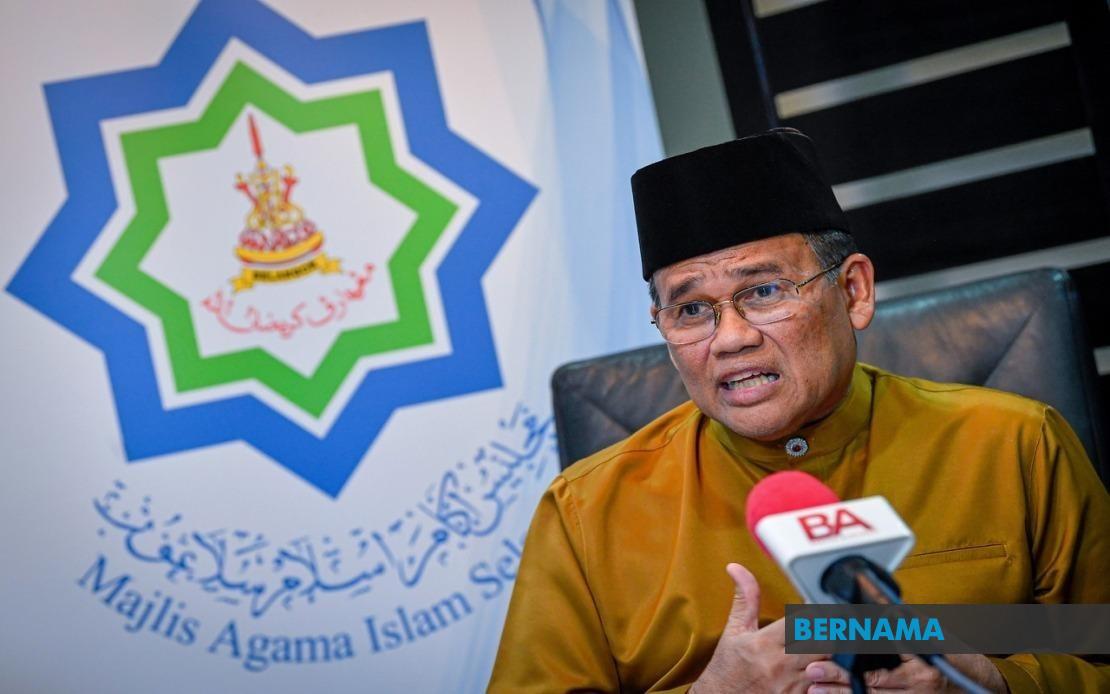
The Sultan of Selangor, Sultan Sharafuddin Idris Shah, has decided against granting permission for prayer spaces within shopping malls across the state to conduct Friday prayers at this time, the Selangor Islamic Religious Council (MAIS) announced on Tuesday. The royal withholding of consent reflects ongoing deliberations within Malaysia's Islamic governance structures over how to balance convenience, institutional preservation, and religious practice in an increasingly urban and commercialised society.
Datuk Salehuddin Saidin, chairman of MAIS, explained that the decision stems fundamentally from protecting the institutional integrity of mosques and traditional surau. The council worries that allowing commercial establishments to host Friday congregations would erode the foundational role that dedicated prayer venues play in Muslim community life. Rather than viewing this as a mere administrative matter, MAIS frames it as a question of preserving Islamic values and the mosque's historic position as the spiritual anchor for believers.
The mathematics of the situation, according to MAIS, favours maintaining the status quo. Selangor currently operates 448 mosques and 379 surau officially authorised to conduct Friday prayers—a combined total of 827 dedicated facilities. This inventory, the council argues, already provides sufficient capacity to serve the state's Muslim population without necessitating prayer arrangements within retail environments. The framing suggests that the question is not one of scarcity but of institutional preference and long-term religious health.
Beyond capacity concerns lies a deeper anxiety about fragmentation. Salehuddin articulated MAIS's worry that permitting Friday prayers at shopping mall surau would create an alternative option that could divert congregants from established mosques and surau. This potential leakage of worshippers represents more than a numerical challenge; it threatens what religious authorities perceive as the unifying function of traditional prayer spaces. Mosques and official surau serve not merely as prayer venues but as gathering points where the community reinforces its collective identity and receives formal Islamic instruction.
The governance dimension adds technical substance to what might otherwise appear as mere institutional protectionism. MAIS highlighted the necessity of appointing qualified personnel—imams, bilals, and administrative staff—to any prayer facility offering Friday congregational worship. When such positions fall outside MAIS's appointment authority, the council cannot effectively supervise sermon content, ensure doctrinal consistency, or maintain administrative standards. This regulatory concern extends to broader oversight: without direct institutional control, ensuring compliance with MAIS guidelines becomes problematic, potentially creating uneven standards across different prayer locations.
A noteworthy exception underscores the council's pragmatism. One shopping mall surau in Selangor has received temporary approval specifically because no nearby mosque exists to serve the immediate area. This limited dispensation carries a sunset provision: once a traditional mosque opens within reasonable proximity and possesses adequate capacity, the temporary mall-based arrangement will be terminated. The arrangement thus represents a transitional accommodation rather than a permanent shift in policy, maintaining the principle that dedicated religious institutions should constitute the default option whenever feasible.
The decision also reflects constitutional architecture and federalism within Malaysia's governance system. Religious affairs—including mosque administration, surau establishment, and prayer facility regulations—fall under state jurisdiction according to the Ninth Schedule of the Federal Constitution. Within Selangor, the Sultan holds ultimate prerogative over Islamic administrative matters. This constitutional framework means that decisions about prayer spaces cannot be overridden by federal initiative; each state sultan retains authority over how Islamic institutions function within their jurisdiction. MAIS emphasised this point to underscore that Selangor's approach, while restrictive, operates fully within constitutional parameters.
The council also acknowledged the federal government's broader position on this issue. Minister in the Prime Minister's Department (Religious Affairs) Dr Zulkifli Hasan has expressed views supporting the nationwide establishment of surau authorised for Friday prayers in shopping malls. MAIS's notation of this federal stance signals awareness of inter-governmental tension without conceding authority. The different institutional perspectives—federal promotion versus state-level caution—reflect broader debates about modernisation, institutional change, and religious accommodation in Malaysia's plural society.
MAIS grounded its reasoning in Islamic teaching and values, contending that reinforcing mosques as primary worship centres aligns with Islamic principles and tradition. The council characterised the decision not as obstructionist but as preserving institutional integrity essential to the faith community's spiritual wellbeing. By framing the issue in terms of strengthening Islamic institutions rather than resisting convenience, MAIS positioned the Sultan's withholding of consent as a positive affirmation of mosque-centred worship culture.
The council simultaneously appealed to Muslims to continue supporting traditional mosques and surau, calling them centres of unity for the faith community. This rhetorical strategy attempts to transform institutional policy into a rallying cry for communal participation, suggesting that maintaining mosque attendance represents a form of religious commitment rather than mere adherence to administrative rules. The appeal reflects understanding that regulatory decisions require moral and social legitimacy, not merely formal authority.
For Malaysian stakeholders, this decision illustrates how Islamic governance in federal Malaysia operates through negotiation between multiple centres of authority. The Sultan's prerogative, MAIS's administrative capacity, federal government positioning, and local Muslim community preferences all intersect in shaping religious practice. While Selangor has restricted mall-based Friday prayers for now, the temporary exception and ongoing federal advocacy suggest this question may resurface as urbanisation intensifies and shopping mall footfall grows. The outcome remains contingent on how state and federal authorities recalibrate their positions regarding religious accommodation in modern commercial spaces.
The decision also raises questions for Malaysia's increasingly urban Muslim population about accessing religious services within their daily routines. As shopping malls become central to urban socialising and commerce, the tension between institutional preservation and practical convenience will likely intensify. How MAIS and other state councils eventually navigate this tension could significantly influence how Islam adapts to Malaysia's continuing urbanisation in coming decades.

