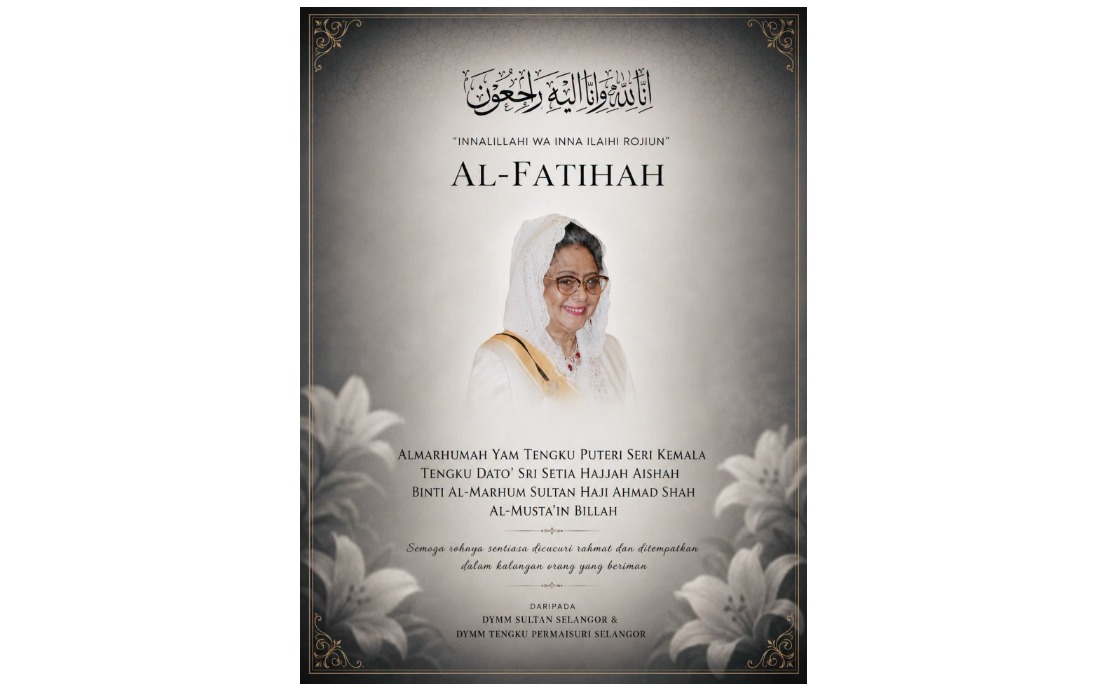
The Sultan of Selangor, Sultan Sharafuddin Idris Shah, and Tengku Permaisuri of Selangor, Tengku Permaisuri Norashikin, have offered formal condolences to Al-Sultan Abdullah Ri'ayatuddin Al-Mustafa Billah Shah, the Sultan of Pahang, following the passing of his elder sister, Tengku Puteri Seri Kemala Tengku Datuk Seri Aishah Almarhum Sultan Ahmad Shah. The message of sympathy was conveyed through the Selangor Royal Office, underscoring the bonds of solidarity that exist among Malaysia's royal households during times of personal loss.
Tengku Datuk Seri Aishah, who held the title of Tengku Puteri Seri Kemala, passed away at a private hospital in Kuala Lumpur at 9.15 pm on Tuesday. Her death represents a significant loss for the Pahang royal family, as the elder sister of a reigning sultan traditionally holds considerable importance within royal circles and broader ceremonial functions. The circumstances surrounding her passing and medical condition were not disclosed in official statements, maintaining the privacy customary to royal matters.
In their formal statement, Sultan Sharafuddin and Tengku Permaisuri Norashikin expressed profound sadness and sorrow at the loss. The Selangor Royal Office released an official communication conveying their sentiments, reflecting the ceremonial yet deeply felt nature of inter-royal family condolences. Such expressions of sympathy from one state's royal household to another demonstrate the interconnected nature of Malaysia's constitutional monarchy system, wherein the various sultans maintain close personal and familial ties alongside their formal state responsibilities.
The royal couple's message included a prayer for the deceased, requesting divine mercy upon her soul and praying that she be counted among the faithful. This spiritual dimension is integral to such occasions within Malaysia's Islamic context, with formal statements routinely incorporating Quranic references and supplications. The inclusion of "Al-Fatihah," the opening chapter of the Quran traditionally recited as a prayer for the deceased, reflects the religious observances observed during periods of royal mourning across the Malaysian sultanates.
Following customary royal protocols, Tengku Datuk Seri Aishah's remains were transported to the Pahang Royal Mausoleum located in Pekan, the royal seat of Pahang state. The burial took place with full ceremonial honours and in accordance with established royal customs, affirming her elevated status within the royal hierarchy. Pekan, as the traditional capital of Pahang, holds particular significance as the repository of royal lineage and historical memory for the state's ruling family, making it the appropriate final resting place.
The Pahang Sultanate, one of Malaysia's most historically prominent royal households, has long maintained close relationships with other state rulers. The death of the Sultan's sister comes as a matter of official and personal concern throughout Malaysia's royal establishment, as demonstrated by the immediate and formal responses from counterparts in other states. Such coordinated expressions of condolence are typical within the intricate network of Malaysian royalty, where multiple sultanates share historical ties, marital connections, and ceremonial responsibilities within the framework of the Conference of Rulers.
Tengku Datuk Seri Aishah's position as sister to the reigning Sultan of Pahang invested her with considerable respect and ceremonial standing. Members of the extended royal family who are siblings of a sultan often participate in state functions, royal ceremonies, and diplomatic occasions, serving as important symbolic figures representing the state's continuity and heritage. Her loss therefore extends beyond immediate family considerations to encompass broader implications for royal representation and ceremonial functions within Pahang state.
The swift and formal nature of the condolence from Selangor's royal household reflects well-established protocols governing inter-state royal communication in Malaysia. These channels exist precisely to facilitate dignified and respectful exchanges during significant occasions affecting the royal families. The involvement of both the Sultan and the Tengku Permaisuri of Selangor in the condolence message underscores the gravity with which such matters are treated within Malaysia's constitutional framework, where the royal institution commands considerable ceremonial and symbolic importance.
For Malaysian observers of royal affairs, such events serve as reminders of the continuity and interconnectedness of the nation's sultanates, despite their independent governance of their respective states. The passage of prominent royal figures represents natural transitions within these centuries-old institutions, yet each departure is marked by formal acknowledgement and expressions of communal sorrow among the royal hierarchy. These occasions demonstrate how Malaysia's system of constitutional monarchy encompasses not merely formal state structures but also deeply personal family relationships among the nation's ruling houses.

