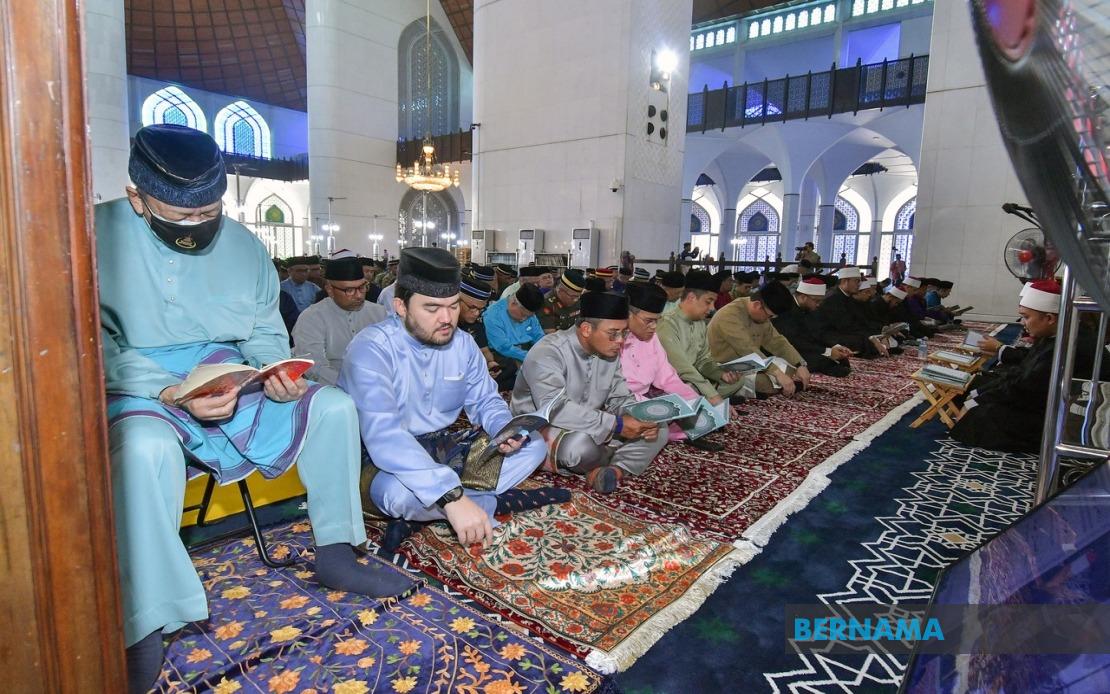
Sultan Sharafuddin Idris Shah, the Sultan of Selangor, attended a significant pre-National Day religious observance on Wednesday at Masjid Sultan Salahuddin Abdul Aziz Shah in Shah Alam, leading a gathering of worshippers for Surah Yassin recitation and Friday prayers. The event reflected the traditional integration of spiritual reflection and national commemoration that characterizes Malaysia's approach to Merdeka celebrations, blending Islamic observance with patriotic sentiment as the country prepares for its independence anniversary.
The Raja Muda of Selangor, Tengku Amir Shah Sultan Sharafuddin Idris Shah, joined his father in the observance, underscoring the significance of the occasion for the state's royal household. Their presence signified not merely ceremonial participation but an active engagement with the religious and civic dimensions of the approaching National Day, which holds particular resonance across Malaysian society as an annual moment for reflecting on national identity and shared values.
Upon arrival at the mosque, Sultan Sharafuddin was formally received by Selangor Menteri Besar Datuk Seri Amirudin Shari, alongside Dr Mohammad Fahmi Ngah, who chairs the State Islamic Affairs and Innovation Culture Committee. This reception protocol highlighted the coordinated approach between state leadership and the royal institution in organizing the religious observance. The presence of these senior state officials underscored the government's commitment to aligning religious and civic activities during the pre-Merdeka period.
Notable attendees included Datuk Mohd Shahzihan Ahmad, director of the Selangor Islamic Religious Department (JAIS), and Datuk Salehuddin Saidin, chairman of the Selangor Islamic Religious Council (MAIS). Their participation ensured that the religious dimensions of the event were managed by appropriate institutional bodies, reflecting Malaysia's structured approach to coordinating state religious affairs with public observances and celebrations.
Approximately 1,000 worshippers participated in the Surah Yassin recitation, with attendance notably including members of security forces stationed throughout Selangor. This broad-based participation across civilian and security personnel communities underscored how National Day preparations extend beyond symbolic gestures to encompass institutional participation across multiple sectors. The inclusion of security personnel emphasized the collective nature of national commemoration and the shared responsibility for upholding national values and security.
Following the Surah Yassin recitation, Sultan Sharafuddin joined the congregation for congregational Friday prayers. The mosque's Grand Imam, Muhammad Farhan Wijaya, delivered the sermon and led the prayers, with the sermon's title—"Merdeka Daripada Belenggu Kerakusan" (Freedom from the Shackles of Greed)—directly engaging with themes of national liberation and moral conduct. This thematic connection between religious teaching and national values illustrated how religious leadership in Malaysia often weaves civic consciousness into spiritual instruction, particularly during significant national observances.
The sermon's focus on freedom from greed represented a deliberate intellectual engagement with substantive national concerns. Rather than treating the pre-Merdeka period as merely ceremonial, the mosque's leadership used the occasion to address economic and moral dimensions of national life. For Malaysian readers, this approach reflects an ongoing tradition wherein Islamic institutions contribute to broader national discourse on development, values, and societal challenges.
Selangor's formal National Day celebrations will unfold at Kajang Stadium on Sunday, August 30, with festivities commencing at 8 p.m. The state-level commemoration operates under the theme "Malaysia MADANI: Kesejahteraan Dinikmati" (Malaysia MADANI: Shared Prosperity), which aligns with the national overarching theme established by the federal government. This thematic coherence ensures that celebrations from local to national levels present unified messaging regarding Malaysia's development trajectory and aspirational values.
The "Malaysia MADANI" framework represents the government's contemporary vision for national development, emphasizing shared prosperity and collective well-being. By organizing pre-Merdeka religious observances around this thematic structure, state authorities demonstrate how spiritual and civic engagement reinforce national policy objectives. For observers tracking Malaysia's evolving national conversation, such integration reveals how religious institutions collaborate with political leadership in articulating and advancing shared developmental frameworks.
Selangor's Merdeka celebrations carry particular significance within Malaysia's broader regional context. As the country's most economically developed and demographically diverse state, Selangor's National Day observances often establish templates and set expectations for commemoration standards nationwide. The coordination between royal patronage, government administration, and religious institutions demonstrated during the pre-celebration prayers exemplifies the institutional relationships that characterize contemporary Malaysian governance during significant national moments.
The choice of Masjid Sultan Salahuddin Abdul Aziz Shah as the venue for these observances carries symbolic weight. Named after a historical Selangor Sultan, the mosque represents institutional continuity and the enduring relationship between religious life and royal authority within Selangor's governance framework. This institutional connection between past and present, embodied in the mosque's name and its current role in state affairs, grounds contemporary national celebrations within longer historical narratives of Malaysian statehood and Islamic institution-building.
For Southeast Asian observers monitoring Malaysia's internal dynamics, these pre-Merdeka activities illustrate how the country integrates religious observance with political and civic commemoration. Unlike some regional neighbors where such integration might generate controversy, Malaysia's institutional frameworks typically facilitate cooperative engagement between religious and secular authorities. The smooth coordination evident in this Selangor event suggests continued institutional stability and shared commitment to national unity across Malaysia's diverse institutional landscape as the country approaches another year of independence commemoration.

