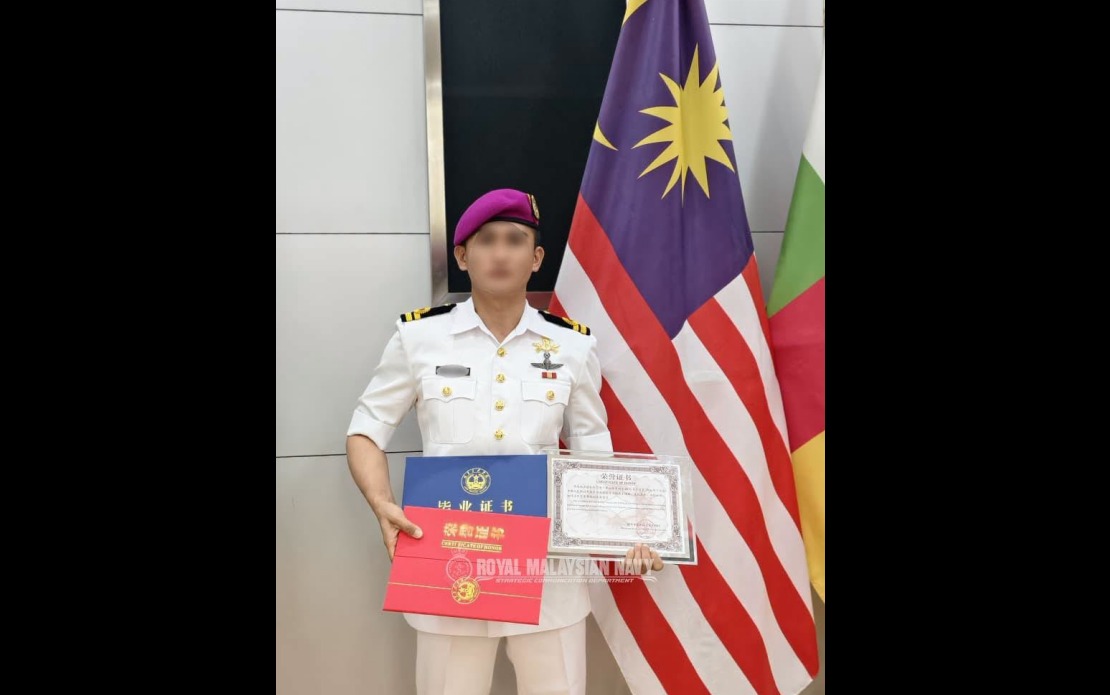
Sultan of Selangor Sultan Sharafuddin Idris Shah has publicly commended a member of the Royal Malaysian Navy's elite Special Naval Forces unit, PASKAL, for achieving top honours in a prestigious sniper training programme conducted at the PLA Infantry Academy's Shijiazhuang Campus in Hebei, China. As Captain-in-Chief of the Royal Malaysian Navy, the Sultan expressed considerable satisfaction with the officer's performance and the broader implications for Malaysia's defence capabilities and international standing.
The five-month course, which ran from March 1 through July 31, culminated in the Malaysian serviceman emerging as the best-performing student among a cohort of 131 participants drawn from more than 24 countries. This international competition underscores Malaysia's growing engagement with advanced military training opportunities, particularly within the Asia-Pacific region where China increasingly plays a central role in defence cooperation frameworks. The officer's victory reflects not merely individual excellence but also validates Malaysia's strategic approach to enhancing its armed forces' professional capabilities through bilateral military partnerships.
The accolades bestowed upon the PASKAL member extend beyond simple recognition. The officer received the Excellent Student Award, signifying top-tier performance in academic and practical assessments throughout the intensive programme. Additionally, he was presented with a Certificate of Honors recognizing him as an Excellent Cadre, a distinction typically reserved for participants demonstrating exemplary conduct, leadership qualities, and mastery of complex operational procedures. The accompanying Silver Badge Medal further embellishes his credentials, representing measurable achievement in sniper-specific disciplines encompassing marksmanship, tactical positioning, surveillance, and field craft.
Sultan Sharafuddin's formal commendation carries particular weight within Malaysia's defence establishment hierarchy. As both the Selangor sultanate's titular head and the constitutional Captain-in-Chief of the RMN, his public endorsement signals state-level appreciation for military excellence and reinforces the monarchy's active engagement with defence matters. The Sultan's remarks emphasized that such individual achievements transcend personal glory, instead constituting instructive examples motivating broader organizational improvement and elevating institutional prestige internationally.
The successful completion of this training represents a significant milestone for PASKAL, Malaysia's most specialized naval unit operating within maritime security and special operations domains. PASKAL personnel typically undergo rigorous domestic preparation before undertaking advanced overseas programmes, making selection for participation in China's PLA Infantry Academy a competitive honour. The sniper specialization aligns with PASKAL's operational requirements for conducting precision maritime interdiction, counter-terrorism missions, and sophisticated intelligence-gathering operations across Southeast Asia's complex maritime environment.
Malaysia's participation in Chinese military training programmes reflects broader regional security dynamics and the diversification of defence partnerships beyond traditional Western alignments. While Malaysia maintains substantial defence cooperation with the United States, United Kingdom, and Australia, expanding engagement with Chinese military institutions demonstrates pragmatic recognition of China's regional influence and military technological advancement. Such exchanges facilitate professional networking, expose Malaysian personnel to alternative tactical doctrines, and potentially create diplomatic channels reducing tensions in contested maritime spaces like the South China Sea.
The officer's international achievement arrives during a period of heightened emphasis on maritime security throughout Southeast Asia. China's expanding naval capabilities and assertive maritime posture have prompted regional nations, including Malaysia, to strengthen their own naval and special operations forces. Investment in specialized training, particularly sniper and reconnaissance capabilities, directly enhances Malaysia's capacity to protect maritime interests, enforce maritime law, and respond to security challenges in territorial waters and exclusive economic zones extending across the Malacca Strait and South China Sea.
Admiral Tan Sri Dr Zulhelmy Ithnain, the Royal Malaysian Navy's Chief, received complementary recognition from the Sultan for fostering an institutional culture supporting advanced professional development. Leadership commitment to identifying and nurturing exceptional personnel represents essential infrastructure for maintaining military competitiveness and modernization. The Admiralty's facilitation of international training opportunities demonstrates strategic vision regarding force development and acknowledgment that contemporary naval operations demand continuously upgraded skills and knowledge.
The broader PASKAL organization likewise featured prominently in the Sultan's commendation, with explicit recognition of collective efforts contributing to the unit's international reputation and operational effectiveness. This institutional acknowledgment serves multiple purposes: it reinforces organizational pride, validates personnel sacrifices undertaken during demanding training regimens, and strengthens morale within a specialized unit often operating under classified operational constraints limiting public recognition of achievements. Such psychological dimensions prove essential for maintaining high readiness standards within elite military formations.
The Sultan's statement extended appreciation to all Royal Malaysian Navy personnel, underscoring that military excellence represents a comprehensive organizational endeavour rather than isolated individual accomplishment. This inclusive recognition acknowledges the logistical support, training infrastructure, and professional standards maintained by supporting personnel enabling operational specialists to excel during advanced international courses. It reflects holistic understanding of how defence institutions function as integrated systems where success depends upon coordinated contribution across multiple hierarchical levels.
Matricululation of Malaysian military personnel through international training programmes strengthens regional security architectures while simultaneously enhancing individual career trajectories and professional recognition. The Sultan's public endorsement provides significant career momentum for the PASKAL officer while demonstrating government commitment to supporting military excellence and international engagement. Such visible encouragement from the highest constitutional levels often precedes advancement opportunities and expanded operational responsibilities.
Moving forward, the officer's achievement will likely influence recruitment narratives and training programme design within PASKAL and broader Royal Malaysian Navy structures. Demonstrable success in international competitions enhances institutional attractiveness to high-calibre candidates and validates organizational claims regarding professional standards. The international recognition also contributes to Malaysia's broader strategic narrative emphasizing defence modernization, professional military development, and active regional security participation alongside established security partners.

