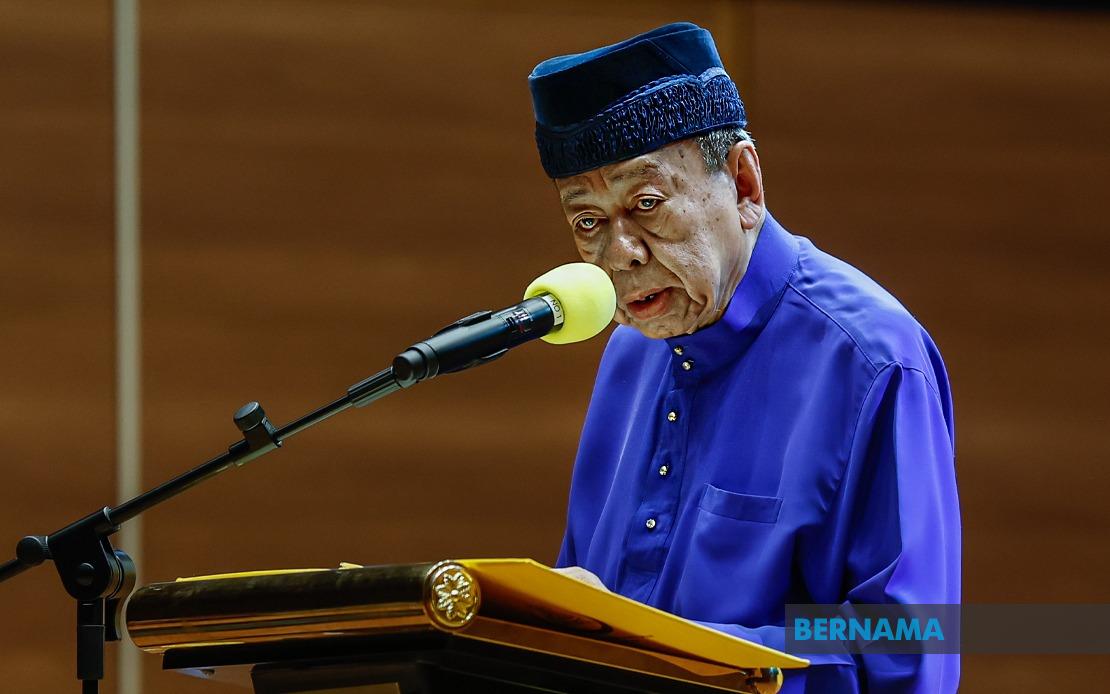
Sultan Sharafuddin Idris Shah has challenged Universiti Teknologi MARA to evolve its academic offerings in step with worldwide technological and economic transformation, arguing that institutional relevance is now as critical as institutional access. Speaking at the UiTM Royal Address 2026 in Shah Alam, the Selangor Sultan reframed the university's mission beyond the historical struggle for admission, emphasising instead that contemporary graduates must be equipped to excel in an intensely competitive global environment where qualifications alone no longer guarantee career success.
The Sultan identified several disciplines as essential to Malaysia's economic future, specifically digital technology, artificial intelligence, science, engineering, medicine, finance, accounting, law, and the creative industries. His framing suggests recognition that UiTM's traditional strengths in producing professional talent must now extend to fields driving the knowledge economy, particularly emerging sectors that may not yet be formally established in the curriculum. This agenda touches on a broader Southeast Asian challenge: balancing institutional heritage with the accelerating pace of sectoral change, where universities often struggle to reform faster than industry demands evolve.
Crucially, the Sultan separated the defence of UiTM's constitutional role from resistance to curricular modernisation. He anchored the university's Bumiputera empowerment mandate in Article 153 of the Federal Constitution and the Universiti Teknologi MARA Act 1976, establishing that any institutional transformation must occur within that foundational framework. This positioning allows for substantive change while maintaining the political and legal consensus that underpins the university's special status. For Malaysian educators and policymakers, the message is clear: constitutional protection does not exempt the institution from performance or relevance expectations.
A notable dimension of the Sultan's remarks centres on the gap between credential possession and workplace readiness. He cautioned against producing degree-holders who lack practical industry skills, language proficiency, critical thinking, and professional confidence—a concern that resonates across Southeast Asian tertiary education, where graduate unemployment and skills mismatches persist despite rising qualification levels. The explicit call for UiTM students to master at least two foreign languages signals recognition that English, while important, may no longer be sufficient for regional or international mobility, particularly in an era of deepening ASEAN integration and rising competition from China and India.
The Sultan also repositioned UiTM's developmental mission from producing job seekers to cultivating job creators. This shift from employment to entrepreneurship and innovation fundamentally redefines institutional success metrics. Rather than measuring outcomes solely through graduate placement rates, the institution would be judged partly on how many alumni establish businesses, lead technological innovation, or build industry-leading enterprises. For a nation concerned about youth unemployment and economic diversification, this reorientation acknowledges that traditional employment pathways may no longer absorb all graduates, making entrepreneurial capability a strategic necessity rather than an optional outcome.
Industry engagement emerged as a key lever in the Sultan's vision. He called for strengthening UiTM's relationships with employers and sectors, suggesting that curriculum design and teaching methods have become too disconnected from workplace realities. This reflects a global trend toward industry partnerships in higher education, though in Malaysia's context it carries additional weight: the Bumiputera professional class that UiTM historically created often filled public sector roles where industry liaison was secondary. Shifting toward private sector alignment and market-responsive training requires cultural and structural changes within an institution founded partly to serve administrative and professional state needs.
The Sultan's acknowledgement that UiTM's empowerment mandate remains incomplete—that socioeconomic gaps between Malays, Bumiputeras, and other groups persist—provides a practical counterweight to any perception that affirmative action has become obsolete. By grounding continued Bumiputera prioritisation in persistent inequality rather than historical entitlement alone, he offered a defensible rationale that aligns with contemporary social mobility discourse. This framing matters regionally: as affirmative action policies come under scrutiny in neighbouring countries like Thailand and the Philippines, Malaysia's explicit constitutional foundation for such measures offers both protection and responsibility to demonstrate ongoing necessity.
The Sultan also implicitly addressed tensions within Malaysia's higher education ecosystem by clarifying that UiTM's specialisation does not deny educational access to other communities. Malaysia's diverse public and private university sector provides alternative pathways, meaning UiTM's Bumiputera focus does not inherently restrict national educational opportunity—a distinction often muddled in public debate. This clarity may help reduce political friction around the institution's admissions policies by anchoring them within a broader, inclusive higher education landscape.
From a Southeast Asian perspective, the Sultan's remarks highlight a dilemma facing many region-wide institutions: how to maintain founding missions rooted in post-colonial nation-building while competing in a borderless, merit-based global knowledge economy. UiTM's constitutional status provides unique protection unavailable to universities in most other ASEAN nations, yet that protection itself may create complacency or resistance to reform. The Sultan's challenge suggests that constitutional mandate and competitive excellence are not mutually exclusive but rather interdependent—an institution that fails to produce globally competitive graduates undermines the very communities it was established to serve.
The emphasis on language proficiency and international exposure also reflects Malaysia's vulnerability in regional competition. Singapore's universities dominate the region in global rankings partly because they operate in English and actively recruit internationally; Thailand and Indonesia are investing heavily in research excellence and internationalisation. UiTM's historical focus on serving domestic Bumiputera needs, while constitutionally sound, has left it less embedded in regional and global academic networks compared to peers in Singapore or increasingly in China. The Sultan's call for multilingualism and global engagement suggests recognition that parochialism, however well-intentioned, ultimately disadvantages the intended beneficiaries.
Moving forward, the substantive challenge for UiTM leadership involves translating the Sultan's aspirations into concrete curricular reform, faculty development, and institutional partnerships without diluting the institution's core identity or abandoning its constitutional mandate. This requires simultaneously upgrading programme quality, expanding entrepreneurial training, deepening industry collaboration, and building international reputation—an ambitious agenda for any university, let alone one navigating the additional complexity of affirmative action obligations and political sensitivity around its role in nation-building. Success would position UiTM as a model for how developing-world institutions can marry social equity with excellence, a contribution with significance far beyond Malaysia's borders.

