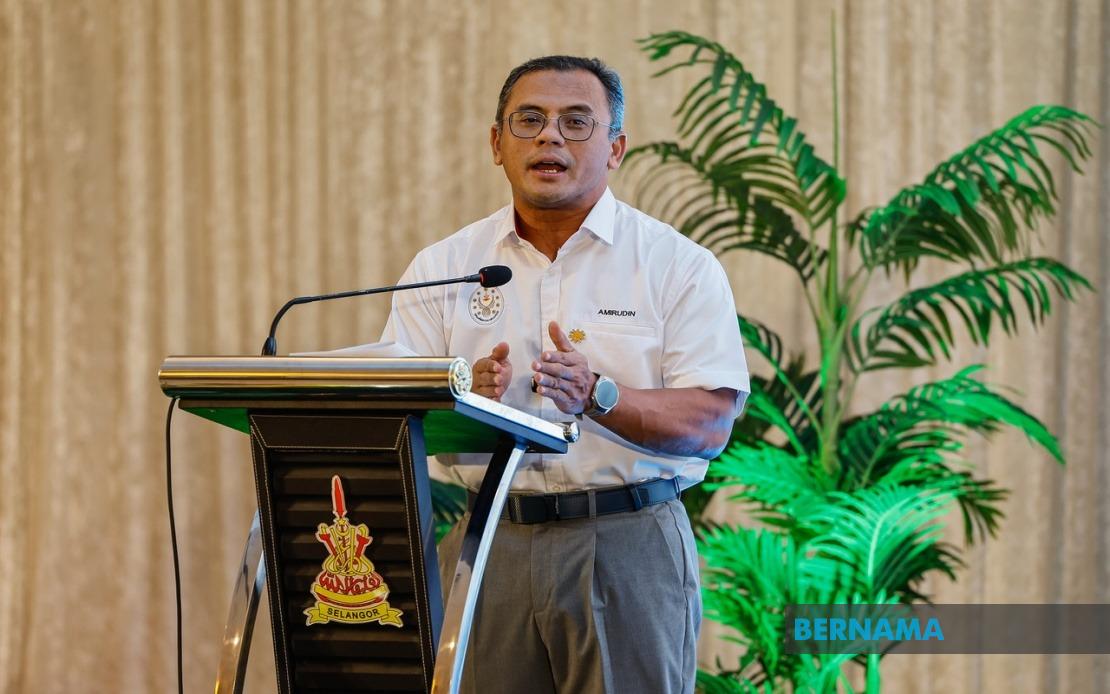
Selangor's state government has zeroed in on Taman Medan as the preferred location for building a new hospital in Petaling Jaya, marking a significant expansion of public healthcare infrastructure in the region. Menteri Besar Datuk Seri Amirudin Shari announced the decision during an event at the Sultan Salahuddin Abdul Aziz Shah Building in Shah Alam, positioning the project as a cornerstone initiative to bolster medical services for residents in congested urban zones. The selection reflects the state's commitment to addressing healthcare accessibility gaps in areas where population density strains existing facilities.
The land acquisition process for the hospital development is currently in its negotiation phase, with two potential sites under consideration. Amirudin explained that while acquisition costs are still being discussed, the Taman Medan location has emerged as the most viable option due to its accessibility and strategic position within a high-density residential corridor. This calculated approach allows the state government to balance financial considerations with operational efficiency, ensuring the selected site maximises community benefit upon completion. The deliberate pace of negotiations suggests officials are conducting thorough due diligence to secure optimal terms for taxpayers.
Residents across Puchong, the Jalan Klang Lama corridor, and Subang stand to gain substantially from the hospital's establishment. These areas have experienced rapid urbanisation over the past decade, creating substantial demand for secondary and tertiary healthcare facilities. Currently, residents often travel considerable distances to access major public hospitals, creating bottlenecks in emergency response times and routine medical care. The new facility will effectively decentralise healthcare provision in the Klang Valley, reducing congestion at existing institutions and enabling faster treatment delivery during critical medical episodes.
The Ministry of Health has endorsed Petaling Jaya Selatan as the most strategically positioned location compared to an alternative site in SS8, Kelana Jaya. This validation from the federal health authority underscores the technical soundness of Selangor's selection process. The MOH's backing carries particular significance for funding and regulatory approval, as it confirms alignment between state-level infrastructure planning and national healthcare strategy. Such coordination between federal and state entities typically accelerates project timelines and ensures compatibility with nationwide health system networks.
Design and developmental responsibilities will rest entirely with the Ministry of Health, which will manage the project using its existing budget allocation. This arrangement centralises planning expertise within a single agency, reducing coordination complexity and potential cost overruns associated with multi-stakeholder management. By leveraging the MOH's established protocols for hospital development, the project can proceed more efficiently while maintaining consistent standards across Malaysia's public health estate. Amirudin's emphasis on expediting the process reflects the urgency surrounding healthcare infrastructure gaps in Selangor, where population growth has consistently outpaced facility expansion.
Beyond infrastructure development, the state government is elevating mental health as a priority health agenda. Amirudin acknowledged that psychological and psychiatric disturbances increasingly correlate with social dysfunction, including bullying, criminal behaviour, and community safety concerns. This holistic framing recognises that hospital construction alone cannot address comprehensive population health needs. The government's intention to coordinate across health, education, and social welfare sectors demonstrates understanding that mental health challenges require multi-agency intervention spanning school environments, clinical settings, and community support networks.
Interagency collaboration between the Ministry of Education and Ministry of Health will shape Selangor's mental health response framework. The MOE is preparing supporting documentation to integrate psychological wellness into educational curricula and school-based screening mechanisms, while the MOH will leverage its clinical infrastructure to provide diagnostic and therapeutic services. This partnership approach reflects international best practices in addressing mental health as a population-wide concern rather than an isolated medical issue. Early intervention in school settings can prevent escalation to crisis-level psychiatric episodes requiring hospitalisation.
Alongside hospital development, Selangor is expanding its Ambulans Kita Selangor programme through a second phase implemented in partnership with St. John Ambulance. The initiative now encompasses a network spanning government health clinics across all state districts, with Phase 2 broadening coverage from three initial districts—Petaling, Kuala Langat, and Kuala Selangor—to comprehensive statewide deployment. This expansion particularly benefits lower and middle-income populations who cannot afford private medical transport services, which can exceed hundreds of ringgit per journey and represent catastrophic expenditures for vulnerable households.
The AKS Phase 2 programme carries a budget of approximately RM1 million, representing cost-effective investment in healthcare accessibility. By coordinating ambulance services across 86 government health clinics and hospital networks, the initiative removes financial barriers to seeking timely medical care. Research consistently demonstrates that transport costs deter disadvantaged populations from accessing preventive and acute services, leading to delayed diagnoses and more severe health outcomes. By subsidising transportation, Selangor addresses a structural barrier that impedes equitable healthcare access regardless of clinical facility quality or provider competence.
The convergence of infrastructure investment, mental health prioritisation, and accessibility programmes reflects sophisticated public health governance. Rather than pursuing isolated initiatives, Selangor's leadership integrates hospital construction, mental health coordination, and transport subsidies into a coherent strategy addressing multiple dimensions of healthcare equity. This systems-level approach acknowledges that expanding bed capacity means little if patients cannot reach facilities or lack psychological support networks. For Southeast Asian policymakers observing Selangor's initiatives, the integrated model offers a template for balancing capital investment, inter-agency coordination, and financial protection mechanisms.
The project timeline and funding mechanisms remain partially undisclosed, though Amirudin's emphasis on expediting development suggests the MOH may announce more specific schedules following land acquisition completion. The hospital's eventual capacity, specialist departments, and teaching affiliations will significantly influence whether it functions primarily as a community facility or a regional tertiary centre. As Malaysia's healthcare system faces mounting demand from an ageing population and chronic disease prevalence, projects like the Petaling Jaya hospital represent necessary though incremental responses to structural capacity shortages affecting urban regions across the country.

