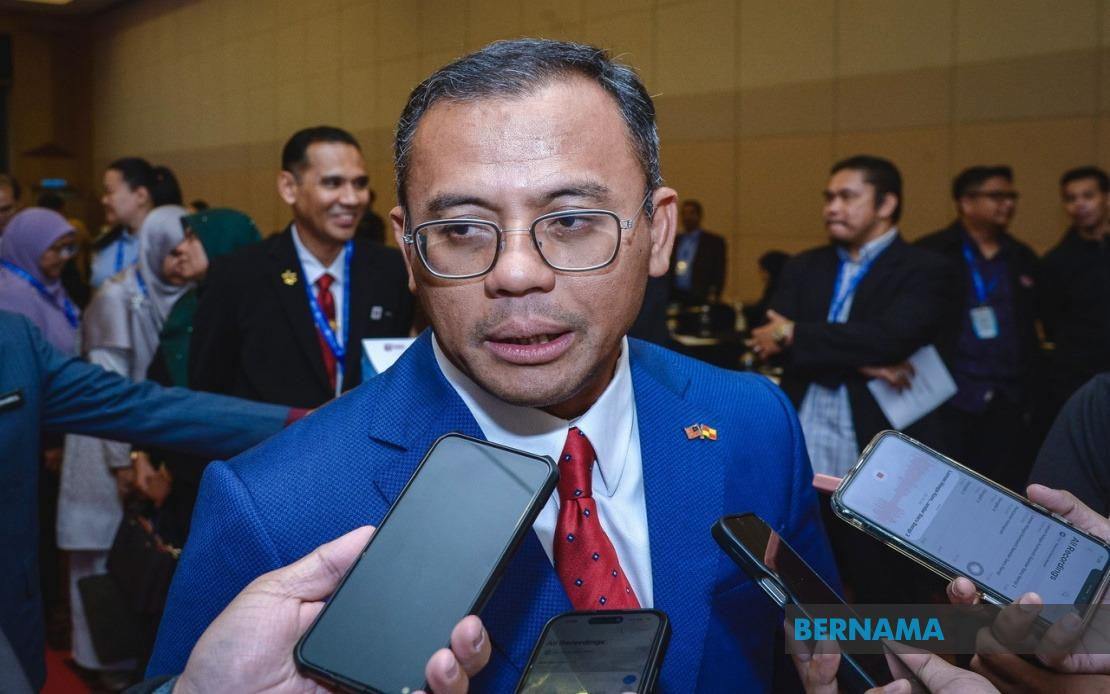
Selangor Menteri Besar Datuk Seri Amirudin Shari has pressed for a fundamental shift in how governments approach policymaking, arguing that fragmented interventions fail to address the complex realities confronting ordinary citizens. Speaking at the Human Ecology International Conference II 2026 in Bangi, Amirudin outlined his vision for a more cohesive policy architecture that acknowledges how various aspects of life intersect and compound challenges faced by individuals, families and communities. This call represents a departure from the traditional sectoral approach where healthcare, education, transport and social welfare are designed as separate domains, often without consideration for their cumulative impact on those they serve.
Amirudin emphasised that the disconnect between policy silos and lived experience constitutes a critical governance challenge. He observed that families do not compartmentalise their struggles into healthcare issues on one day and childcare concerns on another. Rather, these challenges operate simultaneously and reinforce each other, creating cascading pressures that existing policy frameworks often fail to capture. When a parent struggles with inadequate public transport, expensive childcare and inflexible work arrangements, the policy response cannot simply address transport in isolation. The Menteri Besar's intervention suggests that Malaysian policymakers increasingly recognise this fundamental mismatch between how government is organised and how people actually experience the world.
The structural pressures bearing down on contemporary families have become more complex in recent years, Amirudin noted. Rising living costs, lengthy commutes that consume working hours and family time alike, the burden of elder care and child supervision, evolving employment patterns including gig work, limited housing options relative to incomes, and accelerating technological disruption all converge to create what might be termed an environment of systemic stress. For middle and lower-income families in Malaysia and across Southeast Asia, these pressures often force difficult trade-offs: working longer hours to afford housing means less time with children, while affordable housing located far from employment centres consumes hours in daily commuting. The current policy framework, organised around discrete functional domains, provides no mechanism for recognising these interconnections or designing interventions that address them holistically.
Amirudin reframed the fundamental question that should guide government action, shifting focus from whether families are merely surviving to whether the broader environment supports their flourishing. This distinction carries profound implications for policy design. A government might declare success if poverty rates decline marginally or employment figures improve, yet miss whether those employed persons can actually afford to live near their workplaces, access quality childcare, or maintain family cohesion under time pressure. The Menteri Besar's formulation suggests that Malaysian governance should adopt wellbeing metrics that capture environmental enablement rather than outcome statistics alone. This approach aligns with international shifts toward measuring quality of life and human flourishing rather than GDP growth as the primary policy objective.
The integration of academic institutions into the policymaking process emerged as another critical element of Amirudin's vision. He advocated for universities to function as genuine partners throughout the policy cycle, from problem definition and intervention design through to evaluation of actual effectiveness. Malaysian universities, particularly those with human ecology and development studies programmes, possess research capacity and community connections that remain underutilised in government policy formulation. By engaging academics from the outset, policymakers can ground interventions in empirical evidence rather than assumption, and capture the feedback necessary to refine approaches based on real-world results. This represents a more sophisticated model of evidence-based policymaking than simply commissioning post-hoc evaluations.
The broader conference context provided institutional momentum for this vision. The Human Ecology International Conference II 2026, convened in Bangi, attracted academics, researchers, practitioners, policymakers and community representatives from Malaysia, Indonesia, the Philippines and beyond, united around the theme of sustaining human well-being. The gathering itself embodied the interconnected approach Amirudin advocated, bringing together disparate stakeholder groups to examine contemporary challenges from multiple angles. This cross-disciplinary, multi-stakeholder model offers a template for how governance could operate: not as discrete government departments making siloed decisions, but as collaborative networks integrating expertise, lived experience and implementation capacity.
A significant institutional development emerged during the conference through the establishment of the ASEAN Human Ecology Consortium, launched with a Memorandum of Understanding between Universiti Putra Malaysia and the University of the Philippines Los Baños. This regional platform will facilitate joint research, enable student and faculty mobility across Southeast Asian institutions, coordinate publications and policy dialogue, and foster community engagement around human ecology issues. For Malaysia, participation in such a consortium extends the opportunity to learn from neighbouring countries facing similar pressures, to share evidence about what policy approaches yield genuine improvements in wellbeing, and to develop regional standards for measuring and monitoring human flourishing. The consortium effectively operationalises the vision Amirudin articulated by creating institutional structures for sustained collaboration around integrated policymaking.
The regional dimension assumes particular significance given Southeast Asia's rapid urbanisation, industrialisation and social transformation. Countries across the region grapple with similar challenges: rural-to-urban migration straining housing and infrastructure, employment transitions as manufacturing shifts and service sectors expand, changing family structures and caregiving arrangements, and pressure on both traditional and emerging social institutions. By establishing a platform for coordinated research and policy dialogue, the ASEAN Human Ecology Consortium positions the region to develop policy innovations collectively, to benchmark results against common metrics, and to avoid the duplication and inefficiency that comes when each country tackles challenges in isolation. For Malaysian policymakers, this creates both accountability and opportunity: accountability to demonstrate that integrated approaches yield measurable improvements, and opportunity to lead regional discussion on what effective human-centred policymaking looks like.
Amirudin's message carries implicit criticism of current policy practice without explicitly denouncing existing approaches. The call to move beyond isolated interventions suggests that Malaysia's current policy architecture, organised around functional ministries and separate programmes, produces suboptimal outcomes despite often well-intentioned design. A family receiving subsidised childcare but unable to afford housing near their workplace, or accessing excellent healthcare but holding precarious employment that leaves them financially vulnerable, has benefited from targeted interventions without gaining the integrated support required for genuine wellbeing. This analysis extends to the broader Southeast Asian context, where governments have invested substantially in specific programmes—poverty reduction initiatives, healthcare expansion, education provision—yet often fail to achieve expected improvements in human wellbeing metrics.
Implementing such an integrated approach requires substantial institutional and cultural change within government. Ministries accustomed to independent budgeting, policy development and implementation would need to collaborate, coordinate and sometimes subordinate sectoral objectives to overarching wellbeing goals. Civil servants trained in functional specialisation would require different skill sets emphasising systems thinking, collaboration and receptiveness to evidence. Government budgeting processes would need modification to enable cross-ministry funding of integrated interventions. These obstacles help explain why fragmented policymaking persists despite its acknowledged limitations: it is administratively simpler and protects bureaucratic turf. Yet Amirudin's advocacy suggests growing recognition, at least among progressive state leaders, that Malaysia's governance institutions must evolve to address twenty-first century social complexity.
The challenge for policymakers lies in translating the vision Amirudin articulated into concrete institutional reform and budget allocation. Establishing interdepartmental task forces, requiring integrated impact assessments, and creating performance metrics that capture environmental enablement represent potential mechanisms for implementation. The academic-policy partnership he championed could establish research centres focused on integrated policy questions rather than functional silos. At the state level, Selangor's position as Malaysia's most developed state outside the federal territories provides a potential testbed for such innovations. If Selangor demonstrates that integrated policymaking produces measurable improvements in family wellbeing, employment security and quality of life, other states and the federal government would face pressure to adopt similar approaches. Conversely, if integration proves administratively cumbersome without proportionate benefits, the model's limitations would become apparent.
The long-term significance of Amirudin's intervention extends beyond immediate policy questions to how Malaysia positions itself for the decade ahead. Southeast Asia faces profound demographic, economic and environmental transitions that existing policy frameworks may be ill-equipped to navigate. Ageing populations will require integrated approaches to healthcare, employment, housing and social connection that current structures cannot provide. Climate change and resource pressures will create interconnected challenges demanding holistic response. Technological disruption will continue reshaping work and social organisation in ways requiring adaptive, evidence-informed policymaking rather than rigid sectoral approaches. By advocating now for integrated frameworks and establishing institutional mechanisms like the ASEAN Human Ecology Consortium, Malaysian leaders position the country to respond more effectively to these emerging challenges. The alternative—continuing fragmented policymaking while complexity escalates—risks widening the gap between what government does and what citizens need.

