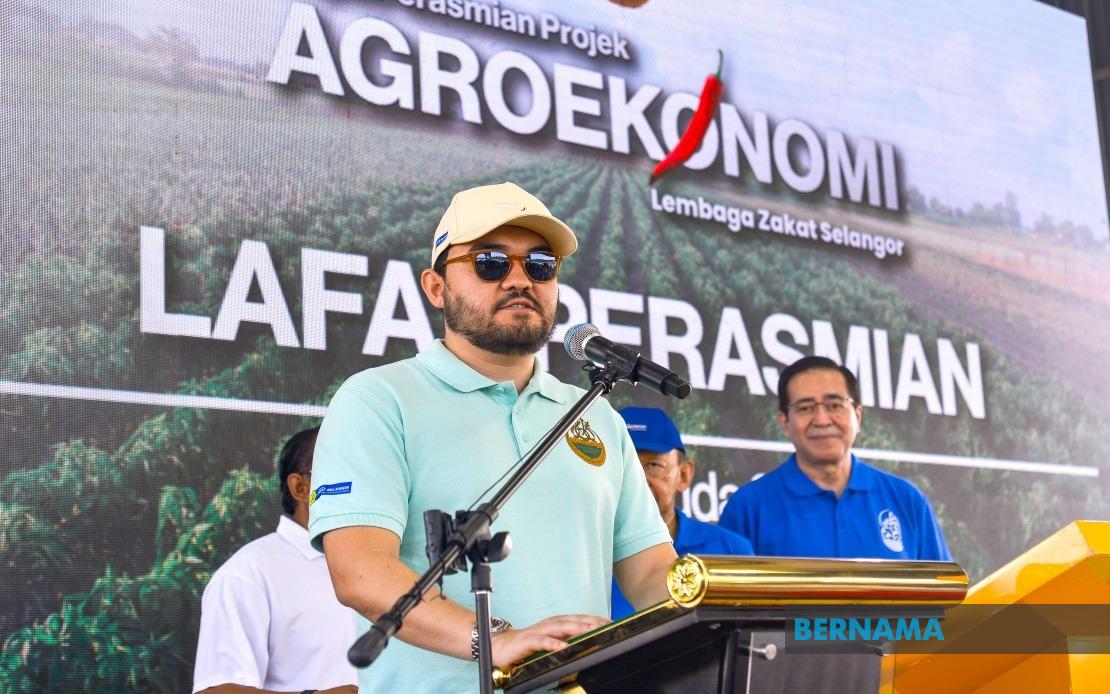
The Selangor Zakat Board has moved beyond conventional cash assistance by launching an ambitious agricultural development initiative aimed at transforming the economic prospects of asnaf recipients. The Agro-Economic Project, inaugurated by the Raja Muda of Selangor, Tengku Amir Shah Sultan Sharafuddin Idris Shah, on July 1, represents a paradigm shift toward creating permanent income streams rather than relying on temporary relief measures. With a substantial investment of RM26 million, the initiative operates across 110 acres at Laman Agro Ehsan in Bukit Beruntung, positioning itself as one of Selangor's most comprehensive efforts to address poverty through economic empowerment.
The project's structure demonstrates careful planning and strategic resource allocation. Of the total landholding, 76 acres have been designated for active agro-development work, with a particular emphasis on fertigation chilli cultivation—a high-value crop chosen for its market demand and profitability potential. This specialization allows participants to develop expertise in a specific agricultural sector rather than spreading efforts across multiple crops, thereby maximizing efficiency and knowledge transfer. The concentration on chilli farming also reflects market analysis, suggesting strong demand and pricing stability in the regional agricultural market.
Fortynine carefully selected asnaf participants form the inaugural cohort of this three-year developmental programme. The selection process itself involved collaboration with the Kuala Langat Area Farmers' Organisation, ensuring that candidates possessed not only economic need but also baseline capability and motivation for agricultural work. This vetting mechanism distinguishes the initiative from broad-based subsidy programmes, instead targeting individuals genuinely equipped to succeed in farming operations. Each participant receives a standardized 0.5-acre cultivation plot containing 2,000 chilli plant bags, creating a uniform framework that facilitates monitoring, technical support, and comparative analysis across the programme.
The income projections associated with the initiative prove particularly significant for Malaysian readers assessing the programme's real-world impact. Once participants achieve stable crop management and establish consistent production cycles, monthly earnings could reach up to RM4,000 per participant—a figure substantially above Malaysia's statutory minimum wage and sufficient to support modest family needs. Across a full cycle, the 48 participants collectively cultivate 96,000 planting bags of chilli, a scale that positions the project as commercially meaningful while remaining manageable for individual oversight.
Beyond agricultural training and land access, the programme incorporates comprehensive support mechanisms that address systemic barriers to rural economic participation. All 48 participants receive accommodation at the Prima Beruntung housing area throughout the programme duration, with zakat resources covering all rental expenses. This provision eliminates a significant variable cost that often burdens rural development participants and demonstrates institutional recognition that economic uplift requires addressing multiple dimensions of participant welfare simultaneously. The integrated approach—combining productive assets, housing security, and income generation—reflects sophisticated understanding of rural poverty dynamics.
The technical curriculum undergoes considerable emphasis throughout the initiative's structure. Participants engage in hands-on training covering crop management protocols, fertigation systems operation, pest and disease identification, harvesting techniques, and post-harvest handling. This knowledge transfer occurs continuously rather than through isolated training sessions, with experienced supervisors providing ongoing guidance as participants navigate actual production cycles. Such embedded learning proves significantly more effective than classroom instruction disconnected from practical application, particularly for populations with limited formal agricultural education.
Financial structuring reveals how the Selangor Zakat Board has leveraged partnerships to extend its resource base. Strategic partners contributed RM2.07 million through wakalah arrangements—a Shariah-compliant mechanism for institutional collaboration. The Pilgrims Fund Board, RHB Islamic Bank Berhad, and Cagamas Berhad collectively supported the initiative, demonstrating how Islamic financial institutions can channel resources toward community development objectives aligned with religious principles. This collaborative funding approach addresses a persistent challenge in development programming: resource constraints that otherwise limit initiative scope and participant numbers.
Participant testimonials offer compelling evidence regarding the programme's perceived value among beneficiaries. Norfhadilah Mohd Shafiin, a 45-year-old mother of five who commenced the programme in 2025, articulates how participation extends beyond income generation to encompassing personal empowerment and confidence-building. Her emphasis on acquiring knowledge and experience reflects recognition that sustainable economic advancement requires capability development alongside financial resources. Similarly, Raimi Rusydi Rodi, a father of two, highlights the social dimension of collective learning, noting the value gained through peer collaboration and knowledge exchange within the participant cohort.
The initiative carries particular relevance for Southeast Asian nations grappling with rural-urban migration and agricultural sector decline. As younger generations abandon farming for urban employment, programmes that demonstrate viable agricultural livelihoods prove increasingly valuable. Selangor's model potentially offers replicable elements for other Malaysian states and regional neighbours confronting similar demographic challenges. The emphasis on specific high-value crops, structured training protocols, and integrated support systems provides a documented framework that other administrators might adapt to local contexts.
From a policy perspective, the project addresses the evolving role of zakat institutions in contemporary Malaysia. Traditionally focused on direct charitable distribution, this initiative repositions zakat funds as catalysts for structural economic change. By investing in productive capacity rather than consumptive support, Zakat Selangor embraces interpretations of Islamic financial ethics emphasizing human capital development and economic self-reliance. This orientation aligns with broader Islamic economic principles emphasizing dignity, productive participation, and community resilience—themes increasingly prominent in contemporary Islamic development discourse.
The three-year programme timeline reflects realistic expectations regarding agricultural skill acquisition and enterprise establishment. Participants require sufficient duration to internalize technical knowledge, navigate multiple growing cycles, address unexpected challenges, and achieve psychological comfort with agricultural decision-making. The structured exit point also provides natural transition moments for programme evaluation and documentation of outcomes, enabling subsequent refinement of methodologies based on empirical evidence. Policymakers considering similar initiatives will benefit from the detailed tracking data this timeframe should generate.
Successful implementation of this scale of initiative requires sustained institutional commitment, adequate supervision, and responsive problem-solving mechanisms. The presence of Selangor Mufti Datuk Dr Anhar Opir and the Selangor Islamic Religious Department director at the launch ceremony signals bureaucratic alignment and political prioritization necessary for long-term programme viability. Beyond formal inauguration, sustained technical support, market linkage development, and adaptive management will determine whether the initiative achieves its ambitious objectives of transforming asnaf economic circumstances through agricultural productivity.

