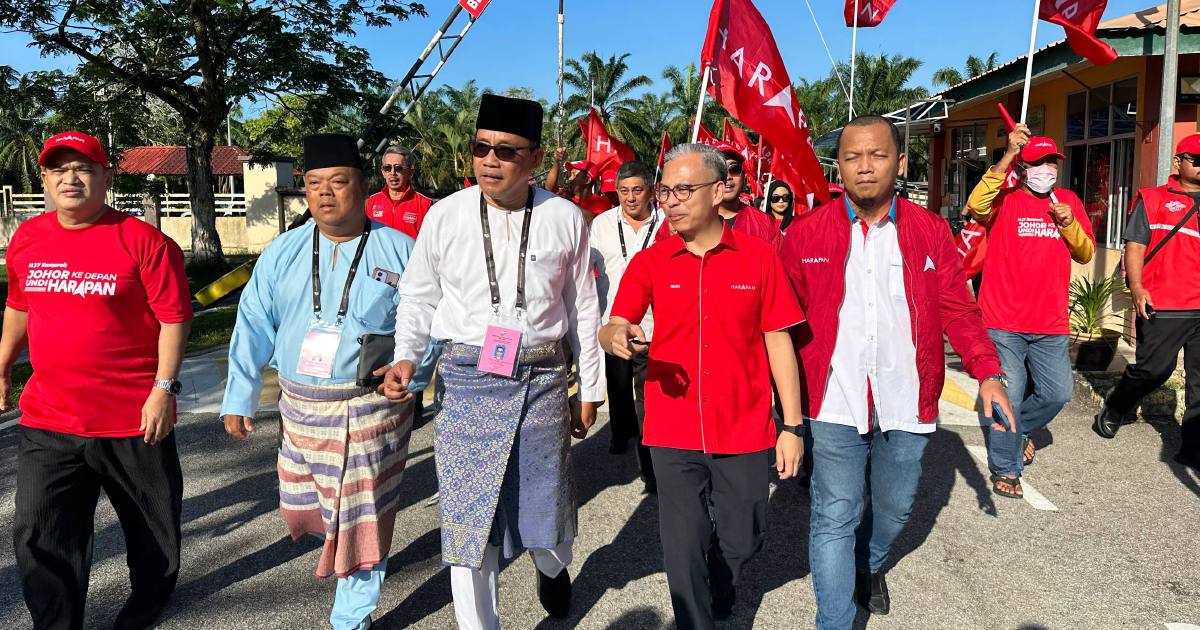
The nomination process for Johor's Semerah state seat unfolded amid energetic scenes at Dewan Mahkota within the Maktab Rendah Sains Mara compound in Batu Pahat this morning, as supporters of rival candidates created an atmosphere charged with political fervour and religious devotion. The convergence of vocal backers chanting "Reformasi" and reciting selawat signalled the depth of engagement surrounding this particular contest, reflecting broader tensions within the state's political landscape as the election cycle intensifies.
Both the Barisan Nasional coalition and Pakatan Harapan have opted to renominate their previous candidates for the seat, setting the stage for a direct rematch that will test voter sentiment in this closely watched constituency. This strategic decision by both alliances suggests confidence in their respective candidates' ground support and a calculated determination to retain or recapture the seat without introducing untested political figures to the electorate.
The choice to field incumbents and established candidates carries significant implications for how the contest will unfold. Rather than pivoting to new personalities or attempting to reshape their electoral appeal, both coalitions appear committed to reinforcing existing voter bases and consolidating support among their traditional constituencies. This approach typically transforms elections into referendums on the candidates themselves and the performance or policies they represent.
For Johor voters in Semerah, this rematch offers continuity and clarity about who will represent their interests should either candidate succeed. Constituents have already formed assessments of the previous candidate's tenure or opposition record, making comparisons and accountability more straightforward than they would be with newly introduced candidates lacking a demonstrated track record in the area.
The religious and reformist sentiment evident during nomination day—manifested through selawat and "Reformasi" chants—suggests that voters in Semerah remain animated by themes of change and spiritual values. These expressions indicate that the election contest extends beyond transactional political calculations into the realm of broader social values and aspirations for institutional renewal. Both coalitions will need to address these deeper voter concerns alongside their conventional campaign messaging.
Semerah's status as a closely watched constituency reflects its broader significance within Johor's political ecosystem. The state remains a critical battleground for federal-level politics, and outcomes in individual seats like Semerah contribute meaningfully to overall state results and coalition fortunes. A decisive victory in the seat could signal momentum for either Barisan Nasional or Pakatan Harapan across the state.
The nomination day proceedings at Batu Pahat demonstrated the logistical and organisational capacity of both political camps to mobilise supporters, organise transportation, and create visible shows of force. This capacity—often underestimated in post-election analysis—frequently correlates with ground-level effectiveness during actual voting and can influence turnout dynamics that ultimately determine electoral outcomes.
For Southeast Asian observers monitoring Malaysian politics, the Semerah contest exemplifies how established coalitions balance innovation with continuity in their electoral strategies. Rather than wholesale restructuring of their approach to Johor voters, Barisan Nasional and Pakatan Harapan have chosen to stake their cases on candidates whom the electorate already knows, a conservative but strategically sound approach in polarised political environments.
The coming weeks will reveal whether the enthusiastic nomination day turnout translates into sustained momentum and voter support during the actual polling period. Campaign effectiveness, candidate visibility, and the resonance of policy platforms will determine whether either coalition can consolidate voter commitment. The Semerah rematch promises to deliver meaningful insights into the direction of Johor politics and the broader trajectory of Malaysian electoral competition as both major coalitions seek to strengthen their positions ahead of potential federal elections.

