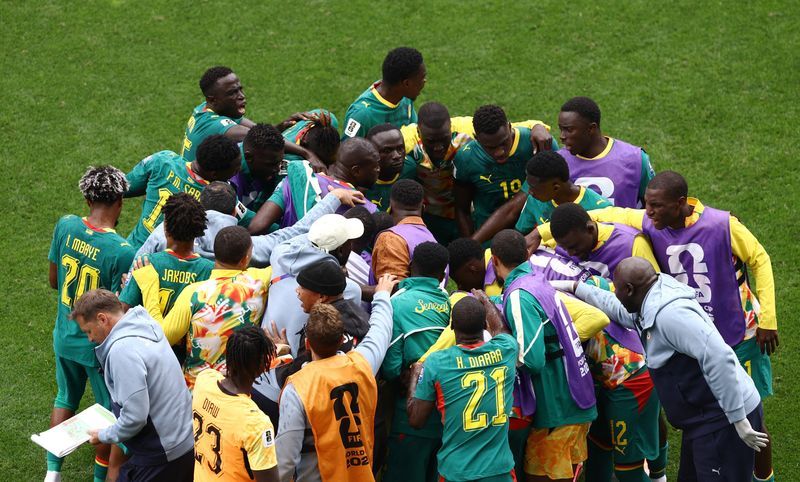
Senegal's football federation has launched into a damaging public dispute over the medical credentials of its World Cup team doctor, with federation president Abdoulaye Fall claiming the physician lacked the specialised training necessary to adequately support the squad during their campaign in North America. The revelation, disclosed at a press conference on Monday, suggests internal tensions festered within the national setup as players grew anxious about the quality of healthcare available during one of international football's most demanding tournaments.
Fall stated that the team doctor, whose primary training was in gynaecology rather than sports medicine, had become a source of concern among players who questioned whether they were receiving proper medical attention. The federation's leadership acknowledged discovering the qualification gap too late in the preparation phase to rectify matters through standard channels, prompting them to seek additional medical expertise from outside sources to restore player confidence. The president emphasised that securing convincing medical personnel was essential, framing the issue as a matter of player welfare that transcended competitive considerations.
However, this criticism has been immediately contested by the Senegalese Association of Sports Medicine, which issued a forceful rebuttal describing the allegations as both "unfounded and defamatory." The association defended the professional standing of Abderahmane Fediore, the team doctor in question, by highlighting his credentials as a holder of a specialist diploma in sports medicine and sports biology from the faculty of medicine at Cheikh Anta Diop University. This academic qualification directly contradicts the federation's characterisation, suggesting a fundamental breakdown in communication or transparency regarding the doctor's background.
Fediore's résumé demonstrates substantial experience in elite sports medicine contexts. He previously oversaw the physiotherapy department at Fann Hospital, one of Senegal's major medical institutions, and had served as the national team doctor since 2017—a tenure spanning three World Cup tournaments and five Africa Cup of Nations competitions. The breadth of his appointment history raises questions about when and why the federation suddenly questioned credentials it had apparently accepted for years, and whether this represents a genuine concern or convenient scapegoating for poor performance.
The medical staff controversy erupts amid broader recriminations following Senegal's disappointing World Cup exit. The federation had entered the tournament with genuine title aspirations after clinching the Africa Cup of Nations in January by defeating Morocco in the final, expectations that appeared justified for a squad with proven winning pedigree. Yet their North American campaign proved profoundly underwhelming, beginning with consecutive group-stage defeats to France and Norway that left them struggling from the tournament's opening days.
The most painful moment came during their round-of-32 encounter against Belgium, where Senegal surrendered a commanding two-goal advantage with just five minutes remaining on the clock. The collapse proved decisive as Belgium scored three times in extra time, securing a 3-2 victory that eliminated the African representatives and crystallised the sense that something had fundamentally malfunctioned within the squad's preparation and execution. This dramatic turnaround suggested psychological fragility or tactical miscalculation at critical moments—factors potentially more consequential than medical support, though not mutually exclusive.
Recognising the gravity of the underperformance, the federation moved swiftly to assign responsibility by dismissing head coach Pape Bouna Thiaw on Saturday, declaring that the team's tournament results necessitated immediate managerial change. Yet the timing and nature of the medical staff accusations suggest the federation may be attempting to distribute blame across multiple institutional levels rather than conducting a thorough and impartial postmortem. By questioning the team doctor's qualifications after years of apparent acceptance, the federation risks appearing to manufacture convenient explanations rather than addressing systemic weaknesses.
For Malaysian and Southeast Asian observers, the Senegal case illustrates broader governance challenges within African football bodies, where institutional transparency and accountability mechanisms often remain underdeveloped. The public nature of these disputes—federation officials making damaging claims against medical staff through press conferences—reveals a lack of internal dispute resolution mechanisms and professional standards that would be expected in more mature sporting administrations. Such public feuding undermines institutional credibility and player confidence simultaneously.
The controversy also raises practical questions about recruitment, vetting, and institutional knowledge management within national football federations. If Fediore's qualifications were genuinely inadequate, the federation should have identified and addressed this through proper channels long before a World Cup tournament. Conversely, if his credentials were satisfactory, the timing of this public challenge suggests retaliatory motives that damage multiple professionals' reputations and distract from constructive analysis of actual performance deficiencies.
Senegal's path forward requires resolving whether this dispute represents genuine concern about player welfare or deflection from more fundamental coaching and tactical failures. The federation would benefit from commissioning an independent review of the entire World Cup campaign, including medical support structures, rather than allowing public accusations and counter-accusations to define the narrative. Malaysian readers familiar with regional sports governance might recognise similar patterns of institutional dysfunction and the corresponding damage inflicted on national sporting efforts when leadership prioritises blame-shifting over systematic improvement and transparency.

