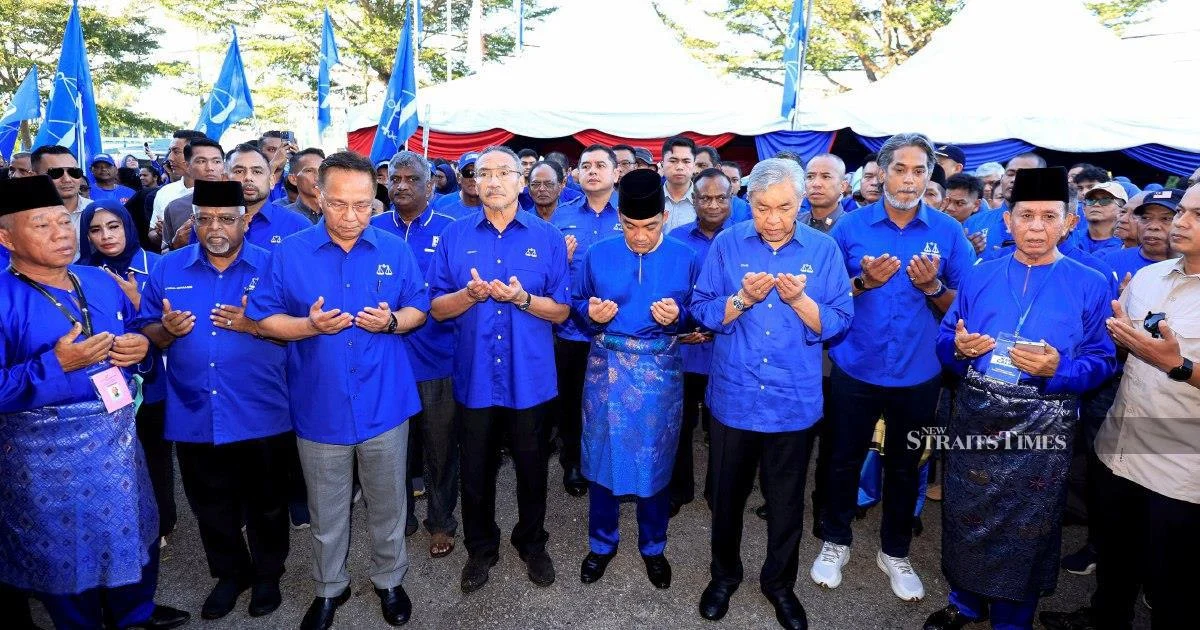
A succession of senior Barisan Nasional (BN) figures descended on Simpang Renggam District Council in what observers read as a carefully orchestrated display of party cohesion around Datuk Onn Hafiz Ghazi, the Johor Chief Minister. The convergence of multiple coalition heavyweights at a single location sent a clear message about the strength of backing he commands within the BN machinery at federal and state levels.
The gathering underscores the strategic importance BN attributes to Johor, Malaysia's southern industrial and commercial powerhouse. For a ruling coalition that has faced mounting pressure across multiple fronts over recent years, demonstrating visible unity in one of its traditional strongholds carries symbolic weight. It signals to party members, rival coalitions, and voters that the BN organization remains disciplined and capable of rallying resources behind its chosen leadership.
Datuk Onn Hafiz has steered Johor since 2022, taking the helm as Chief Minister following the prior administration. His tenure has been marked by efforts to consolidate BN control in the state while navigating the complex dynamics of peninsular Malaysian politics. The appearance of top-ranking BN allies at Simpang Renggam suggests party strategists believe reinforcing his position is essential to maintaining coalition dominance in the state.
Simplang Renggam, situated within Kluang District in the northern part of Johor state, carries electoral significance within the broader Johor political ecosystem. The choice of venue was unlikely to be arbitrary; district council platforms often serve as launching points for broader political messaging campaigns. By assembling leadership at this location, BN was effectively signalling that support for Onn Hafiz extends deeply into the state's administrative structure and grassroots organization.
The show of solidarity reflects internal BN calculations about managing potential electoral challenges ahead. While Malaysian state elections do not follow a fixed schedule, maintaining visible party unity remains a perpetual political necessity. Coalition members understand that public fractures invite opposition challenges and demoralize ground-level activists responsible for delivering votes during actual polling periods.
Within the Malaysian political context, these solidarity rallies serve multiple tactical purposes. They reinforce the hierarchy within BN by demonstrating how senior federal figures can mobilize to support state-level leaders. They also provide media opportunities to frame the coalition narrative favorably, emphasizing themes of stability, coordination, and widespread endorsement for particular leaders. For Onn Hafiz specifically, the high-profile backing burnishes his credentials as a figure capable of commanding both respect and resources within the broader national coalition.
Johor's political landscape has become increasingly complex in recent years. The state, home to nearly two million people and spanning significant industrial, agricultural, and coastal regions, represents one of Malaysia's most economically consequential territories. Whoever controls the state government wields influence over major development decisions, commercial contracts, and resource allocation that ripple across Southeast Asia's supply chains and business networks.
The BN-led administration in Johor faces the perpetual challenge of competing against opposition coalitions that have demonstrated growing organizational capacity. By assembling senior party figures in visual displays of support, BN attempts to project an image of an organization confident in its direction and assured of its electoral prospects. These events also serve to energize party machinery at all levels, from federal coordinators down to village-level activists.
For political observers tracking Malaysian governance, such gatherings provide windows into how coalitions manage internal relationships and project power. The appearance of multiple heavyweights alongside a single state leader can be read as confirmation that party power-brokers have aligned behind that individual, at least for the foreseeable political cycle. It reduces uncertainty among party members about internal contests and signals where the coalition's institutional backing is concentrated.
The broader significance extends to understanding how BN, which governed Malaysia continuously from independence until 2018, continues to adapt its organizational methods in an era of more fluid politics. Rather than relying solely on bureaucratic machinery or informal patronage networks, modern BN increasingly stages high-visibility events designed to generate media coverage and reinforce narratives of institutional strength and political certainty.
Johor's strategic importance in Malaysian politics cannot be overstated. The state generates substantial tax revenue, hosts major petrochemical industries, and controls critical transport corridors connecting the peninsula to Singapore. Whoever governs Johor shapes policies affecting everything from port operations to manufacturing incentives, making it a prize any major political actor seeks to control and a platform from which leaders can project national political ambitions.

