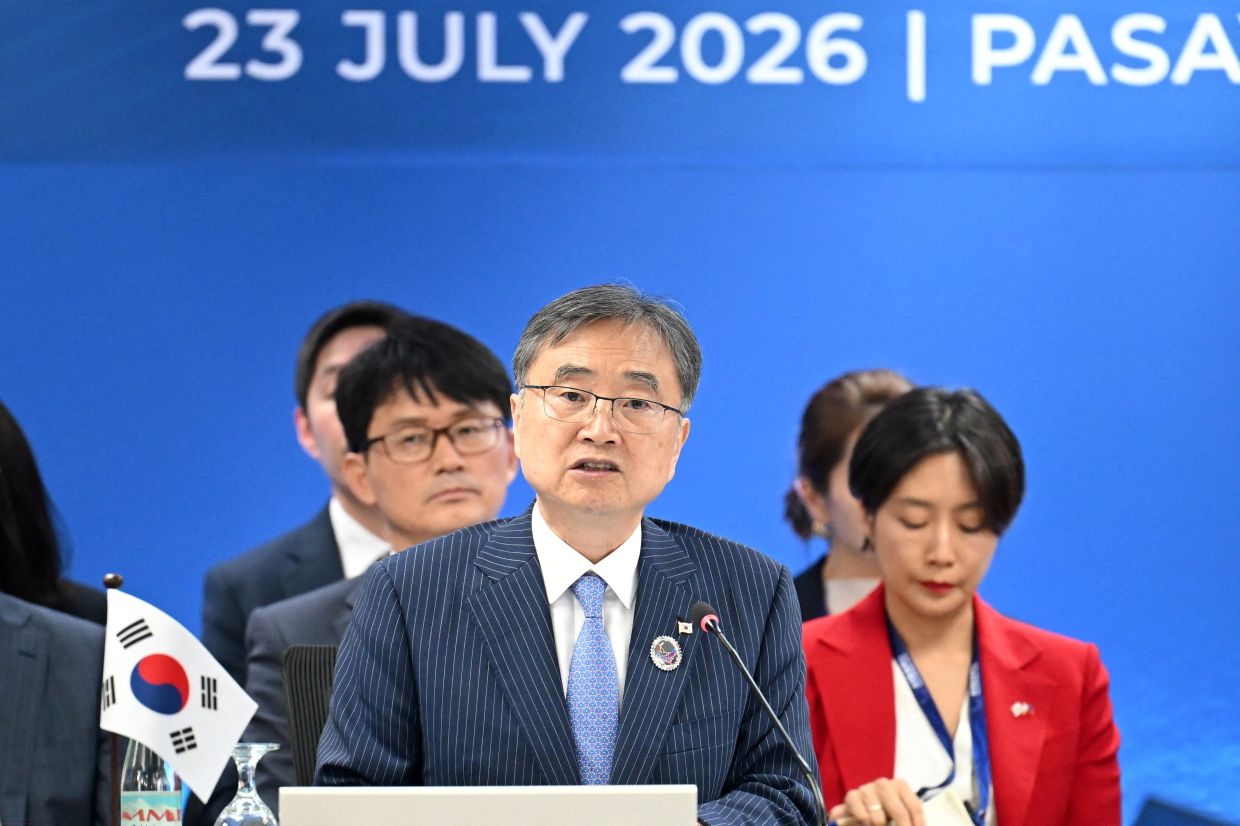
A rare public disagreement between South Korea's Foreign and Unification ministers this week has laid bare the internal tensions surrounding President Lee Jae Myung's ambitious bid to reengage with North Korea, potentially undermining Seoul's already fragile negotiating position with Pyongyang. The clash came after Unification Minister Chung Dong-young presented engagement proposals to President Lee on Wednesday, only to have Foreign Minister Cho Hyun immediately dismiss them as unrealistic and lacking inter-agency consensus.
The substantive point of contention centres on Chung's proposal to launch four-party talks involving South Korea, North Korea, the United States, and China—a mechanism the Unification Ministry sees as essential for breaking the current diplomatic deadlock. However, Cho's pointed characterisation of these ideas as "idealistic" and his assertion that they had not been discussed across government departments suggested a more cautious diplomatic posture from the Foreign Ministry. The public nature of this disagreement, with each minister clarifying their position to reporters within 24 hours, signals that the administration's North Korea policy lacks the unified direction necessary for successful diplomatic engagement.
The broader context illuminates why Seoul's approach has shifted markedly under Lee's presidency. Upon taking office, the administration abandoned its predecessor's "denuclearisation-first" framework in favour of a "peace-first" strategy, reflecting a pragmatic judgment that immediate demands for nuclear weapons abandonment have historically proved counterproductive. This recalibration extended to encouraging US President Donald Trump to initiate direct dialogue with North Korean leader Kim Jong Un, representing a significant departure from previous South Korean administrations' preference for maintaining tight alignment with Washington's negotiating stance. The philosophical underpinning is that confidence-building measures and sustained engagement might eventually create conditions more conducive to addressing denuclearisation concerns.
Yet the ministerial discord suggests this strategic reorientation remains contested within Seoul's bureaucratic apparatus. While Chung's ministry appears committed to an expansive engagement agenda, Cho's Foreign Ministry seems to harbour reservations about moving too rapidly or offering concessions without concrete reciprocation from Pyongyang. This internal division reflects genuine policy uncertainty rather than mere procedural disagreement—it touches on fundamental questions about whether engagement or pressure better serves South Korean interests. The fact that both ministries declined further comment following their Friday coordination meeting suggests presidential intervention was necessary to prevent further public airing of disputes.
Analysts have warned that such visible internal disagreement carries significant strategic costs in dealings with North Korea. Lim Eul-chul, a Korea specialist at Kyungnam University, observed that Pyongyang will inevitably interpret ministerial friction as evidence that Seoul lacks unified resolve and that any agreements reached could be reversed through shifts in factional influence or electoral outcomes. This perception undermines Seoul's credibility and gives North Korean negotiators reason to withhold commitments, reasoning that today's conciliatory stance might be tomorrow's policy reversal. The problem is particularly acute given North Korea's historical experience with rapidly shifting South Korean administrations and their oscillating approaches to engagement and confrontation.
The deteriorating state of inter-Korean relations over recent years provides sobering context for Seoul's diplomatic overtures. Since the Covid-19 pandemic severely restricted movement and communication across the border, North Korea has hardened its position fundamentally—Kim Jong Un announced in 2024 that Pyongyang would abandon reunification aspirations entirely and proceeded to demolish symbolic joint projects constructed during earlier periods of cooperation. Defections across the demarcation line have plummeted dramatically, with only 63 North Koreans reaching the South in the first half of 2026 compared to 1,047 in 2019, reflecting both increased border security and diminished willingness among North Koreans to attempt escape. These developments suggest that North Korea has consciously sealed itself off from engagement initiatives and may be unmoved by Seoul's unilateral diplomatic gestures.
Seoul has nonetheless implemented numerous confidence-building steps intended to signal peaceful intent. The government suspended anti-North loudspeaker broadcasts along the border and curtailed other measures it characterised as provocative, effectively removing tools that could be portrayed as hostile by Pyongyang's propaganda apparatus. However, these overtures have generated minimal reciprocal response from the North, which continues its stringent border surveillance and maintains its hostile rhetoric toward Seoul. This asymmetry raises questions about whether engagement without conditionality simply allows North Korea to pocket concessions while withholding the political reopening Seoul seeks.
The policy reorientation has prompted criticism from human rights advocates who contend that Seoul has deprioritised concerns about North Korean citizens' welfare in pursuit of diplomatic advancement. While South Korea technically co-sponsored a United Nations resolution on North Korean human rights last year, observers note that the Lee administration has substantially downgraded such advocacy, suspending certain human rights reports and broadcasts previously issued by governmental agencies. Kim Tae-Hoon, the former president of PSCORE, an organisation dedicated to documenting North Korean human rights violations, reported that the shift has had cascading effects on civil society, with charitable donations drying up as international attention and moral urgency appear to have diminished. This retrenchment reflects an implicit calculation that human rights advocacy antagonises North Korea and thereby impedes the diplomatic engagement Seoul now prioritises.
For regional observers, including Malaysia and other Southeast Asian nations, the ministerial tensions underscore the volatility inherent in Korean peninsula politics and the difficulty of maintaining consistent external relations when fundamental strategic questions remain unresolved internally. Malaysia has historically maintained balanced relationships with both South Korea and, more circumspectly, with North Korea, but shifts in Seoul's diplomatic orientation inevitably create ripple effects throughout the region. An unstable Korean peninsula continues to represent a potential flashpoint with consequences extending well beyond Northeast Asia, particularly given the involvement of major powers including the United States and China.
The coming months will be revealing. Whether President Lee can consolidate his cabinet around a unified North Korea strategy, and whether that strategy ultimately proves effective in generating genuine reciprocation from Pyongyang, remains uncertain. The public airing of ministerial disagreement has already signalled vulnerability in Seoul's negotiating position, potentially emboldening North Korea to adopt a more unyielding posture. Ultimately, the success of Lee's engagement initiative depends not merely on internal South Korean consensus—crucial though that is—but on North Korea's willingness to treat diplomatic overtures as opportunities rather than weaknesses to be exploited.

