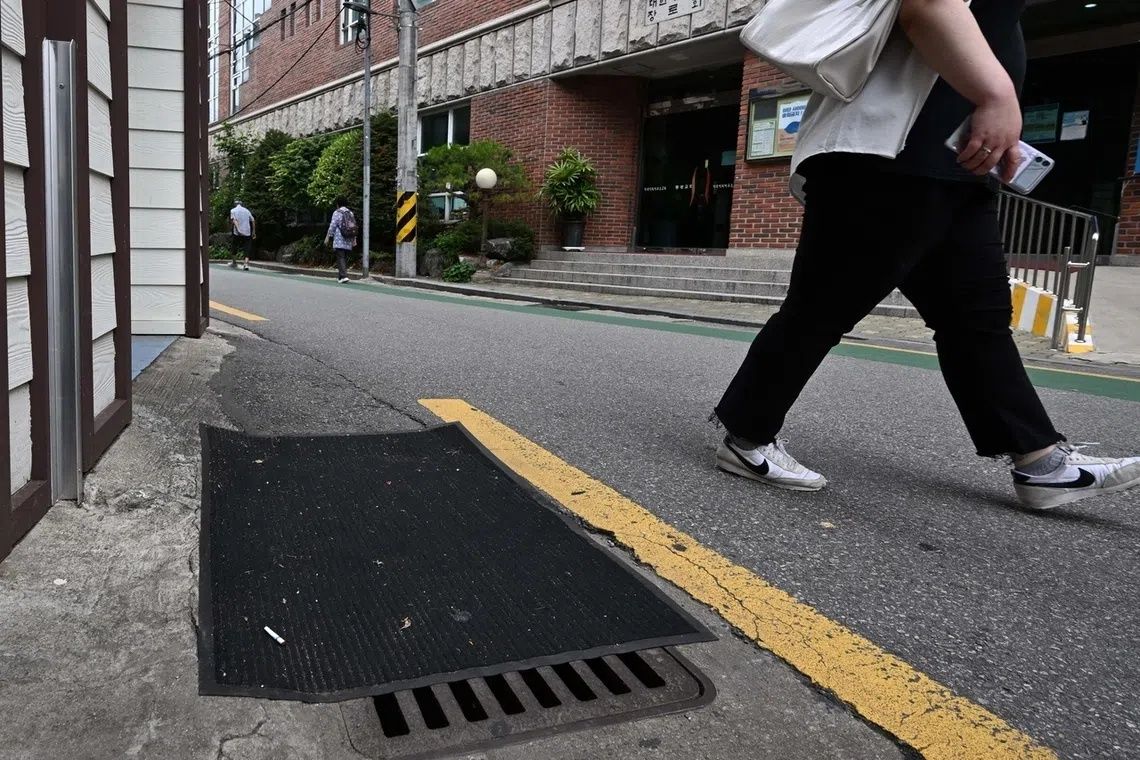
Residents and visitors to South Korea's capital frequently encounter an unmistakable stench while navigating Seoul's streets and bus stops—a sharp, transient smell that vanishes within seconds but lingers in memory and complaint registers. The phenomenon, which crops up consistently in both Korean and international online forums, reflects a deepening frustration with urban infrastructure that fails to mask its biological processes. Although Seoul launched systematic odour reduction initiatives over a decade ago, the problem has not only persisted but actually worsened in recent years, suggesting that conventional remedial approaches may be fundamentally insufficient for addressing the city's sewer management crisis.
According to the 2025 Seoul Institute report, sewer-related odours account for approximately half of all municipal complaints regarding atmospheric pollution in the city. Initial progress appeared promising: sewer odour grievances dropped sharply from 3,095 in 2015 to 1,660 in 2020, validating the city's investment in odour reduction devices and infrastructure upgrades. Yet this temporary success proved illusory. By 2024, complaints had climbed back to 2,302, indicating that the underlying problem remains unresolved and that temporary measures offer only incomplete relief rather than lasting fixes.
The primary culprit is hydrogen sulfide, a toxic gas renowned for its pungent rotten-egg odour. This substance emerges when organic matter in sewage undergoes decomposition within anaerobic environments—situations where oxygen becomes depleted and bacterial processes turn wastewater into a source of noxious emissions. Seoul's sewer infrastructure developed in a manner poorly suited to managing this chemical process. Rapid urbanisation outpaced the city's ability to integrate new buildings into comprehensive sewerage networks, prompting property owners and developers to install septic tanks as temporary holding facilities before discharging wastewater into underground pipes. Whilst these tanks successfully trap solid waste, they cannot remove dissolved organic compounds, which remain suspended in the water flowing into the municipal sewer system where decomposition subsequently occurs.
Weather patterns substantially influence odour intensity in Seoul's streets. Heavy rainfall increases water velocity through sewers, flushing away accumulated hydrogen sulfide before it can accumulate dangerously or escape through maintenance openings and storm drains. Conversely, during hot, dry periods characterised by minimal precipitation, hydrogen sulfide builds up within the system with nowhere to disperse. This seasonal variation explains why odour complaints spike during particular months and disappear during others—a cyclical pattern suggesting that Seoul's infrastructure operates at the threshold of capacity during normal conditions and fails completely under stress.
Seoul officials acknowledge the fundamental problem but disagree on remedies. Low wastewater flow rates through pipes allow sediment to accumulate, creating stagnant zones where hydrogen sulfide production accelerates. Municipal authorities contemplate structural interventions, including complete reconfiguration of sewer architectures and mechanical dredging of accumulated solids. These options carry massive costs and logistical challenges given the density of underground infrastructure in a sprawling metropolitan area.
A more fundamental issue complicates Seoul's response: the city operates a combined sewer system where domestic wastewater and street-level stormwater travel through identical underground pipes. This design, implemented in the early twentieth century before modern environmental science understood its limitations, creates chemical interactions and sediment dynamics that intensify hydrogen sulfide production. Since the 1990s, Seoul has pursued separation of these flows into distinct pipe networks, yet progress remains glacial. As of 2025, only 20.4 percent of the city's sewer infrastructure had undergone conversion to this separation model, meaning most of Seoul remains locked into a fundamentally problematic system that authorities themselves recognise as inadequate.
The legal and regulatory framework governing Seoul's response further constrains potential solutions. Current statutes emphasise management of odours exceeding permissible thresholds rather than mandating proactive prevention strategies. This reactive orientation means the city responds to complaints rather than systematically identifying vulnerable areas and implementing preventive measures. Ki Dong-won, a researcher at the Seoul Institute, identifies a critical gap: South Korea lacks predictive models that forecast how sewer odours disperse above ground or identify diffusion pathways, making it impossible to anticipate problems before residents experience them. Whilst mapping initiatives have commenced, these remain disconnected from performance metrics or evaluation standards that would measure whether investment in reduction facilities actually delivers results.
The complaint-driven regulatory approach has historically paralysed Seoul's capacity to develop comprehensive, long-term strategies. Cities respond to visible pressure from residents rather than implementing systematic infrastructure upgrades that would prevent problems from emerging. This dynamic creates a perverse incentive structure where municipal agencies manage symptoms whilst avoiding costly structural solutions. The persistence of odour complaints despite acknowledged awareness and substantial effort indicates that Seoul has exhausted the returns available from incremental improvements and now faces the prospect of fundamental infrastructure transformation.
International comparisons reveal that solutions exist but demand either capital investment or operational discipline that Seoul has not yet fully mobilised. Park Seok-soon, an environmental engineering professor emeritus at Ewha Womans University, proposes introducing artificial water circulation through sewers using hydrant systems or similar mechanisms to prevent wastewater stagnation and decomposition. This approach recognises that even developed nations including Japan continue operating combined sewer systems successfully, suggesting that the problem becomes not whether combined systems inevitably fail but rather how rigorously cities manage them. Cities prioritising odour control implement continuous circulation and maintenance protocols that Seoul has not institutionalised.
For Southeast Asian observers, Seoul's situation offers cautionary lessons about urbanisation trajectories. Many major cities across Malaysia, Thailand, Indonesia, and the Philippines face comparable infrastructure challenges as rapid growth outpaces investment in fundamental systems. Seoul's experience demonstrates that temporary measures and complaint-responsive policies ultimately fail to resolve endemic sewer-related problems. The capital city's unresolved struggle suggests that comprehensive solutions require either substantial upfront investment in system separation and modernisation, or alternatively, aggressive operational management protocols backed by regulatory frameworks that mandate prevention rather than merely respond to complaints.
The Seoul Institute researcher notes that establishing sewer odour maps, whilst initiated, remain disconnected from operational performance standards that would drive actual improvements. This gap between mapping and action represents a broader challenge facing Seoul and similar cities: generating data without converting that information into systematic improvement processes merely creates documentation of failure rather than addressing root causes. Until Seoul commits to either comprehensive system separation or implements rigorous operational protocols that circulate water continuously through pipes and prevent stagnation, residents should expect the acrid smell to persist as a permanent feature of urban life.

