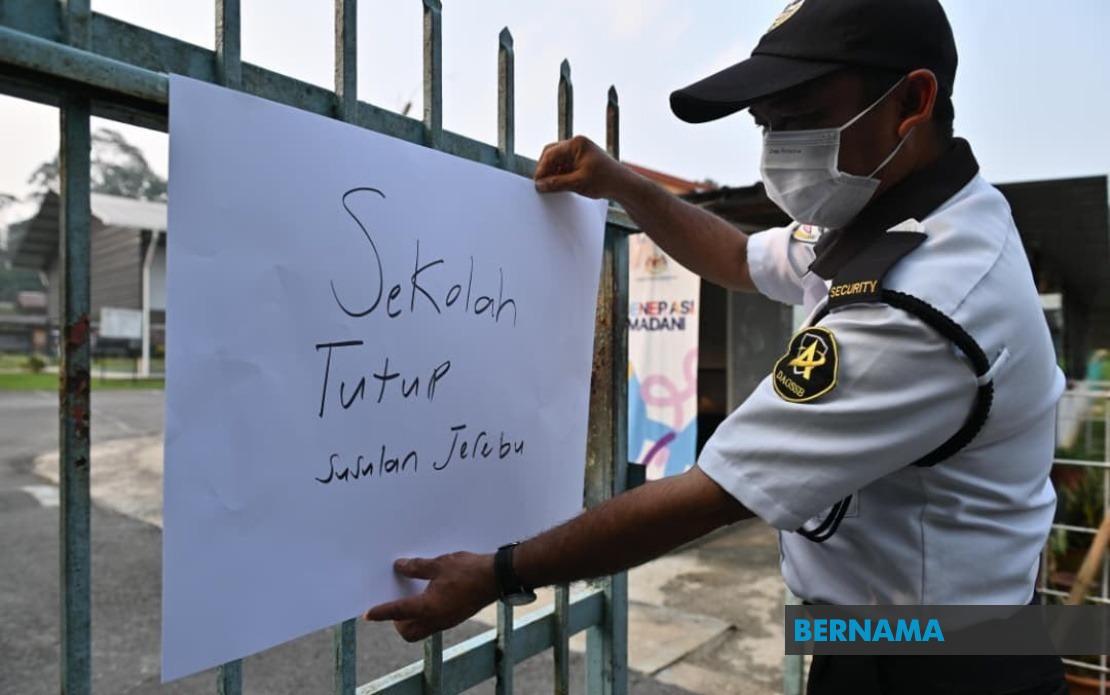
The Sarawak State Education Department has extended the temporary suspension of classes in schools throughout the Serian district through Friday, responding to escalating air quality concerns that have rendered conditions unsafe for students and educators. The decision follows consultations between the department's regional office and leadership from both secondary and primary institutions across the affected locality, representing a coordinated approach to managing the public health crisis created by cross-border atmospheric pollution.
Officials justified the prolonged closure by emphasizing the strain that operational disruptions place on multiple stakeholders within the education ecosystem. School administrators face logistical complications when facilities remain open during hazardous conditions, while teaching staff must navigate classroom management amid environmental hazards. Parents encounter unexpected childcare challenges, yet the department particularly highlighted the vulnerable position of boarding school residents who cannot easily return home when air quality deteriorates. By extending the closure rather than implementing day-to-day uncertainty, the authority aimed to provide clarity for families and institutions attempting to adapt their schedules.
The Air Pollution Index recorded in Serian at 4 pm on the announcement day reached 178, firmly positioning the district within the unhealthy category according to Malaysia's standardized measurement system. This level of pollution represents more than a mere inconvenience—it signals atmospheric conditions that pose genuine respiratory risks for developing children and staff members with underlying health vulnerabilities. Cross-border haze, originating from regional sources rather than localized industrial activity, has become an increasingly familiar phenomenon across Sarawak and neighboring Malaysian territories, yet its impact on education systems remains a significant logistical and public health challenge.
The Sarawak State Education Department directed all educational institutions to maintain active monitoring through the Air Pollution Index Management System, a technological infrastructure that allows schools to track real-time air quality metrics specific to their geographic locations and districts. Rather than relying solely on centralized directives, this approach empowers individual institutions to assess conditions independently and make informed decisions aligned with their particular circumstances. The system's decentralized monitoring capability ensures that schools in different districts experience varying pollution levels and can therefore receive appropriately tailored guidance rather than blanket policies that may be overly restrictive in some areas or insufficiently protective in others.
For Malaysian educators and parents familiar with seasonal haze episodes, the Serian situation exemplifies recurring vulnerabilities within education systems across the broader Southeast Asian region. These periodic disruptions interrupt pedagogical continuity, particularly for examination candidates and students progressing through critical learning phases. The cumulative effect of repeated closures throughout academic years complicates curriculum delivery and assessment timelines, forcing schools to compress content delivery or extend academic calendars into traditionally break periods.
The transnational nature of atmospheric pollution in this region underscores an environmental governance challenge that transcends individual state and national borders. Sarawak's susceptibility to haze originating from distant sources places it in a dependent position regarding environmental management occurring beyond its administrative jurisdiction. This reality constrains the capacity of local authorities to prevent recurring episodes through unilateral action, instead requiring regional coordination and international diplomatic engagement with neighboring territories where the haze originates.
School closure protocols, while protecting student health in the immediate term, generate secondary consequences that educational administrators must weigh carefully. Interruptions to learning schedules particularly disadvantage students from lower-income households who depend on school facilities for meals and structured supervision, a consideration that adds social equity dimensions to what might otherwise appear as a straightforward health decision. The boarding school population specifically faces heightened complications, as returning home during unexpected closures may prove logistically impossible for students whose families reside in distant locations.
The extension of the closure through Friday provides a concrete timeline that allows families to arrange alternative care and activities, avoiding the frustration and confusion that might result from day-by-day announcements. This forward-looking approach demonstrates administrative coordination between the state education department and district-level offices, indicating that the decision emerged from collective judgment rather than reactive crisis management. By communicating updated information through formal channels, authorities attempt to establish trust with parents and educators who must implement these disruptions.
Looking forward, the persistence of haze-related school closures raises questions about whether education systems across Malaysian Borneo should develop more robust contingency frameworks for remote learning and flexible delivery modalities. While infrastructure limitations and digital inequality currently constrain online education viability in some rural districts, progressive planning might gradually expand capacity to maintain pedagogical continuity despite environmental disruptions. Simultaneously, regional environmental initiatives and bilateral agreements addressing the root causes of transnational haze require strengthened political commitment to prevent such disruptions from becoming routine features of the academic calendar.

