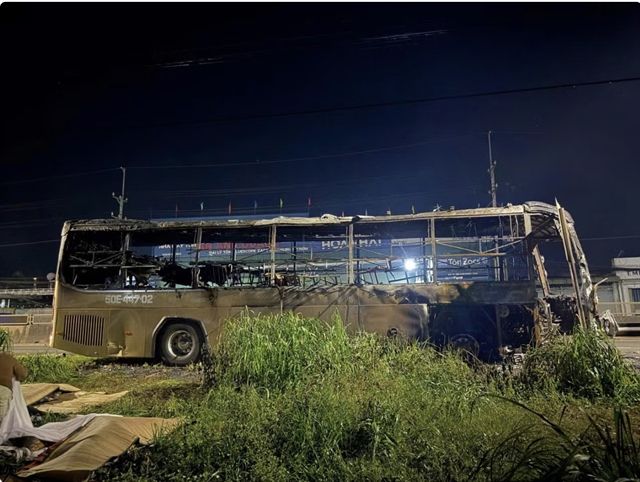
A sleeper bus burst into flames after colliding with a roadside embankment on National Highway 1 in southern Vietnam's Hung Thinh Commune in the early hours of Tuesday, leaving seven people dead and sparking fresh concerns about safety standards on regional long-distance routes. The incident, which occurred at approximately 2.30am, has intensified scrutiny of overnight coach services that remain a popular but increasingly risky transport option across Southeast Asia.
The ill-fated vehicle, operated by driver Tran Thanh Hai, a 41-year-old from Khanh Hoa Province, was en route from Dong Nai to Ho Chi Minh City when it first struck an embankment along the highway. In an attempt to regain control, the driver steered the bus toward another embankment before finally bringing the 33-passenger coach to a halt. The sequence of collisions, though apparently deliberate as a safety measure, inadvertently triggered a catastrophic chain of events that would unfold within moments.
According to local authorities, a fire erupted at the front section of the bus immediately after impact, spreading with alarming speed through the confined passenger compartment. The densely packed interior—a feature of sleeper buses that prioritises capacity over safety margins—provided little impediment to the rapidly advancing flames. While some passengers managed to exit before the fire became fully established, numerous others found themselves unable to escape the advancing inferno, trapped in a compartment increasingly filled with smoke and intense heat.
Community members living in proximity to the crash site demonstrated remarkable initiative in the immediate aftermath, mobilising fire extinguishers and whatever equipment lay to hand in desperate attempts to suppress the blaze. Their efforts, though valiant and potentially life-saving for some, ultimately proved insufficient against the scale and speed of the conflagration. The fire consumed the entire vehicle, reducing it to a burnt-out shell before professional emergency services could mount a comprehensive response.
Authorities activated a full emergency response once alerted to the disaster, deploying firefighters, rescue teams and specialised firefighting equipment to the scene. Emergency personnel brought the inferno under control, extracted remaining victims and reorganised traffic flow in the heavily affected area. By the time the flames were finally extinguished, investigators faced the grim task of examining what remained of the coach to understand the origins and mechanics of the disaster.
The Hung Thinh Commune People's Committee officially confirmed that seven people had perished in the tragedy. Survivors and injured passengers were transported to Thong Nhat General Hospital, where medical staff treated burns, smoke inhalation and trauma-related injuries. Most affected passengers required ongoing hospitalisation, though one individual discharged relatively quickly had sustained only minor injuries, a fortunate exception in an otherwise devastating incident.
The investigation into the fire's root cause remains ongoing, with authorities cordoning off the scene for detailed forensic examination. Determining whether the blaze originated from mechanical failure, electrical malfunction, fuel system damage sustained during the collision, or other factors remains crucial not only for understanding this specific tragedy but for identifying systemic vulnerabilities in Vietnam's intercity coach fleet. Victim identification procedures continue as authorities cross-reference passenger manifests with the deceased and injured.
This catastrophe represents the second major sleeper bus accident to strike Vietnam within seven days, a clustering that underscores persistent safety deficiencies in the sector. On July 17, another sleeper coach operating a route from Thien Cam beach in Ha Tinh Province toward the northern province of Thai Nguyen veered dramatically off an expressway near Ha Noi, overturning with tremendous force. That incident claimed five lives and left numerous passengers hospitalised with serious injuries, signalling that the underlying problems transcend individual mechanical failures.
The recurring nature of these disasters highlights enduring vulnerabilities in overnight coach operations across the region. Long-distance sleeper buses remain economically essential transport for millions of Southeast Asian travellers unable to afford flights or train fares, yet operators frequently prioritise passenger density and overnight scheduling over comprehensive safety infrastructure. Cramped interiors, limited emergency exits, minimal emergency equipment, driver fatigue on overnight routes and inadequate vehicle maintenance regimes collectively create conditions where minor mechanical problems can rapidly escalate into mass casualties. For Malaysian travellers who occasionally utilise similar cross-border services to Thailand and beyond, these tragedies serve as sobering reminders that regulatory oversight and enforcement standards vary considerably across the region.

