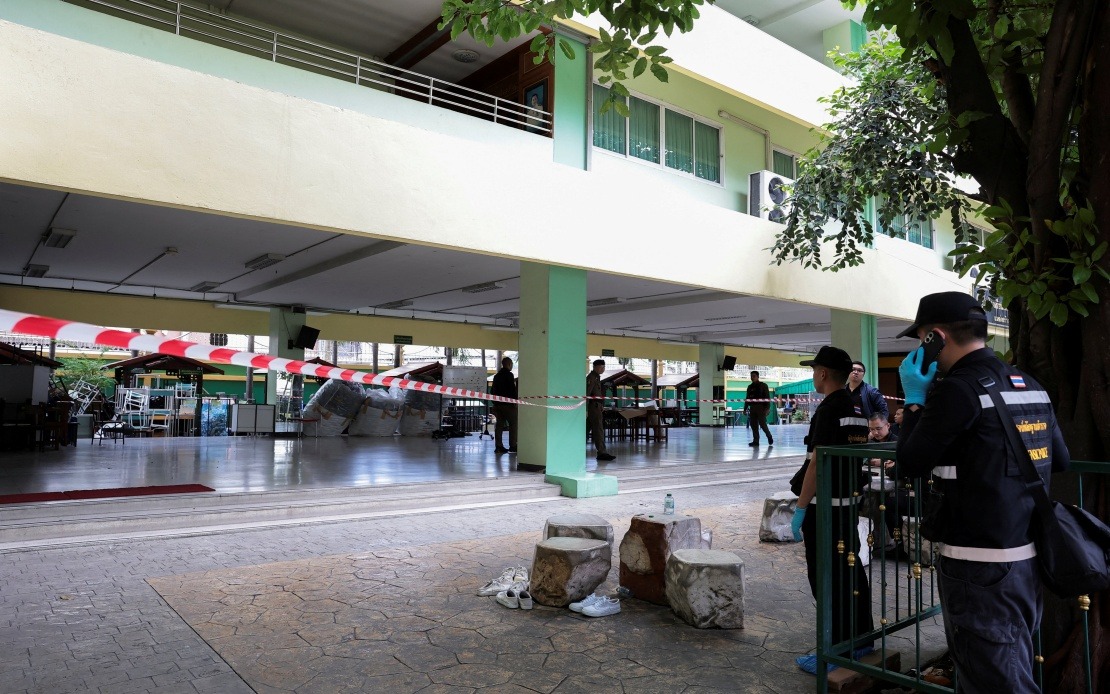
A devastating shooting at Debsirin Nonthaburi School in Bang Kruai district has left seven dead and at least fifteen wounded, marking another tragedy in Thailand's recurring struggle with firearm violence. The incident unfolded on Friday morning around 10 am when a student opened fire within the school premises in Nonthaburi province, located northwest of the capital Bangkok. Among those killed were three teachers, three of the shooter's fellow students, and the gunman himself, according to Royal Thai Police deputy inspector-general Lieutenant General Trairong Piwpan, who addressed reporters at the scene. The casualty toll underscores the indiscriminate nature of the attack and the difficulty schools face in preventing such incidents despite being institutions entrusted with safeguarding children.
Medical personnel transported fifteen injured individuals to hospital facilities, with two sustaining critical injuries requiring intensive care. The rapid response of emergency services likely prevented additional fatalities, though the psychological toll on survivors and the wider school community will extend far beyond the immediate aftermath. Teachers and students who were unharmed were evacuated to the nearby Chanrat Wittaya School, while parents and guardians began the traumatic process of locating and collecting their children, many uncertain of their safety in the hours following the attack.
Investigations by Thai police revealed that the suspect, identified only as a student at the school, had accessed a 9mm handgun belonging to his grandfather. Officers recovered the weapon along with 34 additional rounds of ammunition, suggesting premeditation rather than an impulsive act. The firearm's presence in the grandfather's possession raises troubling questions about family oversight and the storage of weapons in homes where young people reside. Lieutenant General Trairong's statement that "the gun belonged to the suspect's grandfather" points toward a critical vulnerability in Thailand's gun control framework: family members with permits may not adequately restrict juvenile access to their weapons.
Prime Minister Anutin Charnvirakul, who concurrently serves as interior minister, responded to the tragedy by expressing deep sorrow and immediately ordering authorities to mobilise resources for the injured and affected families. His statement that "it's terrible, what has happened" conveyed official sympathy, yet he moved swiftly to connect the incident to government firearms policy. Anutin emphasised that this very scenario exemplifies why Thailand's administration has declined to renew permits for carrying and possessing firearms, positioning the tragedy as validation of stricter regulatory approaches. Such policy linkage, while politically expedient, reflects Bangkok's commitment to tightening access to weapons, a contentious issue in a nation where gun ownership remains embedded in certain cultural and professional contexts.
The shooting represents the second major school gun violence incident in Thailand within six months, a frequency that alarms educators and parents nationwide. In February of this year, an 18-year-old gunman opened fire at a school in Hat Yai, Songkhla province, in the country's south, killing the school director and injuring multiple others before police apprehended him. The recurring pattern suggests systemic vulnerabilities that extend beyond individual incidents—whether inadequate psychological screening, insufficient campus security protocols, or gaps in firearm licensing oversight. These consecutive attacks have intensified public pressure on the government to implement comprehensive prevention measures rather than respond reactively to each tragedy.
Thailand's education sector faces mounting challenges in creating genuinely safe learning environments without resorting to fortress-like campus architecture that might itself prove counterproductive. Schools must balance openness and accessibility with security measures that detect potential threats. The involvement of a student perpetrator complicates prevention further; unlike external attackers, internal threats emerge from within the trusted community, making identification and early intervention essential. Educators and administrators now confront the uncomfortable reality that traditional safeguarding approaches may prove insufficient if students with access to weapons harbour violent intentions.
The national police chief's directive to deploy psychologists from Police General Hospital to provide counselling to those affected demonstrates recognition that the incident's impact transcends physical injuries. Survivors, witnesses, bereaved family members, and the broader school community require sustained mental health support to process trauma and rebuild a sense of security. Thailand's mental health infrastructure, while improving, remains stretched in rural and provincial areas where this school is located. International experience shows that early psychological intervention significantly improves long-term outcomes for survivors, yet resource constraints may limit the scope and duration of available support.
For regional observers in Southeast Asia, the Nonthaburi incident carries implications beyond Thailand's borders. Malaysia, with its own regulations governing firearms ownership, and other neighbouring countries monitor how Thailand addresses the root causes underlying these shootings. Factors such as youth mental health crises, access to weapons through family members, bullying or social ostracisation within schools, and the absence of threat assessment protocols merit examination across the region. Educational institutions throughout Southeast Asia may benefit from reviewing their own security postures and crisis response procedures in light of Thailand's recurring tragedies.
The grandfather's legal possession of the 9mm handgun highlights an ongoing tension between individual rights and collective safety in Thailand. Unlike countries with near-total civilian firearm bans, Thailand permits ownership under licence for specific purposes—hunting, sport, security work. Yet this framework assumes responsible storage and family supervision. The tragedy suggests that permit conditions should mandate secure storage mechanisms, such as gun safes accessible only to licensed holders, particularly in homes with adolescents. Whether Prime Minister Anutin's government will pursue such targeted regulatory refinements or broader restrictions on permit renewals remains to be seen, though this incident may accelerate legislative action.
As Thai authorities investigate the shooter's background—his grievances, psychological state, and access to weapons—the nation must confront uncomfortable questions about what drives a student to commit such violence. Preliminary reports do not indicate obvious external motives or ideological radicalisation. Instead, the profile suggests possible personal crisis, interpersonal conflict, depression, or other psychological distress that went undetected or unaddressed. Schools, families, and mental health professionals share responsibility for identifying at-risk youth and providing intervention before desperation or anger transform into violence. Thailand's healthcare system, education sector, and law enforcement agencies will need coordinated effort to develop early warning systems and support structures that prevent the next tragedy.

