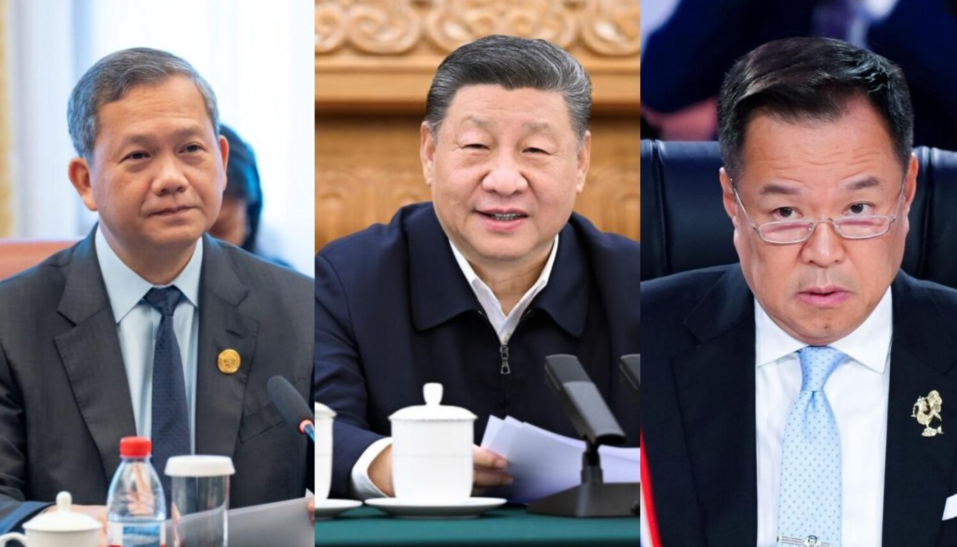
The upcoming Shanghai gathering of Cambodia's Prime Minister Hun Manet and Thailand's Anutin Chanvirakul at the World AI Conference 2026 on July 17 presents a critical diplomatic juncture for Southeast Asia, though the event's formal agenda focuses squarely on artificial intelligence and technological cooperation. Invited by Chinese President Xi Jinping, the two leaders will participate in a forum ostensibly devoted to innovation, yet their presence in China's commercial capital carries unmistakable political weight. The scheduling coincides with mounting international scrutiny over the prolonged border standoff between Phnom Penh and Bangkok, which has festered since their last substantive negotiation in December and shows few signs of resolution through conventional diplomatic channels.
Hun Manet's delegation reflects the gravity Cambodia attaches to this engagement, bringing along Foreign Minister Prak Sokhonn, Defence Minister Tea Seiha, and Sun Chanthol, the first vice-chairman of the Council for the Development of Cambodia. Thailand's representation will include Foreign Minister Sihasak Phuangketkeow. Both nations plan bilateral meetings with Xi and Premier Li Qiang, indicating that discussions will extend well beyond the conference's nominal purpose. The careful composition of these delegations—notably the inclusion of defence and international relations officials—suggests that beneath the surface messaging about technological partnership and strategic cooperation, both governments expect substantive political engagement during the three-day visit.
Cambodia's foreign ministry has framed the July 15-17 journey as an opportunity to deepen the Comprehensive Strategic Partnership with China and advance what it describes as the Diamond Cooperation Framework and an all-weather Cambodia-China Community with a Shared Future. Thailand has similarly emphasised strengthening its Comprehensive Strategic Cooperative Partnership with Beijing. These formulaic statements, typical of official diplomatic language, mask the central question troubling regional observers: will China leverage its substantial economic and political influence to pressure both neighbours into genuine border negotiations, or will it settle for the optics of prime ministerial handshakes and ceremonial declarations?
The track record offers limited grounds for optimism. At the Asean Future Forum in Hanoi during early June, both Manet and Anutin were present, and their camera-ready handshake generated predictable headlines about warming relations. Yet no substantive discussions addressing the territorial dispute occurred. For nearly eight months, the two nations have avoided direct negotiation, allowing tensions to simmer while displaced Cambodian civilians—estimated at some 20,000 individuals—remain barred from returning to homes in disputed areas under Thai occupation. This stalemate underscores a troubling pattern: high-profile diplomatic moments often substitute for meaningful progress rather than accelerate it.
China's leverage over both nations is undeniable. As the primary trading partner for Cambodia and a crucial economic anchor for Thailand, Beijing possesses the carrots and sticks necessary to incentivise a settlement. Analysts have suggested that China will indeed use this positioning to encourage resolution. However, questions persist about whether Beijing's primary interest lies in actually solving the border crisis or in maintaining stability sufficient to protect its regional interests and economic corridors. For Cambodia, which depends heavily on Chinese investment and development assistance, pressure from Xi's government carries particular weight. Thailand, though economically diversified, cannot ignore Beijing's significance to its strategic calculations.
Yet expert analysis reveals a more complicated picture. Kin Phea, director of the International Relations Institute at the Royal Academy of Cambodia, identifies a fundamental impediment that transcends China's mediatory role: the gap between Thailand's civilian government commitments and the Thai military's actual implementation of those promises. According to Phea's assessment, the civilian authorities who initially agreed to border-related measures with Cambodia lack the authority to enforce them against institutional resistance from the armed forces. This institutional fracture within Thailand creates a structural problem that diplomatic pressure alone cannot resolve. The military has continued to encroach upon Cambodian sovereign territory and maintain occupation of disputed zones, effectively nullifying civilian-led negotiations.
Phea argues forcefully that China must graduate from passive mediation to active arbitration. Rather than simply hosting meetings and accepting ceremonial outcomes, Beijing should condition its continued support and investment on concrete compliance with the Fuxian Consensus—the Chinese-brokered agreement reached in December 2025 that established the framework for peaceful resolution. Under this consensus framework, Thailand explicitly committed to respecting agreed-upon principles and returning to substantive talks. The failure to implement these commitments represents not merely a diplomatic disappointment but a fundamental violation of an accord that Beijing itself helped broker.
The specific demands outlined by regional analysts are precise and measurable: Thailand must withdraw its military forces from occupied Cambodian areas, return to the Joint Boundary Commission negotiating table, and cease arbitrary military actions in disputed zones. These are not nebulous aspirations but concrete steps that would either occur or not occur. The current situation—where Thai forces maintain physical control over Cambodian territory while diplomatic processes stall—fundamentally favours the status quo from Bangkok's perspective, removing any incentive for substantive movement.
The Shanghai summit thus becomes a litmus test for China's actual commitment to regional stability versus its preference for maintaining the existing balance of power. Should Beijing emerge from the July 17 meetings issuing only generic statements about cooperation and friendship, without public or private pressure on Thailand regarding military withdrawal and border talks, it would signal that Chinese mediation serves primarily to legitimise the current stalemate rather than resolve it. Conversely, if China issues clear expectations regarding the Fuxian Consensus implementation and conditions future engagement on concrete progress, it would demonstrate that Beijing views border peace as genuinely important to its regional vision.
For Malaysian observers and Southeast Asian policymakers, the outcome matters considerably. A resolved Cambodia-Thailand border dispute would reduce flashpoint tensions in the region and demonstrate that China-brokered agreements can translate into substantive outcomes. Conversely, continued stalemate despite high-level summitry would suggest that diplomatic forums, no matter how prominent the venue or elevated the participants, function primarily as theatre when underlying power imbalances favour the status quo. The 20,000 displaced Cambodians awaiting return to their homes represent the human cost of this diplomatic impasse, a reality that transcends the polished messaging emanating from Shanghai's conference halls.

