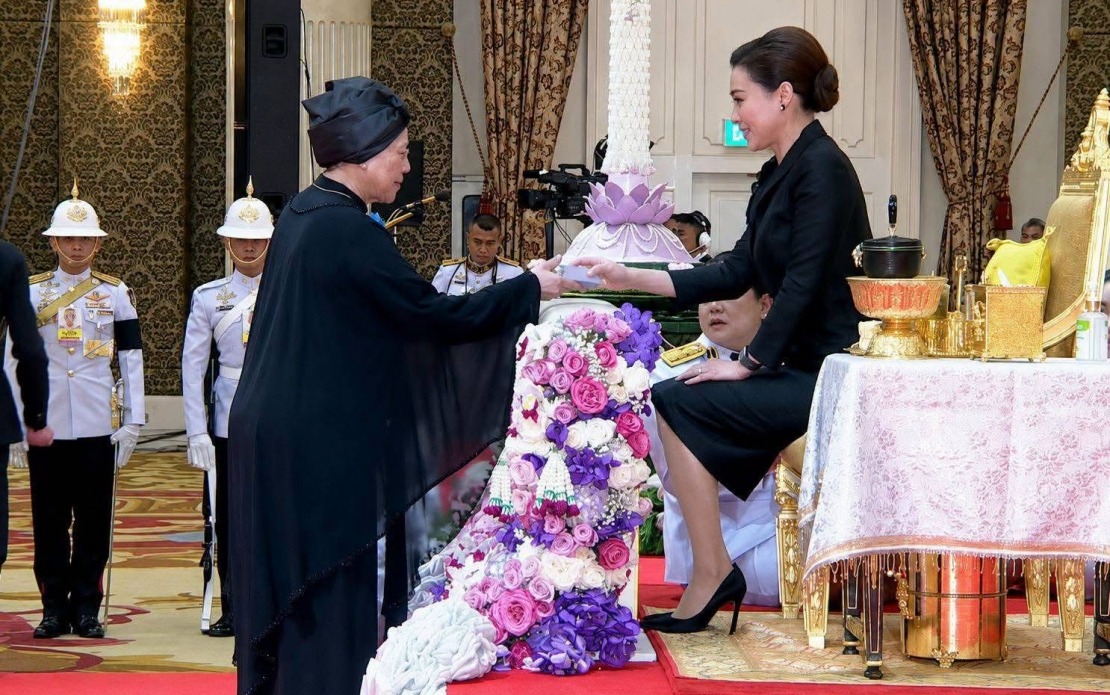
Prime Minister Datuk Seri Anwar Ibrahim has joined his wife, Datuk Seri Dr Wan Azizah Wan Ismail, in extending congratulations to Prof Emerita Tan Sri Datuk Seri Dr Sharifah Hapsah Syed Hasan Shahabudin following her conferment of the Outstanding Woman Award for Social Development, an honour presented by Thailand's Queen Suthida Bajrasudhabimalalakshana. The recognition arrived on August 4, drawing attention to the achievements of a prominent Malaysian figure whose work has garnered international acknowledgement across Southeast Asia's expanding networks of professional women leaders.
Anwar characterised the accolade not merely as a personal triumph but as emblematic of a broader pattern in which Malaysian women continue to command respect and visibility within international forums. By framing Sharifah Hapsah's award as reflective of the nation's female talent pool, the Prime Minister signalled the government's investment in women's advancement as part of a strategic national narrative. This positioning carries particular weight given Malaysia's evolving regional role, where soft power and international relations increasingly depend on showcasing home-grown excellence across professional domains.
The award ceremony, hosted by a neighbouring ASEAN monarchy, underscores the cross-border dimensions of recognising women's contributions to social development. Thailand's formal acknowledgement of a Malaysian achiever demonstrates the interconnected nature of professional networks within the region, where excellence transcends national boundaries yet remains a source of national pride. Such recognition becomes especially significant in a Southeast Asian context where women's leadership in developmental and social sectors continues to gain momentum, though structural barriers in many countries still restrict their advancement.
In his statement released on social media platform X, Anwar elaborated on what he viewed as the deeper implication of Sharifah Hapsah's honour. He characterised her award as validation of Malaysian women's demonstrated capacity, competence and tangible impact on societal development. This framing suggests that the government perceives women's professional achievements as integral to national branding and international standing, a perspective that extends beyond ceremonial recognition into substantive policy considerations.
The Prime Minister explicitly linked Sharifah Hapsah's accomplishment to his administration's broader commitment toward the Malaysia MADANI agenda, which emphasises human-centred governance and inclusive development. By invoking this programmatic framework, Anwar positioned women's advancement not as a peripheral concern but as foundational to the government's central ideological mission. This rhetorical linkage suggests that female leadership and participation are conceived as essential drivers of the kind of equitable, sustainable development the MADANI framework purports to champion.
Anwar's remarks included an aspirational dimension, calling upon Sharifah Hapsah's achievement to inspire other Malaysian women to engage in nation-building through knowledge transfer, leadership assumption and compassionate engagement with communities. This appeal reflects a recognition that individual accomplishments can catalyse broader shifts in how women perceive opportunity pathways and professional possibilities. By elevating one woman's success to exemplary status, the government attempts to create a demonstration effect that encourages further female participation across sectors historically dominated by men.
The government's stated commitment encompasses several concrete dimensions. Anwar pledged that his administration would sustain elevated status afforded to women's roles within Malaysian society, broaden their access to opportunities spanning diverse economic and social sectors, and protect the recognition of female talent and potential as foundational to long-term national development. These assurances, whether translated into budgetary allocation, legislative reform or institutional restructuring, will ultimately determine whether rhetorical support for women's advancement translates into measurable change.
Sharifah Hapsah's recognition arrives amid ongoing global conversations about gender parity in professional and leadership roles. Her award by a Thai monarch highlights how women's contributions to social development increasingly receive formal, high-level acknowledgement even as structural inequalities persist across the region. The conspicuous nature of the award—presented by a head of state—signals that women's developmental work commands respect sufficient to warrant ceremonial prominence, a shift from earlier periods when such contributions received less formal recognition.
From a regional perspective, the award demonstrates how ASEAN nations increasingly recognise and celebrate each other's achievements in advancing women's development, creating an interconnected community of practice around gender equality and social progress. Malaysia's ability to produce recognised female leaders in developmental sectors reinforces its positioning within these networks and contributes to soft power accumulation through the demonstration of inclusive governance and human development outcomes.
The implications for Malaysian women extend beyond symbolic recognition. International awards and acknowledgements can enhance professional mobility, expand networking opportunities and create platforms for amplified influence in shaping policy agendas both domestically and regionally. Sharifah Hapsah's honour, therefore, potentially benefits not only the individual recipient but contributes to building the visibility and credibility of Malaysian women professionals seeking to influence developmental agendas across Southeast Asia and beyond.

