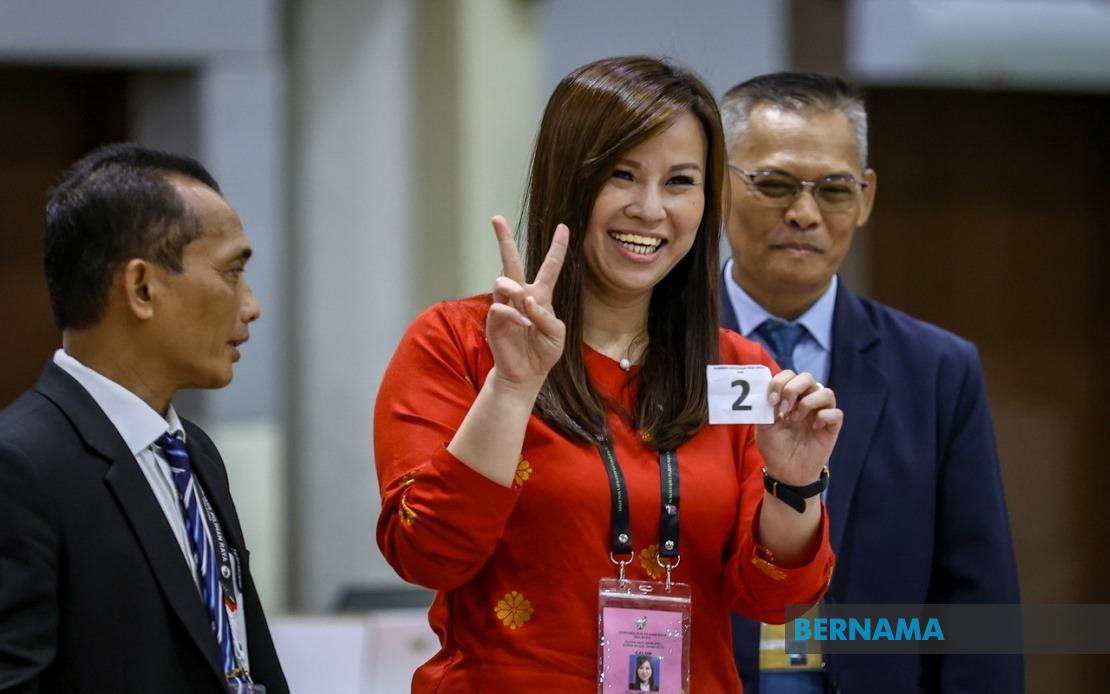
Sharon Teo, the Pakatan Harapan candidate for the Permas state seat, has anchored her campaign squarely on two critical issues that resonate with residents across the constituency: the quality of local infrastructure and the welfare of ordinary families. Speaking after nomination proceedings at Dewan Muafakat in Taman Mawar on June 27, Teo emphasized that these themes have emerged repeatedly during her grassroots engagement, reflecting genuine community concerns rather than political talking points. The Johor Amanah Women's Youth chief is positioning herself as a candidate who will translate voter feedback into concrete action, signalling a ground-up approach to state representation that contrasts with traditional top-down politics.
Road conditions in the Permas area have become a focal point of Teo's platform. She has identified transport infrastructure as a matter of public safety, suggesting that poorly maintained roads pose risks to residents and undermine quality of life beyond mere convenience. This emphasis on tangible, everyday concerns speaks to a political strategy focused on bread-and-butter issues rather than ideological appeals. For a constituency where commuters and families navigate local roads daily, road quality translates directly into accident prevention, reduced vehicle wear, and improved accessibility to schools and workplaces. Teo's willingness to prioritize this issue signals recognition that state-level politics ultimately succeeds or fails based on whether constituents experience improvements in their immediate surroundings.
Teo brings relevant political experience to her candidacy, having previously worked as an aide in the Pulai parliamentary constituency under the late Amanah deputy president Salahuddin Ayub. This background provides her with exposure to the mechanics of constituency management and legislative advocacy at the federal level, though the transition to state politics represents a different arena with distinct resource constraints and administrative responsibilities. Her connection to Salahuddin, a prominent Amanah figure, also lends her credential within the party hierarchy and may facilitate access to party machinery and campaign resources. She has committed to unveiling a comprehensive manifesto that will detail her vision and mission for Permas voters, though at the time of nomination this document had not yet been formally presented to the electorate.
Defending the seat is Baharudin Mohamed Taib, the Barisan Nasional incumbent who secured victory in the 2022 Johor election. Baharudin's assessment of the contest reflects awareness that the political terrain has shifted considerably since his last electoral victory. By acknowledging that each opponent possesses distinct strengths, he is signalling that this is genuinely competitive and cannot be treated as a foregone conclusion. His determination to work intensively to secure a BN victory indicates recognition that the ruling coalition's hold on Permas is under real pressure, whether from Pakatan's resurgence or the growing fragmentation represented by Perikatan Nasional and smaller parties. The incumbent's framing of the contest as "no easy task" suggests either genuine concern about voter sentiment or strategic humility designed to mobilize the BN campaign machinery.
Barahudin's campaign approach differs notably from Teo's in that he is declining to launch a personal manifesto, instead positioning himself as an advocate for the Barisan Nasional's broader agenda for the state. This decision reflects BN's traditional strength in organization and party brand recognition, betting that the coalition's machinery and established governance record will suffice without individualized platform-building. Whether this approach proves effective may depend on whether voters view the state election as a referendum on specific local representation or as a referendum on ruling coalitions more broadly. In recent Malaysian electoral cycles, both dynamics have proven significant, and the relative weight of each varies by constituency and demographic composition.
The Permas state constituency encompasses part of the Pasir Gudang parliamentary area and boasts 113,963 eligible voters, making it a significant electoral prize for all competing parties. The four-way contest involves Sharon Teo representing Pakatan Harapan, Baharudin defending for Barisan Nasional, T. Vela contesting on behalf of Perikatan Nasional, and Dr Zamil Najwah standing as the Parti Bersama Malaysia candidate. This four-cornered configuration introduces complexity that could fragment the vote in unpredictable ways, particularly if no single candidate achieves dominant support early in the campaign. For PH and BN, the challenge lies in consolidating what might traditionally be their respective voter blocs while neutralizing the appeal of alternative options.
The 16th Johor state election is scheduled for July 11, with early voting taking place on July 7. The compressed campaign period means candidates must move swiftly to build momentum, communicate their positions, and differentiate themselves from competitors. For a relatively new entrant like Teo, the short timeframe presents both challenge and opportunity: insufficient time to build organizational depth, but also less time for incumbents to consolidate their advantages. The Johor election holds significance beyond the state level, as results will provide indicators of broader political trends affecting Southeast Asia's most developed state and a crucial economic hub.
The positioning of infrastructure and welfare as central to Teo's campaign reflects broader patterns in Malaysian electoral politics, where state and local government elections increasingly turn on delivery of services and improvement of living standards rather than national party competition alone. Voters increasingly evaluate candidates based on whether they have secured drainage improvements, resolved traffic problems, enhanced security, or expanded social assistance programs. This localization of electoral contestation means that candidates who can convincingly argue they understand and will address specific community problems hold considerable advantage. Teo's emphasis on soliciting and acting upon resident concerns positions her as responsive to local sentiment, a valuable attribute in an era when political trust in Malaysia remains fragile.
The contest in Permas also reflects the ongoing restructuring of Malaysian politics following the 2022 general election and subsequent realignments. The emergence of Perikatan Nasional as a serious contender in state elections, combined with the appearance of parties like Bersama, indicates that the traditional two-coalition framework (BN versus PH) has become more complex. For Permas voters, this means more genuine choice but also potential for vote-splitting that could produce unexpected outcomes. The four-way contest makes predicting results considerably more difficult than in straightforward two-candidate races, as voter preferences for secondary choices could determine who emerges victorious if first-preference support divides relatively evenly among the field.

