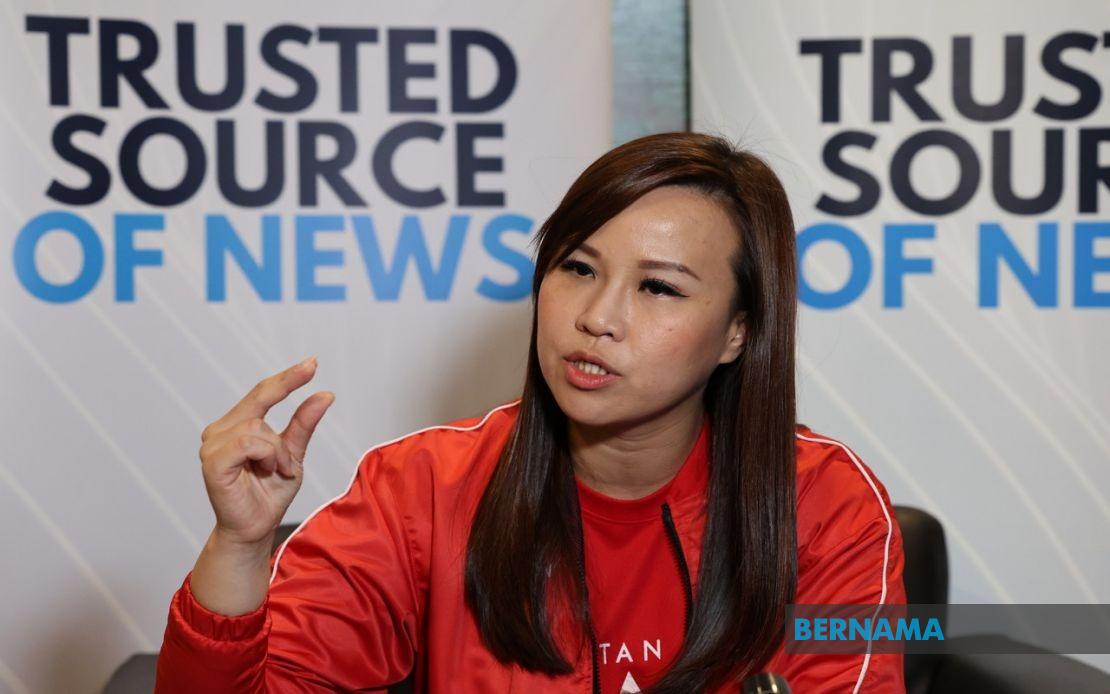
Sharon Teo Siew Hui is banking on a formative political apprenticeship to guide her campaign for the Permas state seat in the Johor election. The 36-year-old Pakatan Harapan candidate spent years working closely with the late Datuk Seri Salahuddin Ayub, the former Minister of Domestic Trade and Cost of Living, and has absorbed what she describes as his defining commitment to putting constituents' needs above partisan considerations. That hands-on experience, she argues, distinguishes her from rivals and equips her to deliver tangible results for voters tired of unresolved grievances.
Salahuddin, affectionately known as "Bapa Rahmah Malaysia" for his role championing subsidised essentials, became Teo's political North Star after she joined Parti Amanah Negara in 2018. Before formalising her party membership, she had already volunteered in his orbit, absorbing his methods firsthand. She credits his example of humility, approachability and tireless follow-through as the moral foundation of her political outlook. Rather than treating constituent complaints as administrative boxes to tick, Salahuddin modelled a painstaking approach: tracking resolutions deep into the night, checking progress via WhatsApp messages, and personalising each case. Teo now pledges to transplant that ethos into Permas, signalling that her candidacy represents continuity with a respected lineage rather than a blank slate.
The "parachute candidate" criticism—a common jab at those perceived as externally imposed on constituencies—does not stick to Teo, she contends. Her trajectory within Amanah began as an ordinary member, progressed through the role of Assistant Secretary of Amanah Johor, and culminated in her heading Amanah Johor Wanita Muda, the party's youth women's wing. Moreover, Permas is not unfamiliar terrain. She accompanied Salahuddin to campaign events and grassroots gatherings throughout the constituency in prior electoral cycles, building a network and understanding of local conditions that extends beyond the campaign announcement. Early canvassing feedback, according to Teo, has been encouraging across demographic lines, reinforcing her conviction that the ground is receptive to her message.
Permas voters have articulated a clear infrastructure agenda during the opening week of campaigning. Potholes pockmarking roads, deteriorating laneways behind shops, traffic bottlenecks and ageing public amenities dominate conversations with residents. These complaints reflect not exotic grievances but the everyday friction that defines urban life in Malaysia's economic heartland. Teo has positioned herself as the candidate who listens, documents and acts—a counterpoint to what some voters perceive as bureaucratic inertia. Her pledge centres on establishing PermasKu, a dedicated complaint-management hub designed to shepherd every issue from reporting through resolution, modelled loosely on Salahuddin's hands-on monitoring approach.
Young people feature prominently in Teo's strategic thinking. First-time voters and school leavers represent a cohort often overlooked by traditional campaigning, yet their engagement will shape electoral turnout and party allegiance for decades. Teo intends to meet them through digital channels and e-sports initiatives—recognising that this demographic inhabits social media and gaming spaces more readily than physical town halls. By lowering barriers to political participation and demonstrating respect for their interests and communication styles, she hopes to inoculate younger voters against apathy and disengagement.
Teo's first 100 days in office, should voters grant her the mandate, will centre on diagnostic work rather than sweeping reforms. She plans to audit Permas systematically, cataloguing the most pressing infrastructure deficits, compiling data on community needs, and then sequencing solutions according to feasibility and impact. This deliberately methodical posture signals realism about resource constraints while committing to transparency in how priorities are set. Rather than imposing top-down assumptions about what Permas residents require, Teo insists on ground-level consultation—a rhetorical move that resonates with frustration over decisions made in distant offices without adequate local input.
The Permas contest is a four-way tussle. Baharudin Mohamed Taib, the incumbent representing Barisan Nasional, secured a majority of 7,926 votes in 2022, establishing him as the frontrunner in terms of prior performance. Perikatan Nasional's T. Vela and Parti Bersama Malaysia's Dr Zamil Najwah round out the field, fragmenting the opposition vote and complicating Teo's path to victory. BN's incumbency advantage and institutional machinery remain formidable, yet the multi-cornered nature of the race means Teo's coalition-building and ground organisation could prove decisive if the vote splits unpredictably.
For Malaysian voters evaluating Permas candidates, the election illustrates a broader pattern in contemporary state and federal politics: the pull between continuity and change, between proven track records and fresh approaches promising reform. Teo represents the latter impulse, banking on her connection to Salahuddin's reputation and her grassroots positioning to overcome BN's structural advantages. Yet her candidacy also reflects the reality that Malaysian political cultures remain shaped by mentorship, personal loyalty and family-like networks rather than purely programmatic appeals. By anchoring her campaign to a late leader widely admired across party lines, Teo attempts to transcend partisan tribalism while still mobilising her coalition's base. Whether that gambit resonates with Permas voters will become clear as campaigning intensifies and residents weigh competing visions for their constituency's future.

