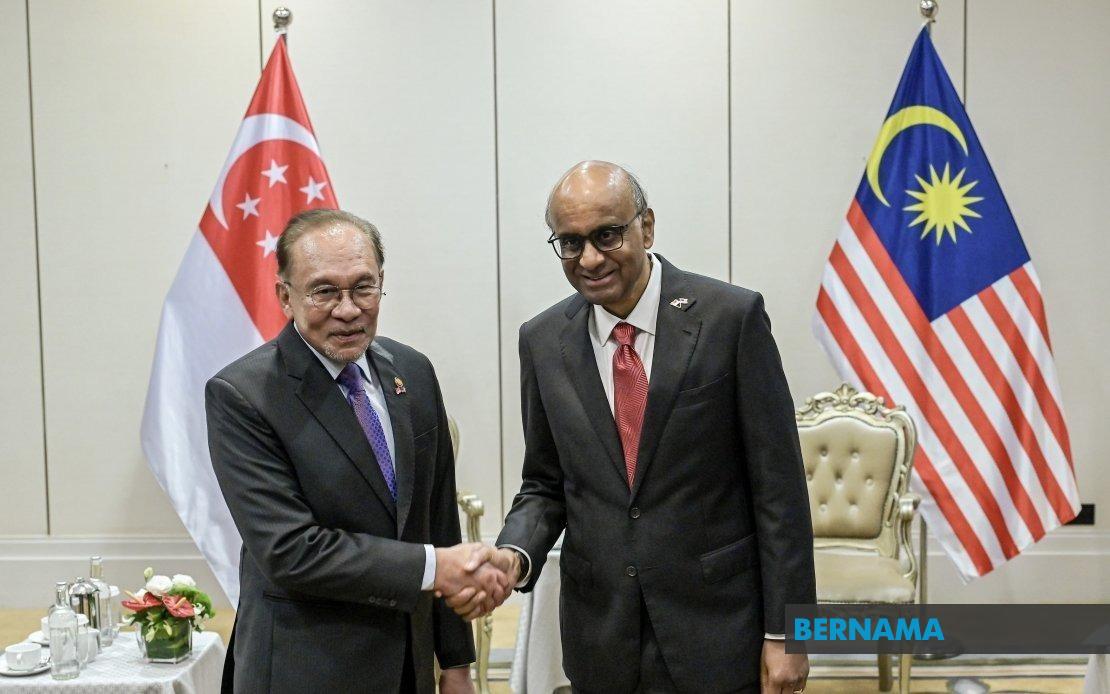
Singapore and Malaysia have reaffirmed their commitment to strengthening bilateral ties across multiple strategic domains, signalling renewed momentum in their long-standing relationship. The pledge emerged during President Tharman Shanmugaratnam's inaugural state visit to Malaysia this week, marking a significant diplomatic engagement between the two neighbours. During a courtesy call on Prime Minister Datuk Seri Anwar Ibrahim on Monday, both leaders identified food security and energy as priority areas where deepened cooperation would serve mutual interests, reflecting the practical concerns facing both island and peninsula economies in an increasingly complex regional environment.
The state visit, which began on July 12 and concludes on July 15, represents an important occasion for high-level dialogue between the two nations. President Tharman and his wife Jane Ittogi Shanmugaratnam received ceremonial honours befitting a head of state, including a formal welcoming ceremony at Istana Negara where they were received by His Majesty Sultan Ibrahim, King of Malaysia, and Her Majesty Raja Zarith Sofiah, Queen of Malaysia. These protocol-heavy engagements underscore the diplomatic significance both countries attach to the visit, moving beyond routine ministerial meetings to involve Malaysia's constitutional head of state in substantive discussions about the bilateral relationship.
Beyond the headline commitments on economic cooperation, both leaders engaged in a broader strategic conversation about the regional and international landscape. The Singapore Foreign Ministry's statement highlighted exchanges on geopolitical developments, particularly the evolving situation in West Asia and its potential ramifications for Southeast Asia. For Malaysia and Singapore, understanding and responding to developments thousands of kilometres away carries genuine importance, as Middle Eastern instability can affect shipping lanes, energy markets, and regional security calculus. The emphasis on these conversations reflects the reality that neither nation can insulate itself from major international currents, requiring constant monitoring and coordinated regional responses.
A key focus of the bilateral discussions centred on maritime law and freedom of navigation, principles that carry outsized significance for two island and peninsular states whose prosperity depends on open sea lanes. Both President Tharman and Prime Minister Anwar reaffirmed their commitment to upholding international law, specifically referencing the United Nations Convention on the Law of the Sea, or UNCLOS. This emphasis is hardly coincidental. With regional tensions occasionally flaring over maritime boundaries and fishing rights, and with major powers competing for influence over vital sea routes, Singapore and Malaysia's joint assertion of support for UNCLOS-based order serves as a stabilising message. For Malaysian and Singaporean businesses and citizens, the security of maritime commerce remains fundamental to prosperity and national welfare.
The engagement extended beyond the federal capital to include substantive discussions with Selangor's state leadership. On Tuesday, President Tharman met with the Sultan of Selangor, Sultan Sharafuddin Idris Shah, and the Menteri Besar of Selangor, Datuk Seri Amirudin Shari. These meetings broadened the dialogue to include Malaysia's most economically dynamic state, home to a large portion of the nation's manufacturing base and a significant concentration of foreign direct investment. The discussions encompassed potential collaboration in technical and vocational education, an area where Singapore's expertise in workforce development could offer valuable insights to Malaysian counterparts seeking to upgrade skills in the manufacturing and services sectors.
Climate adaptation and flood mitigation emerged as another collaboration avenue, reflecting shared vulnerabilities that transcend national borders. Both nations experience tropical weather patterns and face increasing climate variability, making cooperation on environmental resilience strategically rational. Singapore's experience managing urban water systems and flood prevention offers transferable lessons for Malaysian cities and coastal regions. Meanwhile, Malaysia's larger land area and diverse ecosystems mean Singapore can benefit from insights into managing climate impacts across varied geographical and economic contexts. Such collaboration addresses real risks both populations face.
The growth of technology start-ups represented a third area of identified cooperation. Singapore has established itself as Southeast Asia's venture capital hub with developed innovation ecosystems, while Malaysia possesses substantial entrepreneurial talent and a growing digital economy. Facilitating knowledge exchange and investment flows between the two nations' start-up communities could accelerate innovation in both markets. For Malaysian entrepreneurs and investors, access to Singapore's capital networks and business infrastructure represents genuine commercial opportunity. For Singapore, Malaysian markets and talent pools offer expansion potential.
President Tharman's explicit welcome for increased exchanges between Singapore and Selangor carries implications for sub-national diplomacy in Southeast Asia. Rather than relationships flowing exclusively through national capitals, direct state-level partnerships can address localised issues more effectively and build people-to-people connections that strengthen overall bilateral ties. Selangor's economic dynamism and Singapore's established governance expertise create natural synergies that merit institutional development. This approach also acknowledges that Malaysia's federal structure means significant policy and investment authority rests at state level, requiring foreign partners to engage accordingly.
The timing of this state visit reflects deliberate diplomatic sequencing by both governments. President Tharman's assumption of Singapore's presidency brought fresh impetus to bilateral relations, and scheduling an inaugural state visit to Malaysia signals priority attachment to the relationship. For Prime Minister Anwar Ibrahim, receiving a Singaporean head of state reinforces Malaysia's commitment to regional stability and cooperation at a moment when Southeast Asia faces multiple challenges ranging from South China Sea tensions to economic uncertainty. The visit demonstrates that despite occasional tensions over bilateral matters, both governments recognise their fundamental interdependence and shared interest in a stable, prosperous region.
The emphasis on multiple cooperation domains reflects sophisticated understanding of bilateral relations in the modern era. Rather than depending on any single area of collaboration, resilient partnerships encompass economic cooperation, security dialogue, people-to-people exchange, and institutional coordination across numerous sectors. Food security and energy transcend narrow commercial interest; they touch on national survival and citizen welfare. Maritime order affects regional peace. Skills development and entrepreneurship determine economic competitiveness. By articulating commitments across these dimensions, Singapore and Malaysia signal that their relationship rests on durable foundations extending well beyond diplomatic courtesy.
For Malaysian audiences, the visit carries reassuring implications about regional relationships during a period of broader geopolitical uncertainty. Deepening ties with Singapore across food security and energy addresses genuine national concerns about supply resilience. The reaffirmation of international law principles and maritime freedom protects Malaysian interests in an era when these principles face occasional challenge. Collaboration on climate adaptation responds to environmental pressures Malaysia's population and economy increasingly experience. The engagement thus translates high-level diplomatic courtesy into frameworks with tangible relevance to Malaysian prosperity and security. As both nations navigate an increasingly complex regional and global environment, the commitment to deeper cooperation provides ballast for stable, mutually beneficial relations serving citizens on both sides of the causeway.

