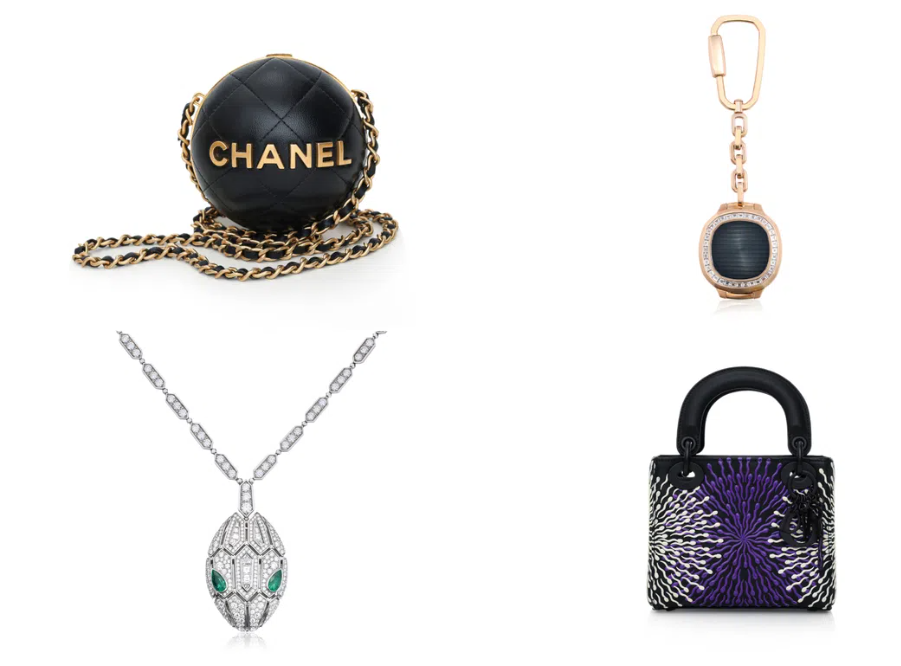
Singapore authorities are preparing to sell off a vast collection of confiscated luxury goods and real estate stemming from the country's most significant money laundering investigation, with initial auctions beginning in early September and continuing through mid-2027. The seized assets—comprising luxury handbags, fine jewellery, timepieces, vehicles, art, and residential properties—represent the tangible fruits of a sprawling criminal network dismantled following coordinated raids in August 2023. Professional services firm Deloitte, appointed to oversee the liquidation process, announced that the first tranche of sales will proceed through online-only auctions accessible to bidders worldwide, marking an unprecedented scale of asset recovery in the city-state's financial crime enforcement history.
The inaugural auctions scheduled for September 7 will focus on two categories: branded luxury handbags and fine jewellery, with bidding opening at 10 am Singapore time and closing on September 20 at 4 pm. The initial offerings alone encompass more than 300 handbags and accessories from prestigious houses including Chanel, Louis Vuitton, and Christian Dior, alongside over 250 fine jewellery pieces from renowned makers such as Graff, Bulgari, and Van Cleef & Arpels. Subsequent tranches, scheduled to commence in November 2026, will introduce Hermès handbags and luxury watches from manufacturers including Patek Philippe, Richard Mille, and Rolex. In total, Hotlotz—the Singapore auction house selected to conduct the sales—has planned 15 separate auctions spanning September 2026 through May 2027, with expectations that more than 1,000 items will be offered across these events.
The auction methodology reflects Singapore's commitment to transparent asset disposal and maximum value recovery. Prospective bidders must complete online registration and mandatory identity verification procedures for each auction they wish to enter, ensuring regulatory compliance across the global participant pool. For those desiring physical inspection of items, Hotlotz has arranged appointment-based viewings at Le Freeport, a maximum-security private vault facility in Changi, where registered bidders can examine lots before committing to purchases. Digital catalogues detailing all items up for auction will be published on Hotlotz's website coinciding with the September 7 opening, providing comprehensive information to international collectors and investors assessing their bids.
Beyond the chattels being auctioned, the real estate component of the seizure presents a considerably larger financial dimension. Over 80 properties implicated in the money laundering network will be progressively marketed for sale through appointed realtors including SRI, Edmund Tie & Company (SEA), and Knight Frank. Deloitte indicated that selected properties will also be offered via expression of interest processes conducted by List International Realty, permitting flexibility in marketing strategies tailored to individual asset characteristics. The public has been explicitly cautioned to engage only with sales processes officially linked to these designated agencies, a precaution against fraudulent schemes capitalizing on the high-profile nature of the seizures.
The scale of the confiscation underscores both the sophistication of the criminal operation and the effectiveness of Singapore's financial crime detection apparatus. When law enforcement executed islandwide raids on August 15, 2023, authorities arrested 10 foreign nationals, all of whom have since been convicted and deported. The investigation subsequently uncovered a multilayered asset acquisition strategy spanning residential properties, luxury vehicles, high-end timepieces, precious metals, fine art, and collectible liquor—a portfolio indicative of sophisticated money laundering methodology designed to obscure illicit proceeds through asset diversification and luxury goods acquisition.
The financial scale of what authorities recovered reflects the magnitude of funds that transited through the network. Police have confirmed seizure or control of approximately S$1.25 billion in non-cash assets across all categories. As of the close of Singapore's 2025 financial year, S$1.4 billion comprising cash held in frozen bank accounts and proceeds from liquidated assets had already been transferred to the Consolidated Fund. The government's initial confiscation announcement in January 2024 detailed 207 properties, 77 vehicles, and more than S$1.45 billion in identified bank accounts, alongside more than S$76 million in cash denominated in multiple currencies. Additional discoveries included cryptocurrency holdings exceeding S$38 million, 68 gold bars, 483 luxury handbags, 169 branded watches, and 580 pieces of jewellery—a comprehensive asset register demonstrating the investigation's penetrating scope.
The auction strategy adopted by Singapore authorities carries implications for regional financial crime enforcement and asset recovery. By conducting public, transparent sales with global participation, Singapore demonstrates commitment to both asset recovery and adherence to anti-money laundering best practices, contrasting with jurisdictions that employ opaque or politically influenced disposal processes. The precedent may influence how other Southeast Asian economies approach seized asset liquidation, particularly as regional collaboration on financial crime intensifies amid rising cross-border illicit flows. Malaysia and other ASEAN states, grappling with their own money laundering challenges, may reference Singapore's methodology when designing asset recovery frameworks.
Justin Lim, performance improvement and restructuring partner at Deloitte, emphasized flexibility in asset realization approaches, noting that beyond formal auctions, certain assets may be disposed of through limited tender processes, expressions of interest, or direct sales arrangements. This graduated approach acknowledges that luxury real estate and specialized assets often benefit from targeted marketing rather than open-market mechanisms, permitting Deloitte to optimize returns across diverse asset classes. The appointment of multiple specialized agencies—each with distinct market expertise—reflects recognition that effective liquidation demands tailored strategies rather than uniform treatment.
Hotlotz, selected for the chattels auctions, brings credibility to the process following its high-profile sale of a silver Montblanc fountain pen belonging to founding Prime Minister Lee Kuan Yew for S$461,500 in August 2024, demonstrating its capacity to attract serious collectors and achieve premium valuations. The auction house has committed to professional cataloguing, comprehensive promotion, and transparent public sales processes, with chief executive Matthew Elton stressing the execution of sales "with the utmost integrity." This emphasis on procedural legitimacy and professional standards distinguishes the auction from potential alternative scenarios where seized luxury goods might be sold through informal channels or government liquidation processes perceived as less rigorous.
For Malaysian observers, the Singapore operation underscores the escalating sophistication of cross-border money laundering networks and the corresponding advancement of detection and enforcement mechanisms across the region. The concentration of luxury acquisition in Singapore—leveraging its status as a regional wealth management hub and financial center—reflects how illicit proceeds gravitate toward jurisdictions offering sophisticated financial infrastructure and relative anonymity. Malaysian authorities, managing their own complex money laundering investigations, confront similar asset recovery challenges requiring comparable coordination, professional expertise, and transparent liquidation frameworks to ensure proceeds benefit the state rather than dissipate through inefficient or compromised disposal processes.

