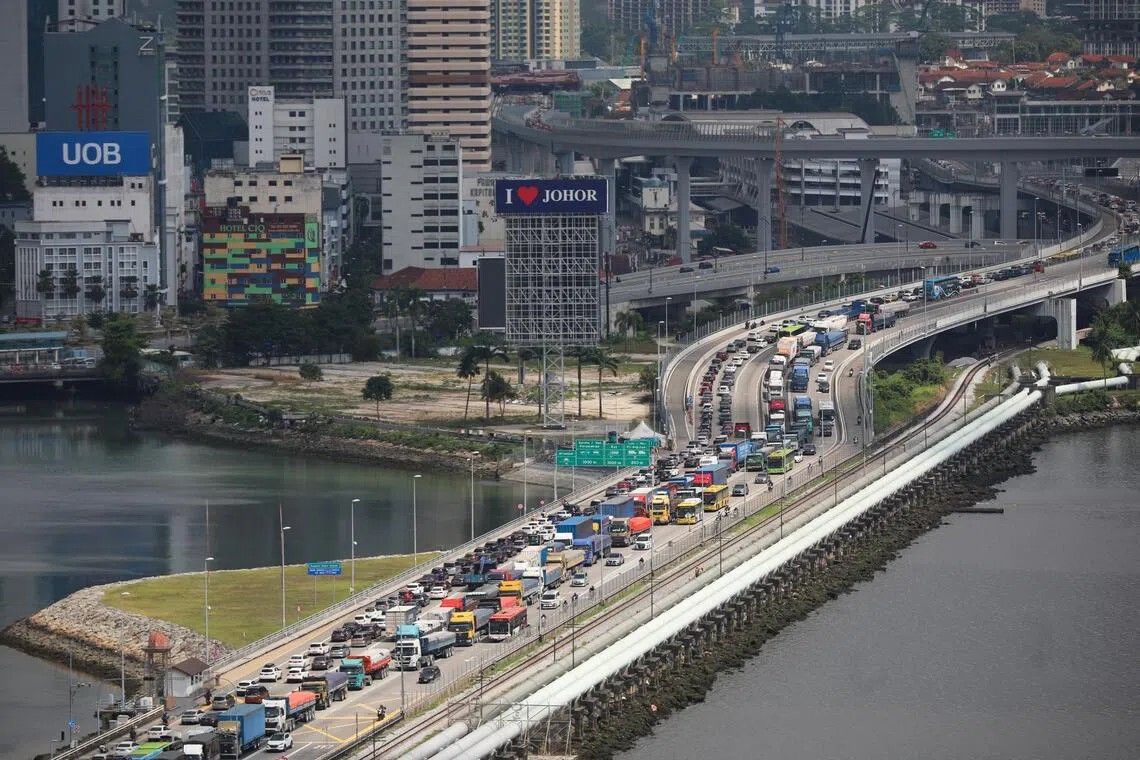
Singapore is preparing for a surge in cross-border traffic as the National Day long weekend approaches, with immigration officials warning that the Woodlands and Tuas checkpoints will experience "very heavy traffic" between August 7 and 10. The Immigration and Checkpoints Authority (ICA) released guidance on August 3 urging both Singapore-bound and Malaysia-bound travellers to stagger their journeys strategically, avoiding peak hours where possible by opting for early morning or late evening departures instead.
The advisory comes on the heels of recent holiday periods that have pushed the land checkpoints to unprecedented capacity. Between May 26 and June 28, spanning the Hari Raya Haji, Vesak Day weekend and June school holidays, more than 18 million travellers transited through the two main land crossings. These figures underscore the massive volume of bilateral movement between Singapore and Malaysia, reflecting how deeply integrated the two countries' economies and societies have become. For Malaysian readers in particular, these checkpoints represent critical infrastructure for commerce, employment, and leisure travel to and from Singapore.
The volume reached a dramatic peak on June 19 this year, when more than 598,000 travellers cleared immigration at the checkpoints on a single day. This figure eclipsed the previous record of 589,000 set on December 19, 2025, demonstrating that holiday periods consistently push the facilities beyond their prior maximums. The escalating numbers raise questions about whether current checkpoint infrastructure, despite ongoing upgrades, can sustainably accommodate future growth in cross-border traffic without systematic improvements to throughput and physical capacity.
Waiting times have become a significant concern during congested periods. During peak hours, motorists have reported delays stretching to three hours simply to complete immigration clearance, a figure that incorporates both the time spent in vehicles queuing due to traffic bottlenecks originating from the Malaysian side and the actual processing time at the border. For commuters and business travellers who cross regularly, such delays represent lost productivity and increased transport costs. Those planning to travel during the long weekend should factor this reality into their schedules, potentially departing several hours earlier than necessary to account for unexpected congestion.
Security enhancements have added another layer to checkpoint operations. Since February 28, the ICA has intensified security screening at all checkpoints in response to heightened global security concerns, particularly developments unfolding in the Middle East. While such measures are essential for public safety, they inherently slow the pace of clearance. The tension between security thoroughness and operational efficiency remains a perpetual challenge for border authorities across the region. Travellers should be prepared for additional scrutiny and allow extra time accordingly.
To mitigate delays, the ICA is actively promoting technological solutions. The MyICA mobile application allows travellers to generate QR codes that expedite the immigration clearance process significantly. Users who have already enrolled and regularly use the app report faster processing times. Additionally, motorcycle riders and pillion passengers can take advantage of facial recognition capabilities under ICA's New Clearance Concept, which has achieved a 35 per cent improvement in clearance rates compared with 2019 pre-pandemic levels, translating to an additional 7,600 travellers per hour during peak departure periods. These innovations represent meaningful progress in managing volume, yet uptake remains incomplete among the travelling population.
Behaviour at the checkpoints remains an ongoing issue. The ICA has recorded concerning patterns of traffic violations and dangerous driving conduct, with 52 motorists caught for such offences during the recent May-June holiday period alone. Queue-cutting, a particularly disruptive behaviour, damages traffic flow and cascades delays throughout the entire system. Offenders face consequences ranging from mandatory repositioning to the rear of queues and referral to Traffic Police for formal prosecution, to outright bans from entering Singapore. This escalating enforcement posture reflects authorities' frustration with persistent disciplinary problems.
For Malaysian travellers planning to use the checkpoints during the National Day weekend, advance planning becomes imperative. Checking real-time traffic conditions via available apps before departing provides valuable intelligence for routing decisions. Cooperation with immigration and traffic officers, strict lane discipline, and adherence to all traffic regulations are not merely courtesies but practical necessities that benefit everyone in the system. The collective behaviour of thousands of individual drivers directly determines system-wide efficiency.
The National Day long weekend represents a predictable seasonal challenge that both countries' authorities have come to expect. The coordination between Singapore's ICA and Malaysian counterparts remains crucial, though press statements typically emphasise only the Singapore side of the equation. Regional economic integration means these checkpoints will continue facing mounting pressure. Without significant infrastructure investment or fundamental changes to work patterns and cross-border commuting, such bottlenecks will remain a regular feature of holiday travel, particularly for the region's substantial population of cross-border workers, families, and business professionals who depend on smooth passage between the two nations.

