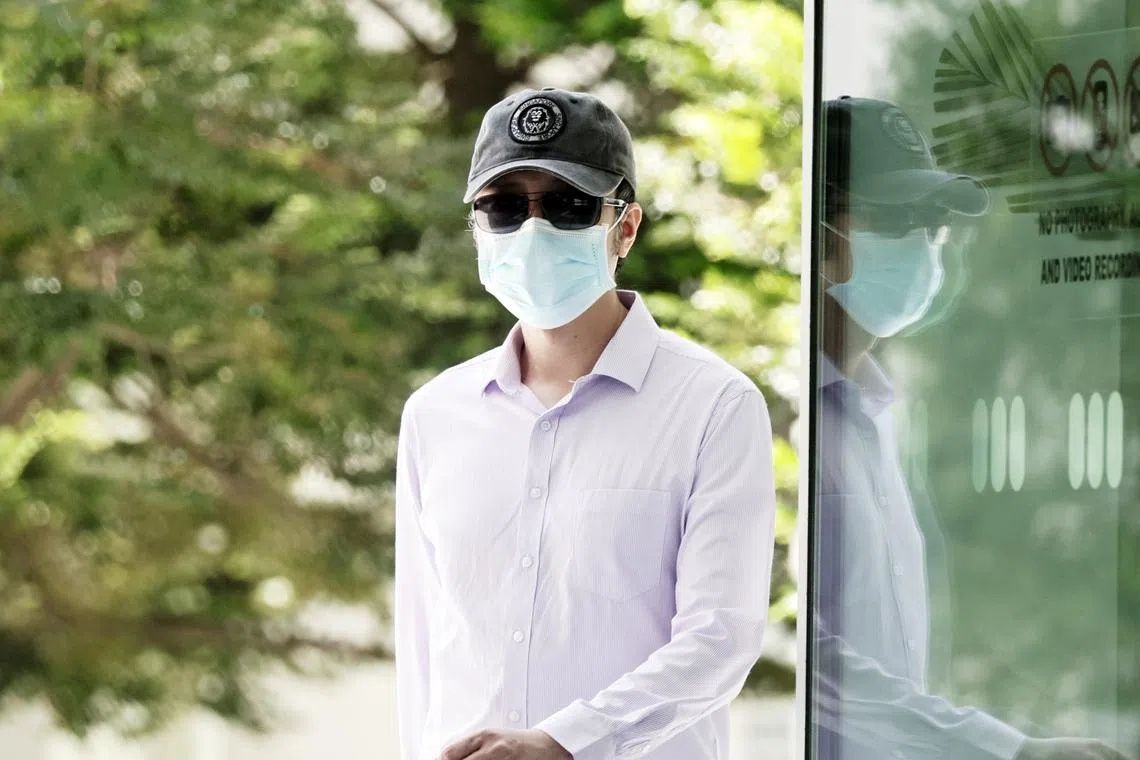
Wang Junjie, a 43-year-old naturalised Singaporean and former proprietor of a corporate services firm, has been sentenced to 32 weeks in jail for his role in fabricating financial documentation for shell companies connected to Singapore's most significant money laundering investigation. The sentencing concluded a case that exposed the vulnerability of Singapore's corporate services sector to exploitation by sophisticated international criminal networks seeking to establish the appearance of legitimate business operations.
Wang's criminal activity centred on his position as director and corporate secretary for companies owned or controlled by Su Haijin and Su Baolin, two of ten foreign nationals prosecuted in the broader S$3 billion money laundering conspiracy. Rather than maintaining genuine business records, Wang systematically created false financial statements and forged business agreements between 2020 and 2022, deliberately misrepresenting these fabrications to Singapore's Inland Revenue Authority (IRAS). The prosecution successfully demonstrated that Wang had functioned as a pivotal enabler, deploying his access to corporate filing systems and accounting practices to legitimise what were essentially hollow entities with no authentic revenue streams or employees.
The mechanics of Wang's deception reveal how professional credentials can be weaponised within opaque corporate structures. Court documents established that despite possessing no formal accounting qualifications, Wang operated LW Business Consultancy between 2018 and 2023, providing accounting, tax consultation, and corporate secretarial services to numerous clients. An investigation by The Straits Times uncovered that Wang had been associated with at least 185 companies by 2023, suggesting a business model predicated on volume rather than rigorous compliance. His services extended beyond document preparation to assisting clients with immigration-related applications, further demonstrating how corporate infrastructure can be mobilised for multifaceted fraudulent objectives.
Wang's engagement with Su Haijin's Yihao Cyber Technologies illuminates the specific mechanics of the scheme. Beginning in October 2018, Wang fabricated financial statements for the company between 2018 and 2023, coordinating directly with Su Haijin to engineer figures that would secure regulatory approval rather than reflecting actual business operations. Yihao Cyber maintained no genuine Singapore-based revenue sources and employed no staff, yet Wang manufactured elaborate false business agreements involving other entities where Su Haijin and Su Baolin held shareholdings. Su Haijin explicitly instructed Wang that the company required the appearance of profitability to strengthen his application for Singapore permanent residency, thereby converting false documentation into a tool for immigration fraud layered atop money laundering.
Equally troubling was Wang's relationship with Su Baolin, who was sentenced to 14 months' imprisonment in April 2024 for his role in the broader money laundering conspiracy. Wang functioned as corporate secretary and director of Su Baolin's Xinbao Investment Holdings across multiple periods between 2018 and 2023, providing the same repertoire of falsified documentation and corporate support services. The overlapping timelines and shared methodologies across Wang's client portfolio suggest a systematic approach to enabling foreign nationals to establish fraudulent business legitimacy within Singapore's regulatory environment.
The prosecution's case against Wang underscored his conscious and deliberate participation in tax evasion. By submitting false representations to IRAS between 2020 and 2022, Wang conspired to deprive Singapore's government of legitimate tax revenue while simultaneously providing the international money laundering network with credible-appearing business entities. His culpability extended beyond passive facilitation; he actively coordinated false figures with his clients and fabricated business agreements, demonstrating knowledge of the fraudulent purpose underlying these documents.
Wang's defence attempted to characterise his conduct as purely professional service provision for which he received only modest fees. His legal counsel argued for a sentence of three to four months' imprisonment, emphasising that Wang had not profited substantially from the offences beyond earning standard professional fees. However, the court determined that such characterisation minimised his conscious participation in systemic fraud and his exploitation of professional positioning to enable larger criminal enterprise.
The sentencing occurred against the backdrop of regulatory collapse. In January 2024, Singapore's Accounting and Corporate Regulatory Authority (ACRA) revoked Wang's qualification to provide corporate services and terminated his firm's registration as a filing agent, effectively ending his capacity to conduct legitimate business in this sector. This action reflected the regulator's assessment that Wang had so thoroughly compromised his professional standing through fraudulent conduct that he represented an ongoing risk to regulatory integrity.
The ten foreign nationals prosecuted in the overarching money laundering case received sentences ranging from 13 to 17 months imprisonment, and have since been deported with permanent bars against re-entering Singapore. Their sentencing in 2024 had established the scale of the conspiracy, with the S$3 billion figure indicating one of the largest organised money laundering operations detected in Singapore's jurisdiction. Wang's subsequent sentencing for his enabling role demonstrates that prosecutors and the courts view facilitators of such schemes as sharing substantive culpability with primary offenders.
For Malaysia and the broader Southeast Asian region, Wang's case underscores the transnational vulnerability of corporate services sectors to exploitation by money laundering networks. Corporate service providers operating across ASEAN borders frequently encounter clients seeking to establish business legitimacy in multiple jurisdictions simultaneously. The sophistication of the Su Haijin and Su Baolin network—spanning multiple shell companies, false documentation, and coordinated immigration fraud—reflects patterns that regulatory authorities across Southeast Asia have identified as increasing in frequency and complexity. Malaysian authorities monitoring corporate services providers should consider whether similar vulnerabilities exist in Malaysia's own regulatory framework, particularly regarding the qualification standards and oversight mechanisms for professionals providing corporate secretarial and accounting services.
Wang's prosecution also highlights the importance of regulatory coordination and intelligence-sharing within Southeast Asia. The initial exposure of Wang's involvement came through The Straits Times' investigative journalism rather than proactive regulatory detection, suggesting that pattern recognition and cross-entity analysis remain underdeveloped in tracking corporate services sector abuse. As money laundering networks become increasingly sophisticated in disguising illicit flows through legitimate corporate structures, the capacity of individual regulators to identify and prosecute enablers like Wang will depend upon enhanced information-sharing mechanisms and coordinated enforcement strategies across the region.

