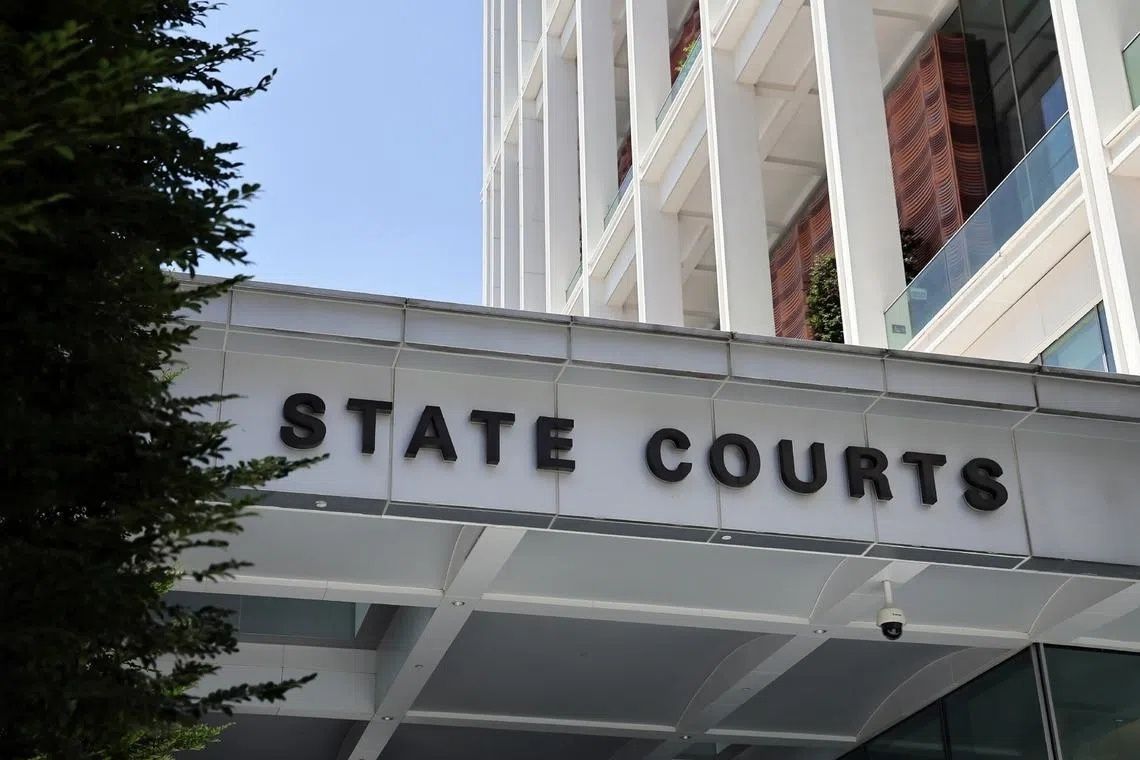
Singapore's judicial system processed a remarkable 41 drink-driving charges in a single day on June 25, underscoring the persistent challenge of impaired driving across the island. Among those brought before the district court were three men who allegedly succumbed to sleep while operating vehicles under the influence of alcohol, an alarming combination that authorities consider particularly hazardous. The coordinated charging of such a large cohort of offenders in one sitting demonstrates the scale and frequency of drink-driving enforcement operations in the city-state.
Tho Yu Wei Ronald, aged 34, faced allegations that he abandoned his vehicle at the entrance of a multi-storey carpark at Block 176 Hougang Street 13 around 11:05 pm on April 30 after supposedly drifting off at the wheel. Breath analysis indicated he carried at least 51 micrograms of alcohol per 100 millilitres of breath, substantially exceeding Singapore's legal threshold of 35 micrograms. The charge of leaving a vehicle in a position causing undue inconvenience to others was compounded by the drink-driving offence, reflecting authorities' concern not only with impaired driving but also with the cascading consequences of such behaviour in densely populated urban areas.
Similarly, Zhong Pengzhi, 38 years old, allegedly parked his car in the second lane of Clementi Avenue 5 at approximately 1:40 am on May 9 after losing consciousness at the wheel. His breath sample revealed concentrations of at least 48 micrograms per 100 millilitres, again surpassing the permissible limit. These incidents, occurring on separate dates and in different locations across Singapore, suggest that falling asleep while intoxicated represents a recurring pattern rather than an isolated occurrence, raising questions about how many such incidents go undetected or unreported.
The third case involved Dharuman Killivalavan, a 29-year-old Indian national, who was operating a lorry along Loyang Avenue on June 15 at approximately 7:45 pm when he allegedly abandoned the heavy vehicle in the extreme right lane. His breath test produced a particularly alarming reading of at least 87 micrograms of alcohol per 100 millilitres of breath—substantially more than double the legal limit. Killivalavan pleaded guilty on June 25 and received a fine of 7,100 Singapore dollars alongside a 36-month driving disqualification, demonstrating the severity of penalties for such infractions.
The broader cohort of 41 offenders charged that day ranged in age from 25 to 68 years, illustrating that impaired driving transcends demographic boundaries. Among these individuals, two represented particularly concerning cases: repeat offenders whose prior convictions apparently failed to deter subsequent violations. Cheng Woon Siong, 44, had previously been convicted of drink driving in December 2019 yet was again apprehended with breath alcohol levels of at least 52 micrograms per 100 millilitres. His repeat offence resulted in substantially harsher consequences—one month of imprisonment, a 5,500 Singapore dollar fine, and a 60-month driving ban commencing after his release. This escalation in sentencing reflects Singapore's zero-tolerance approach to recidivist impaired drivers.
The second repeat offender, Koh Choon Lye, aged 48, had a prior conviction dating to 2018 when he was similarly cited for drink driving. He was intercepted along Tyrwhitt Road on April 16 and registered breath alcohol concentrations of at least 51 micrograms per 100 millilitres. The existence of these repeat cases raises important questions about the effectiveness of licensing bans, rehabilitation programmes, and deterrent messaging in preventing individuals from reoffending after initial conviction.
Official statistics from Singapore's Traffic Police reveal the magnitude of the drink-driving problem. In 2025, 1,716 individuals were arrested for operating vehicles under the influence of alcohol, representing a substantial law enforcement undertaking. More troubling still, 12 fatal accidents attributed to drink-driving occurred that same year, each representing a tragedy that extended far beyond the driver to affect victims, families, and communities. These fatalities underscore that drink-driving is not merely a regulatory or administrative concern but a public safety crisis with lethal consequences.
For Malaysian and Southeast Asian observers, Singapore's aggressive enforcement and robust penalty framework offer instructive parallels. While Malaysia and other regional nations have implemented drink-drive legislation, the consistency and severity of enforcement varies considerably. Singapore's approach—combining substantial financial penalties, lengthy driving disqualifications, and, for repeat offences, custodial sentences—reflects the island-state's broader philosophy of swift and certain consequences for violations.
The authorities have emphasised that driving under alcohol's influence represents a fundamentally irresponsible and dangerous act, particularly in a densely urbanised environment where single incidents can endanger numerous other road users. Singapore's Traffic Police have actively promoted alternative transport options, including taxis and private-hire vehicles, as substitutes for self-driving after alcohol consumption. This messaging recognises that preventing impaired driving requires not only law enforcement but also the availability of practical alternatives and cultural shifts in social attitudes toward responsible transport choices.
The concentrated charging of 41 offenders in one day, while headline-grabbing, reflects routine enforcement operations rather than an exceptional occurrence. Such coordination suggests that authorities regularly identify and process substantial numbers of impaired drivers through systematic road checks and surveillance. For visitors and residents across Southeast Asia, the takeaway is clear: Singapore's enforcement apparatus is unforgiving, detection rates are high, and consequences are severe, making impaired driving an exponentially riskier choice than in jurisdictions with less rigorous enforcement.
Looking forward, the persistence of drink-driving despite public messaging, legislative penalties, and high-profile prosecutions indicates that behavioural change remains incomplete. The cases of Cheng and Koh demonstrate that even imprisonment and multi-year driving bans may not suffice to deter certain individuals. This suggests that combating impaired driving requires multi-layered interventions encompassing not only legal consequences but also alcohol-education initiatives, treatment programmes for those with substance-use disorders, and continued investment in public-transport infrastructure that reduces reliance on private vehicles.

