Singapore's Internal Security Department has moved against two citizens whose embrace of violent extremism traces directly to the escalating Israeli-Palestinian conflict. Cyrus Dzulqarnain Al-Shahriar, a 19-year-old student, has been placed under a restriction order, while 30-year-old Tarmizi Mohd Taha, employed as a customer service officer, faces detention. The cases underscore a troubling pattern emerging across the region: how geopolitical flashpoints thousands of miles away can ignite dangerous radicalisation among young Southeast Asians who consume extremist content through digital channels. Together, these individuals represent the seventh and eighth Singaporeans dealt with under the Internal Security Act specifically because their path toward violent extremism was triggered by Hamas' October 7, 2023 attacks on Israel and the subsequent conflict.
Cyrus's descent into extremism began innocuously enough in 2022 when he joined online religious learning groups to deepen his understanding of Islam. What started as theological inquiry, however, gradually exposed him to material promoting violence against Western societies and LGBTQ communities. He began posting content inciting attacks on LGBTQ individuals, reflecting a radicalization pathway that authorities recognise as particularly vulnerable among digitally native youth. The trajectory shifted markedly after October 2023, when pro-Hamas narratives flooded social media platforms. The teenager became convinced that Hamas's killing of Israeli civilians constituted legitimate jihad, and by 2024 he had seriously entertained travelling to Gaza to join the militant organisation and fight. Only practical constraints—lack of travel resources and genuine fear of physical combat—prevented him from attempting the journey.
What distinguishes Cyrus's case and represents a growing concern for regional security analysts is his embrace of what authorities term Composite Violent Extremism, or "salad bar" ideologies. Rather than adhering to a single coherent extremist framework, Cyrus cobbled together a personalised belief system drawing selectively from multiple violent ideologies. He consumed and amplified pro-Hamas messaging, gravitating toward online groups espousing violent accelerationism—the belief that chaos and violence can catalyse the collapse of existing world order and establishment of an Islamic global civilisation. These groups particularly target Singapore, viewing it as an extension of American and Zionist control. Early in 2025, Cyrus joined private online chat forums associated with these accelerationist cells, where he began glorifying historical terrorist attacks including Al-Qaeda's September 11 strikes and the 2002 Bali bombings.
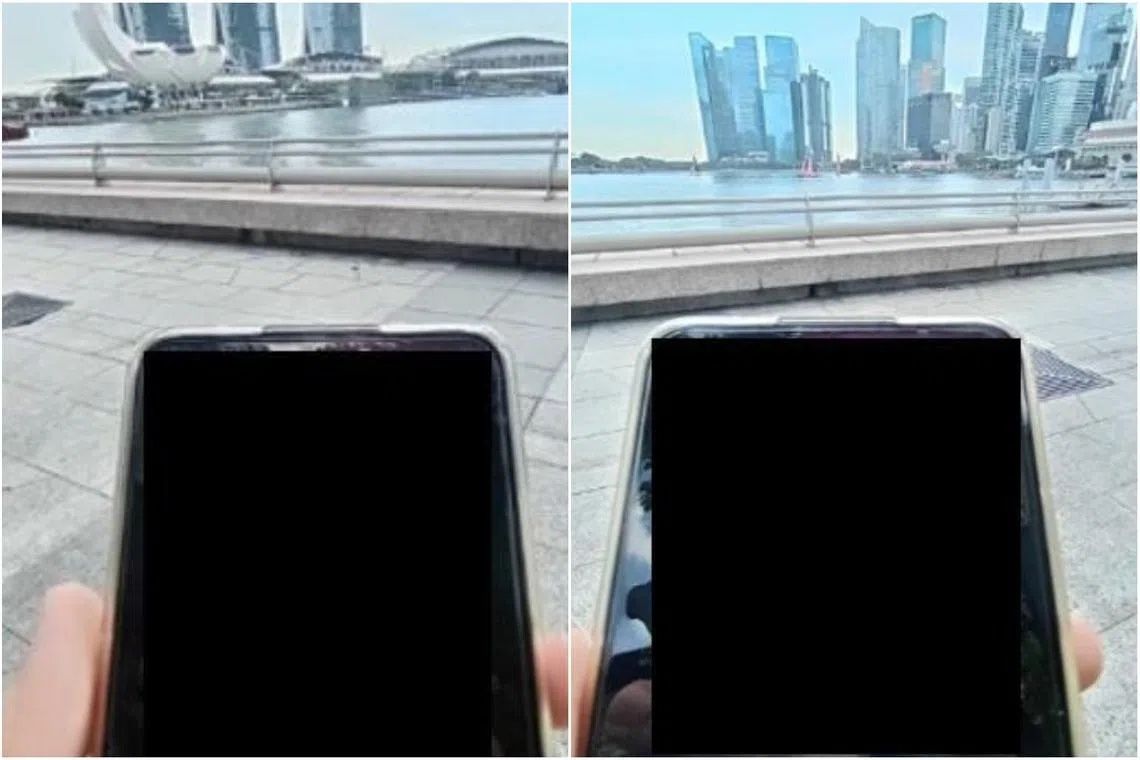
The photograph incident that ultimately brought Cyrus to authorities' attention reveals how modern extremist movements operationalise their members. At the direction of other group members, Cyrus visited the Esplanade area on multiple occasions to photograph extremist propaganda materials positioned against the Marina Bay Sands backdrop. He then publicly shared these images on social media in November 2025 as a form of pledge of allegiance to the group. He viewed himself as an active participant in the collective "digital jihad," engaging in online harassment campaigns, spreading disinformation to defame perceived enemies of Islam, and amplifying content supporting Hamas and Syrian militant organisations. The strategic use of Singapore's iconic landmarks in propaganda material points to deliberate efforts to localise and legitimise extremism within the city-state's context.
Cyrus's case took an even more disturbing turn when he encountered online content celebrating school shooter Elliot Rodger, whose 2014 attack near the University of California, Santa Barbara claimed six lives and injured fourteen others. Rodger's killing spree stemmed from documented resentment over social rejection and perceived bullying. Cyrus became intrigued by incel ideology—the "involuntary celibate" subculture primarily composed of men who blame society and women for their inability to find romantic or sexual partners. Having explored incel forums, the teenager began identifying as incel and posting threats against women using dehumanising terminology including "foid," shorthand for "female humanoid." He fantasised about committing violence against specific groups within his school environment, particularly LGBTQ individuals and couples.
What prevented these ideations from translating into actual violence, according to the Internal Security Department, was the absence of preparatory steps and the teenager's failure to share his extremist views or violent fantasies with family members or schoolmates. The isolation that characterises online radicalisation thus paradoxically offered protection; Cyrus's violent ideation remained confined to digital spaces. Nevertheless, authorities regard his case as warranting immediate intervention. ISD officials emphasised that his documented support for terrorist organisations combined with public online posts inciting violence against identifiable groups constitute genuine security concerns requiring rehabilitation intervention to address his radical ideological commitments.
Tarmizi Mohd Taha's case, though formally unrelated to Cyrus's according to ISD, reveals parallel vulnerabilities among Singapore's working-age population. The 30-year-old customer service officer has been detained after admitting his willingness to execute attacks within Singapore if Hamas instructed him to do so. His background as a logistics assistant during compulsory military service in the Singapore Police Force made him potentially valuable to extremist networks; he believed his skills could contribute meaningfully to Hamas operations and hasten his path to martyrdom. Like Cyrus, Tarmizi's radicalisation traced directly to the October 2023 escalation, illustrating how the Gaza conflict has functioned as a catalyst across different age groups and socioeconomic positions within Singapore.
The emergence of Composite Violent Extremism as a distinct threat category reflects evolving radicalisation dynamics across Southeast Asia. Unlike traditional extremist movements organised around coherent ideological platforms with established leadership hierarchies, CoVE practitioners construct bespoke belief systems combining elements from Islamist terrorism, violent accelerationism, incel misogyny, anti-LGBTQ extremism, and anti-Western conspiracy narratives. The absence of organisational coherence has historically led some analysts to dismiss such fragmented movements as less threatening. The Internal Security Department's assessment directly counters this view, noting that ideological incoherence does not diminish the genuine violence risk such individuals pose. If anything, the personalised nature of composite extremism makes detection and prevention more challenging, as adherents lack clearly identifiable organisational affiliations that intelligence agencies traditionally monitor.
For Southeast Asian governments and regional security communities, the Cyrus and Tarmizi cases carry important implications. Both illustrate how geographic distance does not insulate the region from Middle Eastern conflicts. Digital platforms enable instantaneous transmission of propaganda and ideological content, creating radicalisation pathways that bypass traditional gatekeepers. Singapore's prominence as a financial and technology hub makes it a natural target for extremist groups seeking to prove capability and extend influence. More broadly, the cases demonstrate that Malaysia, as a Muslim-majority democracy with significant youth populations active on social media, faces comparable vulnerabilities. Young people exposed to conflicting narratives about Islamic identity, national belonging, and global power structures may gravitate toward extremist content offering simplified answers to complex geopolitical questions.
The rehabilitation framework authorities intend to apply to Cyrus represents an important regional innovation in counter-extremism strategy. Rather than exclusively pursuing detention and incapacitation, Singapore's approach emphasises ideological deprogramming and cognitive restructuring for younger offenders. This reflects recognition that individuals radicalised primarily through digital exposure may respond to intensive intervention addressing the underlying ideological appeals. Cyrus's youth, his isolation within family and school communities, and the primarily ideational rather than operational nature of his threat profile suggest potential responsiveness to structured rehabilitation. Success or failure in his case will offer valuable lessons for other Southeast Asian jurisdictions developing counter-extremism protocols for digitally-native populations.
The broader context of eight Singaporeans radicalised through Gaza conflict exposure within roughly eighteen months suggests that Middle Eastern conflicts have become deeply integrated into Southeast Asian security landscapes in ways that require fresh analytical and operational responses. Regional governments must grapple with how to maintain open information environments and digital connectivity while building population resilience against extremist messaging. Educational initiatives addressing media literacy, ideological alternatives to violent extremism, and the psychological appeals of accelerationist and incel ideologies may prove as important as traditional security operations. For Malaysia specifically, where similar dynamics of online radicalisation affecting youth have been documented, the Singaporean cases provide urgent cautionary examples of trajectories authorities should actively work to interrupt through early identification and intervention.