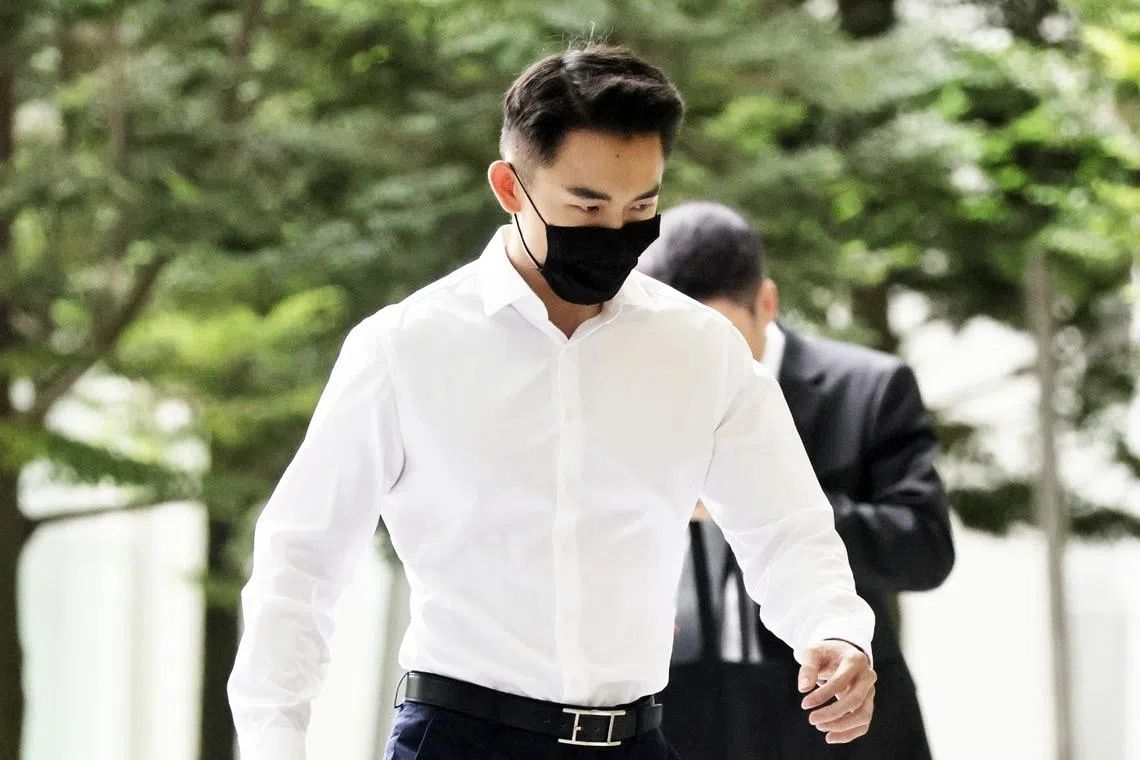
A medical practitioner in Singapore has been convicted of drug consumption after being arrested during a coordinated police operation at a luxury hotel in Sentosa last year. Rayson Lee Rui Sheng, 36, was among 49 men apprehended when officers raided a private villa gathering at the Sofitel Singapore Sentosa in the early hours of August 9, 2023. A second defendant, Tan Li Ming, 29, was also found guilty on the same charge on Tuesday, June 30, following a trial that examined whether the men knowingly consumed the controlled substances or whether their drinks had been surreptitiously laced without their consent.
The case hinged on forensic evidence obtained from both urine and hair samples provided by the two men. Testing by the Health Sciences Authority revealed the presence of MDMA, commonly known as ecstasy, in their urine samples, while their hair samples indicated exposure to both MDMA and ketamine, a separate recreational drug. The chemical analysis represented crucial evidence that consumption had indeed taken place, though the men's defence centred on their assertion that they did not knowingly ingest these substances and that their beverages had been spiked without their knowledge or consent.
District Judge A Sangeetha presided over the trial and ultimately rejected the defendants' accounts as lacking credibility. The judge observed that despite the men's claims that their initial drinks had been adulterated, they subsequently consumed additional beverages during the party, a pattern that seemed inconsistent with genuine victims concerned about poisoned drinks. Furthermore, the judge noted that the hair sample results demonstrated prior drug exposure, indicating that neither defendant was unfamiliar with drug consumption. This history of use became a critical factor in the judicial assessment of their overall credibility.
The events leading to the raid began when police received intelligence about suspicious activity at the Sofitel property. Officers conducted initial checks shortly after 5:30 am on August 9 and discovered substances suspected to be controlled drugs at the scene. The discovery prompted the Central Narcotics Bureau to assume operational control of the investigation. During the comprehensive search of the villa, authorities recovered multiple items including suspected ecstasy and ketamine, along with various drug paraphernalia associated with substance consumption and distribution.
Lee's account to the court revealed that he had initially attended a birthday celebration hosted by an acquaintance on the evening of August 8, arriving around 8:00 pm. He subsequently left this gathering to visit a nightclub in Clarke Quay, where he encountered Tan for the first time and was introduced to him by mutual contacts. The two men independently made their way to the villa in the early morning hours of August 9. Upon arrival, Lee discovered that the gathering had expanded significantly, with numerous additional guests present, many of whom he did not recognise. He claimed he consumed three beverages offered to him by individuals he identified as strangers, while maintaining he observed no pills, drug paraphernalia, or evidence of drug consumption during the party.
Tan's testimony presented a more detailed account of alleged suspicious activity at the gathering. He asserted that he observed a group of four to five unidentified men in a pantry area using a syringe to extract liquid from a bottle and subsequently inject this substance into plastic cups. According to Tan's version of events, after consuming from one of these cups, he noticed white residue remaining at the bottom. He further claimed to have approached an unidentified person to inquire about the substance being added to the drinks, and that this person responded by identifying it as "G-water," a substance allegedly intended to produce intoxication. Tan maintained that he was unfamiliar with this term and did not understand what was being administered to him.
The prosecution team, comprising deputy public prosecutors Jocelyn Teo and Dhiraj G Chainani, systematically dismantled the defence narrative during closing arguments. They highlighted that while the defendants did not contest the laboratory findings regarding the presence of MDMA and ketamine in their systems, the absence of any credible identification of specific individuals responsible for the alleged drink spiking severely weakened their case. The prosecutors characterised the defence strategy as relying on "hypothetical scenarios and unexplained possibilities," including vague references to unidentified foreign nationals purportedly involved in the drink contamination.
A particularly significant aspect of the prosecution's argument involved the plastic cups that the defendants claimed might contain drug residue. While the defence suggested that failure to seize these cups represented a gap in the investigation, the prosecutors contended that even if such cups had been recovered and tested positive for drugs, this would merely confirm that the men consumed drug-laced beverages rather than establishing that such consumption was genuinely unknowing or non-consensual. This logical framework proved persuasive to the court, as it highlighted the fundamental distinction between proving contamination and proving ignorance.
Lee's admission during testimony that he had previously consumed pills given to him by strangers during a visit to Thailand in June 2023 further undermined the credibility of his defence. The prosecution emphasised that individuals who had truly been unwitting victims of drink spiking would typically possess concrete, specific details about the perpetrators, yet the defendants offered only vague descriptions and claims of unknown actors. The complete absence of identifiable witnesses to corroborate their versions of events suggested to the judge that their accounts were fabricated rather than truthful recollections.
The case reflects broader concerns about drug use at social gatherings in Singapore and the region, where enforcement operations continue to identify significant quantities of recreational drugs at private venues. The large number of arrests—49 men ranging in age from 21 to 46—indicates that such parties may be more prevalent than commonly acknowledged. For Malaysian readers, the case serves as a cautionary reminder of the stringent drug laws operating across Southeast Asia and the serious consequences of controlled substance possession or consumption, with conviction records potentially affecting professional licensing and career prospects.
The legal proceedings also underscore the sophistication of forensic testing available to regional law enforcement agencies. The combination of urine and hair sample analysis provides authorities with complementary evidence, as hair testing can detect drug use over longer periods than urine analysis alone. This technological capability makes it increasingly difficult for individuals to successfully claim ignorance or non-participation in drug consumption, particularly when laboratory evidence is supplemented by witness testimony and circumstantial evidence regarding behaviour at the scene.
Beyond the immediate case, the conviction highlights the vulnerability of individuals who frequent venues where drugs are present, even if they claim not to have knowingly participated in consumption. The judge's observation that the defendants continued to consume beverages despite their alleged concerns about contamination suggests that social and peer pressure at such gatherings may override personal safety considerations. For health professionals like Lee, the conviction carries additional implications, as it may trigger disciplinary proceedings with the Singapore Medical Council, potentially affecting his ability to practice medicine in the jurisdiction.

