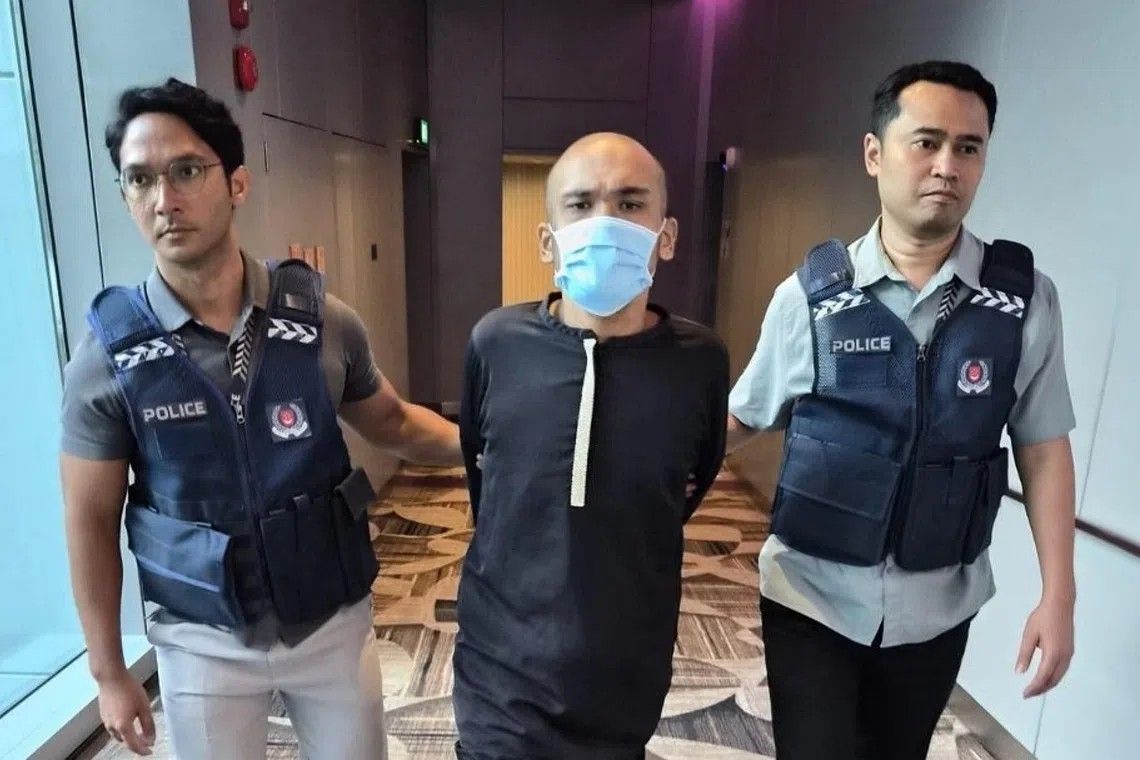
A 27-year-old Singaporean man appeared in court on August 7 to face charges stemming from inflammatory social media posts targeting the Muslim community, marking another case of religious sensitivities being tested through digital platforms in the island nation. Elvin John Baptist was charged under Singapore's Maintenance of Religious Harmony Act, a statute designed to protect religious minorities and preserve interfaith stability in a multi-ethnic, multireligious society. The charge carries particular weight given Singapore's historical experience with religious tensions and the government's consistent messaging that such conduct threatens social cohesion.
Court documents reveal that Baptist allegedly uploaded two TikTok videos on March 1 containing remarks in Malay that he knew would offend Muslims and potentially disturb public peace. The specific language he used, while not fully detailed in public statements, represents the kind of religiously offensive content that Singapore's authorities treat as a serious breach of the social contract that underpins the nation's multicultural framework. The timing of the videos—posted during a period when digital platforms have become increasingly central to public discourse—underscores how modern communication tools have created new vulnerabilities for religious harmony.
The investigative response demonstrates Singapore's commitment to swift enforcement of religious harmony laws. Police received a report on March 1, the same day the videos appeared online, suggesting that community members quickly identified and flagged the content. However, Baptist had already departed Singapore before authorities could take action, complicating the initial response. This pattern of fleeing jurisdiction occasionally appears in cases involving religiously sensitive allegations, as offenders may recognise the severity of potential legal consequences under Singapore's strict interpretation of religious harmony statutes.
The cross-border dimensions of the case highlight how Southeast Asian law enforcement cooperation has evolved. Baptist's departure took him to Malaysia, where he remained until Malaysian authorities, working with Singapore's police, arranged his deportation on August 6. The rapid repatriation—facilitated by the Royal Malaysia Police—reflects both the operational coordination between neighbouring countries and Malaysia's own commitment to preventing its territory from becoming a refuge for individuals accused of religious offences. Upon landing in Singapore on the same day, Baptist was immediately arrested, ensuring uninterrupted custody and investigation continuity.
Beyond the immediate charges, Baptist is simultaneously assisting police with investigation into a separate incident that carries even more inflammatory connotations. Another video circulating on social media allegedly depicts someone stepping on a Quran aboard a public bus in Singapore. While authorities have not confirmed whether Baptist is directly involved in this second matter, his cooperation with investigators suggests potential connections. Such an act—deliberately desecrating a sacred religious text—would represent a far more egregious violation of religious sensitivities and carries deeper theological significance within Islamic tradition.
For Malaysia and the broader Southeast Asian region, these cases underscore the delicate balance between free expression and religious protection that characterises governance across the area. While Singapore maintains stricter speech restrictions than some democracies, Malaysian courts have also prosecuted cases involving religious insults and hateful speech targeting minority communities. The precedent set through Baptist's prosecution will likely influence how other jurisdictions assess similar digital-age religious offences, particularly as social media enables rapid dissemination of inflammatory content across borders.
The Maintenance of Religious Harmony Act reflects Singapore's foundational principle that religious respect represents a prerequisite for social stability rather than merely a preference. This philosophical approach distinguishes the city-state from Western liberal democracies that typically grant broader speech protections even for religiously offensive content. However, it aligns closely with values prevalent across Southeast Asia, where religious minorities historically faced persecution and where contemporary religious tensions remain real concerns for policymakers.
From a Malaysian perspective, Baptist's case carries particular resonance given ongoing discussions about strengthening legal protections for Islam and other faiths. Malaysia's own legal frameworks, including provisions under the Penal Code and state Islamic law, address religious insults, though enforcement patterns and judicial interpretations vary across states. The Singapore case may influence how Malaysian authorities approach similar digital transgressions, especially those involving content that crosses state borders or reaches Malaysian audiences.
The incident also reflects broader challenges facing Southeast Asian societies navigating the intersection of digital communication and religious identity. Unlike print or broadcast media, which traditionally involved editorial gatekeeping, social media platforms enable individuals to broadcast potentially inflammatory content instantaneously to mass audiences. This technological democratisation of communication has created enforcement challenges for authorities seeking to maintain religious harmony while respecting legitimate expression. Baptist's case represents authorities' determination to prosecute violations even when they occur in digital spaces characterised by rapid content circulation and distributed responsibility.
Moving forward, the prosecution may establish precedents affecting how regional platforms moderate religious content and how law enforcement coordinates across borders to apprehend offenders. For Malaysian and other Southeast Asian residents who regularly engage on international social media platforms, the case serves as a reminder that religiously offensive speech posted from outside one's home country can trigger transnational legal consequences when shared internationally or when individuals subsequently return to their home jurisdiction.

