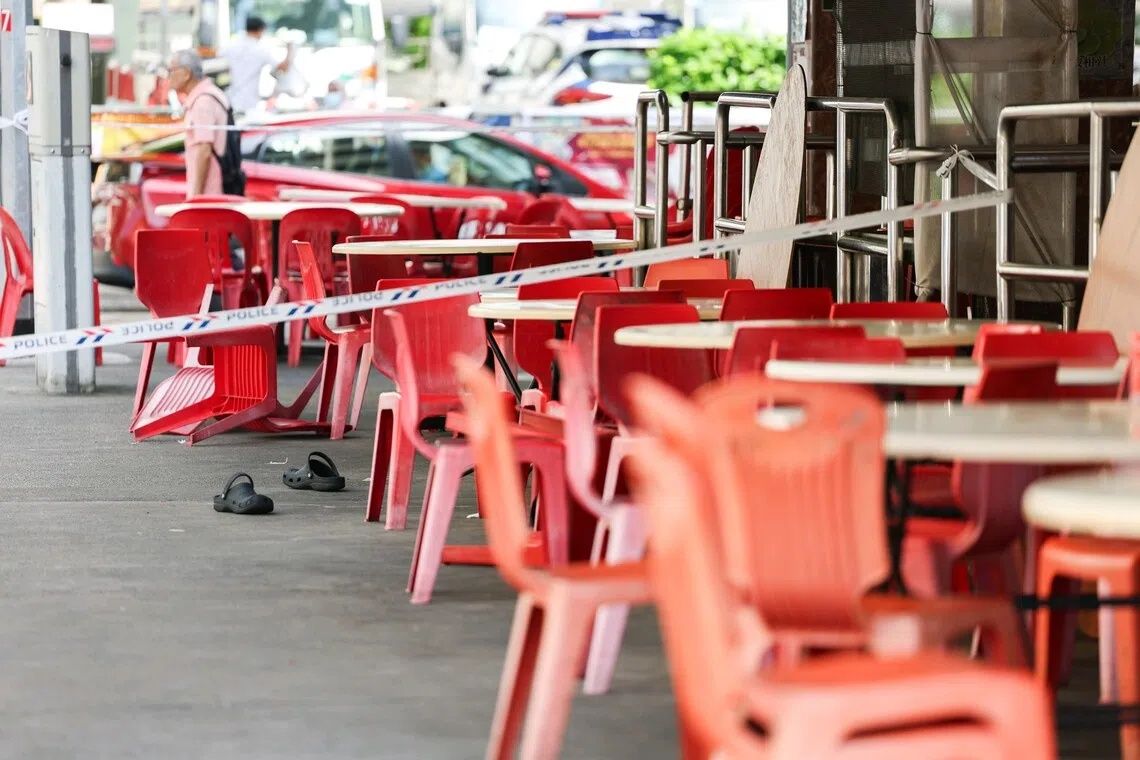
A Singapore court has handed down a 17-month prison sentence to Pradave Shashi Kumar, a 22-year-old man found guilty of deploying a chair as a weapon against a victim already targeted in a knife assault. The incident, which resulted in the death of 25-year-old Dhinessh Vasie, unfolded during a chaotic early-morning clash near Kitchener Road on September 22, 2024. Kumar's guilty plea to voluntarily causing hurt with a dangerous weapon marks the first legal resolution in a case involving four accused persons, with the remaining three facing more serious charges including murder and rioting.
The circumstances leading to the deadly confrontation reveal a night of escalating tensions. Kumar travelled with three companions and two women from a club in Golden Mile Tower to a pub located on Sam Leong Road to continue their celebrations. Upon arriving around 4am, the group ventured through a back alley where they encountered a larger gathering already embroiled in a heated dispute. The altercation between the two groups initially sparked when one of Kumar's companions, Satish Jason Prabhas, exchanged heated words with a member of the opposing faction before resorting to physical violence.
The breakdown of order happened rapidly once the initial punch connected. Kumar and his associates engaged directly with members of Dhinessh's group, prompting them to retreat towards the vicinity of Verdun Road. According to Deputy Public Prosecutor Jonathan Tan, multiple witnesses observed Muhammad Sajid Saleem, aged 24, brandishing a small blade approximately 7.5 centimetres in length with the point facing downward. The sight of the weapon prompted Dhinessh and his companions to flee, but Kumar's group pursued them relentlessly.
During the chase, Sajid inflicted slashing wounds on Dhinessh and at least two others as they desperately attempted to distance themselves. The pursuit continued until Dhinessh's pace slowed as he neared a coffee shop positioned at the intersection of Verdun Road and Sam Leong Road. This momentary hesitation allowed Sajid to close the gap and deliver what would prove a fatal blow—a stab wound to the upper back that penetrated the victim's heart. The prosecution's account presented a picture of a defenceless man struggling through a violent ordeal.
What transformed the stabbing into a coordinated assault was the subsequent participation of multiple assailants. Kirrthik Roshan Prem Ananth, also 23, seized a chair from within the coffee shop and repeatedly struck the incapacitated victim. Kumar, observing the ongoing attack, retrieved another chair and forcefully struck Dhinessh's head and chest twice with considerable force. Throughout this sustained assault, Dhinessh remained slumped and unable to defend himself, according to court testimony. The prosecution emphasised the victim's complete vulnerability during what amounted to an uncontested beating.
The group's departure from the scene occurred shortly after this final assault, with the perpetrators walking towards City Square Mall as if attempting to distance themselves from immediate detection. Emergency responders arrived to find Dhinessh critically injured; he succumbed to his wounds despite medical intervention. Police apprehended Kumar at approximately 5.15am that same morning, marking the beginning of investigations that would ultimately implicate four individuals in varying degrees of culpability.
The differentiated charges reflect the prosecutors' assessment of each defendant's role and intent. While Kumar faced charges related to his use of the chair as a weapon, Sajid confronts a murder charge as the person who wielded the knife during the fatal stabbing. Satish and Kirrthik remain under rioting charges, acknowledging their participation in the violent confrontation without necessarily establishing the same level of direct responsibility for the death. The judicial process continues to unfold with these three remaining cases pending resolution.
Under Singapore law, conviction for voluntarily causing hurt using a dangerous weapon carries potential sentences of up to seven years' imprisonment, supplemented by possible fines and caning. Kumar's 17-month sentence represents a relatively modest outcome within this possible range, potentially reflecting mitigating factors such as his age, guilty plea, and role as a secondary participant in the escalating violence. However, the sentencing also sends a message about the seriousness of deploying weapons or improvised instruments during altercations that result in fatalities.
For Malaysian observers, this case illustrates the escalatory potential of street violence and how spontaneous confrontations can rapidly transform into fatal incidents through collective participation. The journey from a drinking establishment to a violent brawl and ultimately to a death underscores how groups of young people can become caught up in circumstances that spiral beyond control or rationality. The involvement of an initial weapon and subsequent use of environmental objects—in this case, cafe chairs—demonstrates the unpredictable weaponisation that occurs during chaotic street fights.
The case also highlights how responsibility apportioning in group violence prosecutions requires careful examination of individual participation levels. Jurisdictions across Southeast Asia grapple with similar challenges when determining culpability where multiple assailants contribute to a single fatal outcome. The distinction between those directly inflicting fatal wounds and those delivering additional blows reflects legal systems' attempts to calibrate punishment according to specific actions and intent.
The remaining prosecutions of Sajid, Satish, and Kirrthik will likely attract significant public and legal attention in Singapore given the fatal outcome and the multiple charges involved. Sajid's murder charge particularly carries severe consequences under Singapore's judicial system. The eventual verdicts in these remaining cases will provide fuller clarity on how courts assess collective responsibility and apportion culpability in circumstances where a single weapon and multiple assailants converge in fatal outcomes. The sentencing of Kumar represents merely the opening chapter in what promises to be a lengthy legal process determining accountability for Dhinessh Vasie's death.

