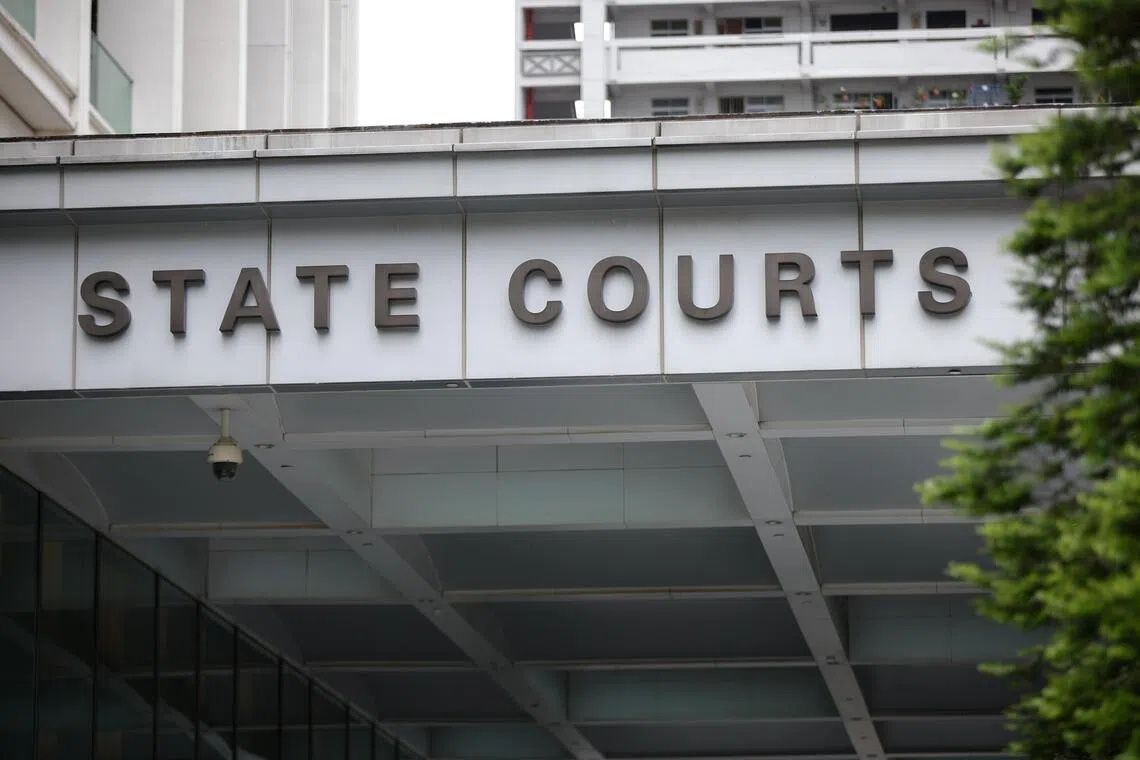
A Singapore court has handed down a substantial prison sentence and corporal punishment to a 27-year-old man convicted of sharing explicit videos of his ex-girlfriend without consent—a crime that prosecutors described as a particularly egregious case of revenge porn. The offender, who distributed the intimate footage to humiliate his former partner after she rejected his reconciliation advances, was sentenced on June 25 to two years and eight months' imprisonment alongside two strokes of the cane. He was also ordered to compensate the victim with S$4,000, though the financial reparation pales against the documented psychological and social devastation caused by his actions spanning nearly five years.
The relationship that spawned this crime began in 2016 when both parties were students at a religious school. The victim was merely 15 years old when she and the then-17-year-old offender became romantically involved. During their relationship, he persuaded her to create intimate self-recorded material—photographs and at least two videos documenting sexual acts—which she voluntarily shared with him under the assumption of privacy and trust. This initial exchange occurred within the context of what appeared to be a consensual teenage relationship, though the age disparity and the minor's tender years raise serious questions about the power dynamics and her capacity for fully informed consent at that developmental stage.
The relationship deteriorated over time as the victim recognised troubling patterns in his behaviour. She ultimately ended their involvement, citing his possessive and toxic conduct as reasons for the separation. In an attempt to sever ties completely, she requested that he delete all intimate material he possessed of her, undertaking the same action herself by destroying any sensitive content she had retained. The offender agreed to her request verbally but, as events would later reveal, this commitment was entirely deceptive. He retained copies of her videos and photographs for what he characterised as personal viewing, effectively maintaining a digital archive of exploitative material without her knowledge or continued consent.
More than five years after their initial encounter, circumstances shifted dramatically when the offender, despite being in a new relationship, reached out to the victim in April 2021 seeking reconciliation. His proposal was met with silence—the victim simply did not respond to his overtures. When confronted with this rejection, he took the decisive step of blocking him from her social media accounts. This rejection apparently triggered a vengeful response from the offender, who determined to punish her through public humiliation and degradation. Rather than accepting her decision and moving on, he embarked on a calculated campaign to destroy her reputation and privacy.
The mechanism for his revenge was particularly calculated and cruel. He created a fraudulent account impersonating the victim herself and used it to upload her intimate videos to a massive social media group comprising nearly 80,000 members. The platform hosting this group boasted millions of users worldwide, meaning the content had the potential to spread far beyond the initial upload point. Notably, the group specialised in sharing explicit images and videos of women wearing religious garments—a detail that adds another layer of degradation, transforming the victim's content into part of a collection designed to sexualise and demean women within faith communities. By situating her videos within this context, the offender effectively transformed her intimate material into fetishised content, compounding the violation of her privacy and autonomy.
The victim discovered the breach of her privacy when a stranger contacted her through Instagram, having encountered her nude images online. When she pressed him for the source, he provided a link directly to the social media group containing her videos. Suspecting the offender's involvement, she undertook her own undercover investigation, creating a false identity to infiltrate the group and verify her suspicions. What she encountered was deeply disturbing: a repository of hundreds of explicit images and videos of women in religious dress, with her own material occupying a prominent place within this collection. This discovery, occurring more than five years after the initial creation of the content, confirmed that her intimate material remained in active circulation and continued to be viewed, shared, and used by strangers for their gratification.
The psychological and social consequences for the victim have been profound and lasting. She became estranged from her mother as a result of the scandal, with family relationships fractured by the shame and betrayal. Friends who encountered her videos online continued to contact her about the material, subjecting her to repeated reminders of the violation and persistent social awkwardness. More significantly for her future trajectory, the victim had previously aspired to become a religious education teacher—a career path that would have aligned with her faith and community involvement. However, fearing potential discovery of her intimate content by colleagues, parents, and students within the religious community, she abandoned this professional ambition entirely. The offender's actions thus did not merely violate her privacy in a moment; they systematically reshaped the arc of her life by foreclosing career opportunities and damaging her family relationships.
During sentencing hearings, the prosecution presented compelling arguments for a substantial custodial term, seeking between 30 and 36 months of imprisonment combined with three strokes of the cane. Deputy Public Prosecutor Chong Kee En emphasised that despite nearly five years having elapsed since the crime, the victim continued to experience its ripple effects through unsolicited contact from men who had discovered her material online. The prosecutor characterised these ongoing consequences as evidence of the crime's persistent harm—the victim remained vulnerable to exploitation and harassment because her intimate content continued circulating through digital networks beyond her control. In contrast, the defence counsel argued for leniency, requesting only 12 months of imprisonment without corporal punishment and a modest compensation payment of S$500, framing the offence as an impulsive act committed in anger rather than a calculated campaign of systematic harassment.
Principal District Judge Toh Han Li's judgment ultimately endorsed the prosecution's characterisation of the offence as fundamentally rooted in revenge and humiliation. The judge noted that the offender had deliberately selected videos showing the victim in religious attire specifically to heighten the degradation and shame, weaponising her faith community membership as a mechanism for maximum social damage. The judgment recognised that the victim's material was demonstrably still circulating years later, evidenced by her continued receipt of propositions from unknown men encountering her content. This persistence of harm distinguished the case from a simple momentary breach; rather, it constituted an ongoing injury sustained through the offender's decision to upload the material to a massive platform where algorithmic spread and human sharing ensured its continued visibility.
The sentence of 32 months imprisonment and two strokes of the cane represents a serious outcome in Singapore's legal framework, though somewhat less severe than the prosecution had sought. Under Singapore law, those convicted of distributing intimate recordings without consent face maximum penalties of five years' imprisonment, fines, caning, or combinations thereof. The imposed sentence reflects judicial recognition of the severity of the violation while stopping short of the maximum available punishment. However, the broader context matters significantly for Malaysian and Southeast Asian readers: this case illustrates how digital platforms enable privacy violations on unprecedented scales, how revenge motivations can drive calculated cruelty, and how the persistent nature of internet content means that victims experience ongoing harm long after initial offences occur. The case also highlights the particular vulnerability of young people pressured into creating intimate material and the lifelong consequences that can follow when such material is weaponised through non-consensual sharing.

