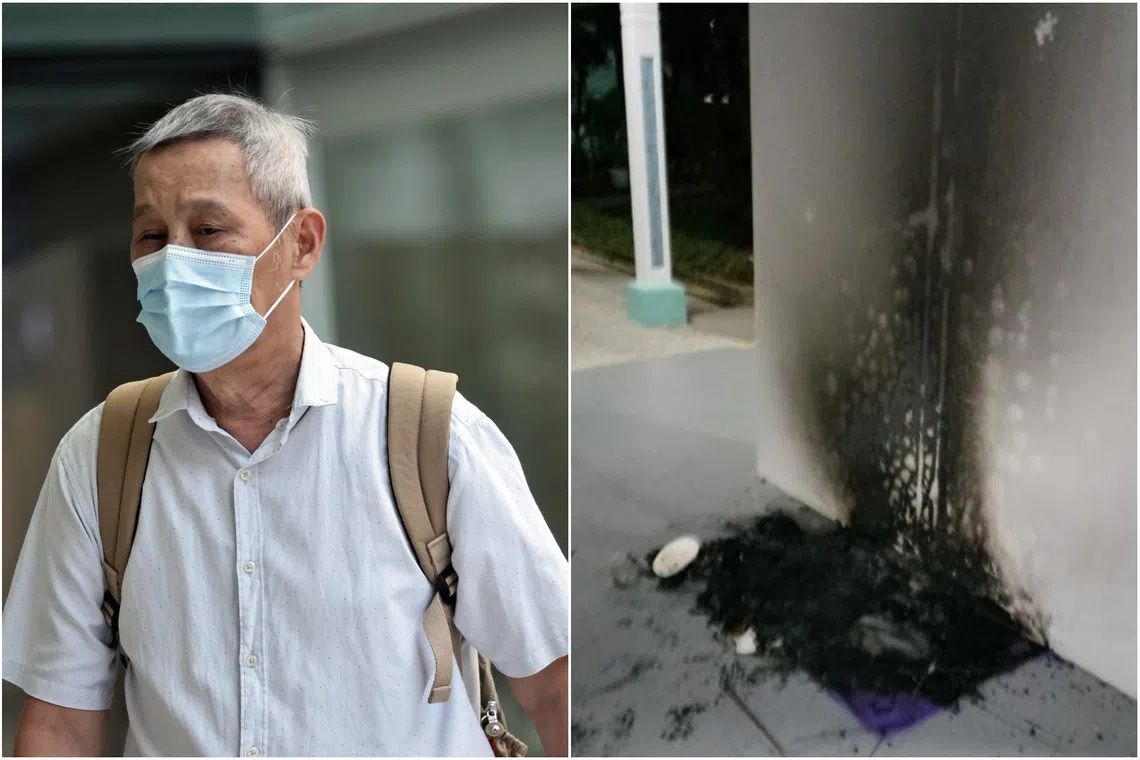
A 68-year-old retired resident of Bukit Batok in Singapore has been sentenced to three months' imprisonment for intentionally setting fire to cardboard shelter structures built to house community cats, an incident that underscores the friction sometimes arising between animal welfare advocates and residents uncomfortable with such initiatives. Koh Teng Boo received his sentence on Tuesday, August 4, after pleading guilty to committing mischief by fire, a charge that carries potential penalties of up to seven years' imprisonment and fines for offenders who damage property through arson.
The chain of events began in September 2025 when Koh, who lives in Bukit Batok East Avenue 4, discovered that multiple cardboard structures had been installed around a pavilion and void deck near his residence. These shelters, according to prosecutors, were designed to provide refuge for stray cats in the neighbourhood and were equipped with food and water supplies by animal-caring volunteers. The presence of these structures triggered what would become an escalating dispute between Koh and those maintaining the shelters, rooted in his concerns about the hygiene implications and broader environmental effects of the arrangement.
Koh's objections to the cat houses extended beyond mere aesthetics or convenience. He articulated to authorities that the structures attracted birds and other unwanted pests, creating what he viewed as a public health and sanitation issue for residents in the block. Believing that official channels might address his grievances, he approached his Member of Parliament with formal complaints about the situation, hoping for intervention that would see the shelters removed or relocated. However, after observing little tangible response to his initial plea, Koh's frustration crystallised into direct action.
In October 2025, approximately one month after the cat houses first appeared, Koh disposed of three of the cardboard structures by placing them into an incense burner bin and igniting them. The deputy public prosecutor, Stephen Yeo, outlined that Koh justified this act by claiming he had taken this step because his appeal to his Member of Parliament had yielded no visible changes to the situation on the ground. Rather than deterring him, however, the removal of those three structures was followed swiftly by the installation of additional cat houses around the block, a development that intensified Koh's sense of powerlessness and grievance.
Escalating his engagement with the formal political process, Koh returned to his Member of Parliament on November 17 to lodge fresh complaints about the persistent presence of the shelters. During this second meeting, he reiterated his concerns about hygiene standards, clarifying that his objection was not rooted in animosity toward cats themselves but rather in practical worries about the conditions being created. He also noted that some residents were depositing litter directly into the cat houses, compounding the sanitation issues he perceived. Despite this additional appeal to his elected representative, the cat houses remained untouched.
The situation escalated sharply just two days later. In the early morning hours of November 19, at approximately 1.30am, Koh returned home after consuming alcohol and encountered cat shelters still standing in the vicinity of his block. Acting impulsively, he produced a lighter and deliberately set fire to one of the structures before walking away without ensuring the fire was properly extinguished or monitored. The investigation into the incident provided no clarity regarding when or how the blaze was ultimately put out, suggesting that either fortunate circumstances or the intervention of others prevented a potentially more serious outcome.
Koh's actions continued the following day when his anger at the persistence of the cat houses drove him to commit a second act of arson. On November 20, he set another shelter ablaze. This time, however, the consequences differed markedly. Two individuals passing nearby observed the burning structure and acted swiftly to extinguish the flames, preventing the fire from spreading or causing more extensive damage. Koh was apprehended later that same day, bringing his campaign against the cat shelters to an abrupt end through formal legal intervention.
The material damage resulting from Koh's actions proved substantial for the neighbourhood. The Jurong-Clementi-Bukit Batok Town Council tallied repair costs of S$913 for damage inflicted on flooring and walls adjacent to where the cat houses had burned. Recognising the seriousness of his conduct, Koh subsequently made full restitution to the town council, demonstrating remorse and financial responsibility even as he faced criminal penalties. This compensation, while meaningful, could not reverse the legal consequences of his actions.
The sentencing illuminates broader tensions within urban communities across Southeast Asia regarding the management of animal welfare concerns and competing residential priorities. Community cat care programmes, increasingly popular in cities including Singapore, Malaysia, and beyond, reflect growing societal recognition of animal suffering and humane approaches to stray populations. Yet such initiatives can generate friction with residents who hold different priorities or who experience genuine practical difficulties—whether real or perceived—from their implementation. Koh's case demonstrates how inadequate channels for resolving such disputes, combined with frustration from unresponsive governance structures, can motivate individuals toward destructive rather than constructive solutions.
For Malaysian readers and policymakers, the incident offers instructive lessons about conflict resolution in densely populated residential settings where different community values intersect. The decision to pursue criminal prosecution rather than mediation underscores Singapore's strict approach to property destruction, yet it also raises questions about whether earlier, more responsive engagement from elected representatives or town councils might have prevented the escalation. The case reflects how procedural justice—the perception that one's concerns are being genuinely heard and addressed—plays a crucial role in maintaining social cohesion, particularly in high-density neighbourhoods where proximity amplifies both cooperation and conflict.
The maximum penalty for mischief by fire is severe: up to seven years' imprisonment and substantial fines. Koh's three-month sentence represents a relatively lenient application of this authority, likely reflecting his guilty plea, his full restitution, and his age as mitigating factors. Nevertheless, the conviction and imprisonment carry implications for individuals in similar circumstances throughout the region, signalling that destructive responses to community disputes—however frustrated the underlying grievance—will attract serious legal consequences and serve as a deterrent to others who might contemplate similar actions when formal channels of complaint prove slow or unresponsive.

