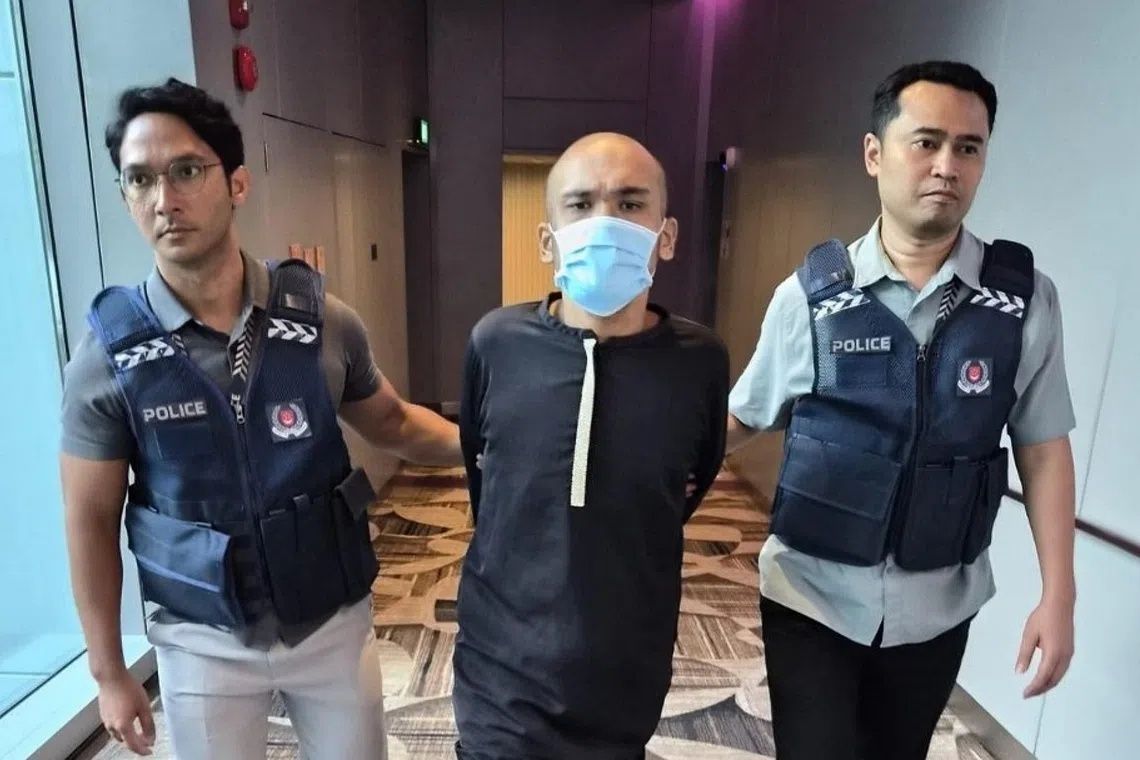
A 27-year-old man is set to appear before Singapore courts on Friday following his arrest for making derogatory and offensive remarks directed at the Muslim community in videos distributed across social media platforms during the first quarter of 2026. The case underscores the island nation's strict approach to protecting religious harmony, an issue of heightened sensitivity across Southeast Asia where diverse faith communities coexist within confined geographic boundaries.
Singapore's police force announced on August 6 that they had received a complaint regarding the man's conduct on March 1, though the suspect had already departed the country before authorities formally documented the allegation. The investigation might have stalled indefinitely had it not been for cross-border cooperation with Malaysian law enforcement. Operating through established channels with the Royal Malaysia Police, Singaporean authorities successfully tracked down the individual and arranged his deportation from Malaysia on the same day he was located. Upon his return to Singapore's shores, officers immediately took him into custody, setting the stage for Friday's court appearance.
The charges carry substantial penalties that reflect the gravity with which Singapore treats religious defamation. Should the court find the defendant guilty as charged, he faces a possible custodial sentence extending up to five years, a monetary fine, or a combination of both sanctions. Such punishments signal the judiciary's commitment to deterring similar behaviour and protecting the constitutional protections afforded to all religious communities on the island.
Complicating matters further, investigators have connected the accused to a separate and equally troubling video circulating on social media platforms, one depicting an individual desecrating a Quran by stepping on the Islamic holy text. The Straits Times has independently verified that the same man appears in both the insulting commentary videos and the profanity-laced Quran desecration footage. According to police statements, the latter incident was recorded inside a public transportation vehicle, suggesting the offensive conduct occurred in a public space where it would have been witnessed by or accessible to members of the general population.
The police's swift digital intervention highlighted their capacity to mobilise tech companies in response to religious violations. On March 7, merely six days after the initial complaint, authorities issued five separate disabling orders to Meta, the technology conglomerate operating Facebook and Instagram, requiring the company to restrict access to the objectionable content for users physically located within Singapore's jurisdiction. This proactive approach demonstrates how modern law enforcement coordinates with multinational platforms to contain the spread of inflammatory material before it inflames communal tensions.
Singapore's response to the incident reflects broader governmental philosophy regarding religious sensitivity in a multicultural city-state where Muslims constitute approximately 14 percent of the population alongside significant Christian, Buddhist, Hindu, and Sikh communities. The government views breaches of religious respect as threats to public order and social stability, not merely as matters of individual expression warranting protection under abstract free speech principles. This orientation diverges notably from Western liberal democracies but aligns with values prevalent throughout much of Asia, where community harmony frequently takes precedence over unrestricted individual speech rights.
The regional implications extend beyond Singapore's borders into Malaysia and the broader Southeast Asian context. Religious sensitivities in Malaysia, where Islam holds constitutional primacy and enjoys special protections under federal law, mean that content perceived as insulting to Islamic beliefs can trigger serious legal consequences. The cooperation between Malaysian and Singaporean police in this case demonstrates how neighbouring countries coordinate enforcement of their respective religious protection laws, creating a more challenging environment for individuals intent on spreading religiously inflammatory material across the region.
For Malaysia specifically, the incident serves as a reminder of how digital connectivity enables offensive content to traverse borders instantly, potentially reaching audiences in multiple jurisdictions simultaneously. While Malaysia's own legal framework provides robust protections for Islam through provisions in the Penal Code and state-level religious enactments, ensuring coordinated regional responses remains crucial. The successful deportation mechanism utilized in this case exemplifies practical cooperation that can supplement individual national legal regimes.
Police authorities emphasized on August 6 that they regard such conduct with utmost seriousness, positioning religious harmony as a foundational element of Singapore's stability. In an official statement, they declared that anyone engaging in rhetoric or behaviour designed to provoke antagonism, animosity, or hostility between racial or religious communities will encounter swift and rigorous legal consequences aligned with statutory provisions. This unambiguous messaging targets not only the immediate defendant but also functions as broader public communication discouraging similar behaviour among social media users who might otherwise test boundaries of acceptable conduct.
The investigation's interconnection between the insulting videos and the Quran desecration footage suggests a pattern of deliberate provocative behaviour rather than isolated incidents. This pattern likely influenced the severity of charging decisions and will probably feature prominently during sentencing should conviction occur. Prosecutors may argue that the systematic nature of the offences demonstrates intentional disrespect toward Islamic beliefs and Muslim community members, aggravating factors that courts typically consider when determining appropriate penalties.
Looking forward, the case will be closely monitored by civil society observers, religious leaders, and digital rights advocates across Southeast Asia. While few would defend the accused's conduct, the broader conversation about balancing religious protection with expressive freedoms continues to evolve in the region. Singapore's approach—emphasising communal harmony and religious respect above individual speech rights—reflects values deeply embedded in its governance model, even as it occasionally generates discussions about the appropriate scope of legal restrictions on expression in plural societies.

