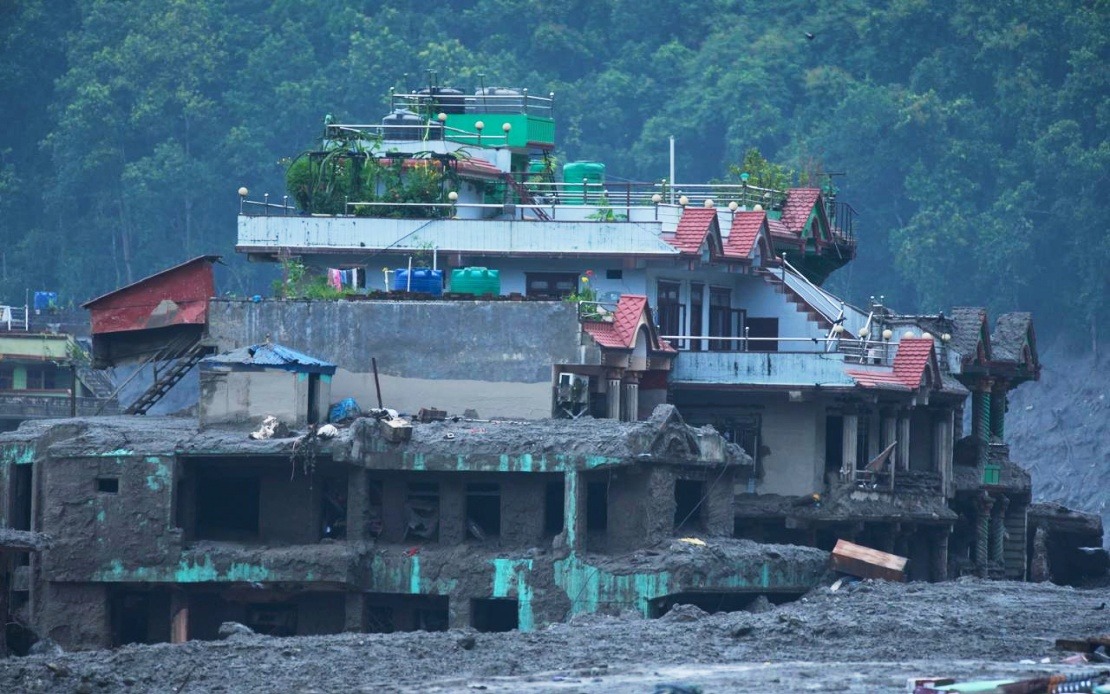
Singapore has activated its diplomatic machinery to support citizens caught in one of the region's deadliest natural disasters in recent weeks, as devastating flash floods swept through Nepal's northern districts. Prime Minister Lawrence Wong confirmed on Thursday that the Ministry of Foreign Affairs is coordinating closely with authorities in Kathmandu and Beijing to provide emergency consular assistance and locate affected Singaporeans. Two nationals are feared among a group of 47 trekkers unaccounted for following the catastrophic flooding that struck the mountainous terrain straddling the Nepal-China frontier.
The disaster has exposed the vulnerability of international hiking expeditions in the Himalayan region, where sudden weather patterns and geological factors create treacherous conditions. Himalayan Glacier Adventures, the company organising the ill-fated trek, has confirmed that the missing cohort represents a multinational assembly of adventure seekers. Beyond the Singaporean contingent, the group included citizens from Australia, Nepal, the United Kingdom, the United States and Russia, underscoring how rapidly such tragedies can entangle multiple nations in coordinated response efforts. The company's founder and chief executive, Sagar Pandey, has been central to initial communications regarding the scope of the disaster.
Prime Minister Wong's statement reflected the gravity Singapore attaches to the situation, moving beyond standard diplomatic formalities to acknowledge the broader humanitarian dimensions. His public acknowledgment of losses and suffering experienced by Nepal and China signals that Singapore recognises this as a shared regional crisis rather than an isolated incident affecting only its own nationals. The Prime Minister extended formal condolences to bereaved families and acknowledged the extraordinary efforts being mounted by rescue and recovery teams operating under extremely challenging conditions in mountainous terrain.
The Ministry of Foreign Affairs has maintained continuous contact with next of kin of affected Singaporeans, a critical function that helps manage uncertainty during the early phases of such crises. This direct engagement with families serves multiple purposes: gathering information about missing persons, coordinating with local authorities for verification purposes, and providing psychological support during an extraordinarily difficult period. The coordination between Singapore's diplomatic missions in Kathmandu and Beijing has been essential, given that the affected zone straddles both jurisdictions and requires bilateral cooperation.
Simultaneously, Singapore's MFA has issued a comprehensive advisory to all Singaporeans in Nepal, warning of the continuing risks posed by residual flooding and infrastructure damage. The advisory specifically identifies five high-risk districts—Rasuwa, Nuwakot, Dhading, Gorkha and Chitwan—where Singaporeans are urged to avoid travel entirely. These zones represent the epicentre of the disaster's impact, where secondary hazards including landslides, contaminated water supplies and disease outbreaks often emerge in the days following major flooding events.
The guidance extends beyond simple avoidance to address the cascading disruptions typical of such disasters. Roads remain compromised or completely severed, transport networks face extended outages, telecommunications infrastructure has deteriorated, and essential services including hospitals and water systems are overwhelmed. The advisory effectively counsels Singaporeans to assume that normal services cannot be relied upon and to treat the situation as a significant departure from routine conditions. For Singapore's expatriate community and tourists in Nepal, this represents a stark reminder of how quickly natural disasters can transform travel plans into survival situations.
The emphasis on staying away from rivers, riverbanks, bridges and low-lying areas reflects specific hazards associated with post-flood periods. Waterways remain dangerously swollen and unpredictable, bridges may be structurally compromised, and sudden secondary surges can occur without warning as upstream water masses continue flowing downhill. Many deaths in flood disasters occur during the recovery phase when people underestimate residual dangers, making this precautionary messaging essential.
For Malaysia's government and public, this incident carries several implications. First, it underscores the vulnerability of regional adventure tourism to extreme weather events, a sector that contributes meaningfully to Southeast Asian economies. Second, it demonstrates the importance of maintaining robust diplomatic channels and consular capacity to protect nationals abroad—an area where Malaysia has invested considerably. Third, it highlights how quickly climate-related disasters can become multinational incidents requiring coordinated international response mechanisms.
The Nepal floods also serve as a regional reminder of climate change impacts in the Himalayan region, where warming temperatures are destabilising glaciers and altering precipitation patterns. Malaysia, situated in a tropical monsoon zone where extreme rainfall events have similarly triggered devastating floods, faces parallel vulnerabilities. The disaster in Nepal provides a case study in how rapidly developing nations must balance tourism promotion with rigorous safety protocols and emergency preparedness.
As rescue operations continue in Nepal's northern districts, Singapore's coordinated diplomatic approach with China and Nepal sets a template for how regional states can collaborate during transnational crises. The speed with which Singapore's Foreign Ministry engaged with counterpart authorities and issued targeted guidance demonstrates the institutional capacity smaller nations must maintain to protect dispersed citizens. For Malaysia, the situation reinforces the critical importance of maintaining current-level consular staffing and diplomatic presence in neighbouring countries experiencing environmental vulnerability.
The broader Southeast Asian context matters here too. The region's expanding middle class increasingly participates in international tourism, with adventure trekking representing a growing segment. Yet infrastructure in some neighbouring countries where such activities occur has not kept pace with increased visitor numbers, creating what experts describe as an expanding risk envelope. Singapore's response to this particular crisis will likely inform how other regional governments refine their own advisory systems and emergency protocols for citizens engaged in high-risk tourism activities.

