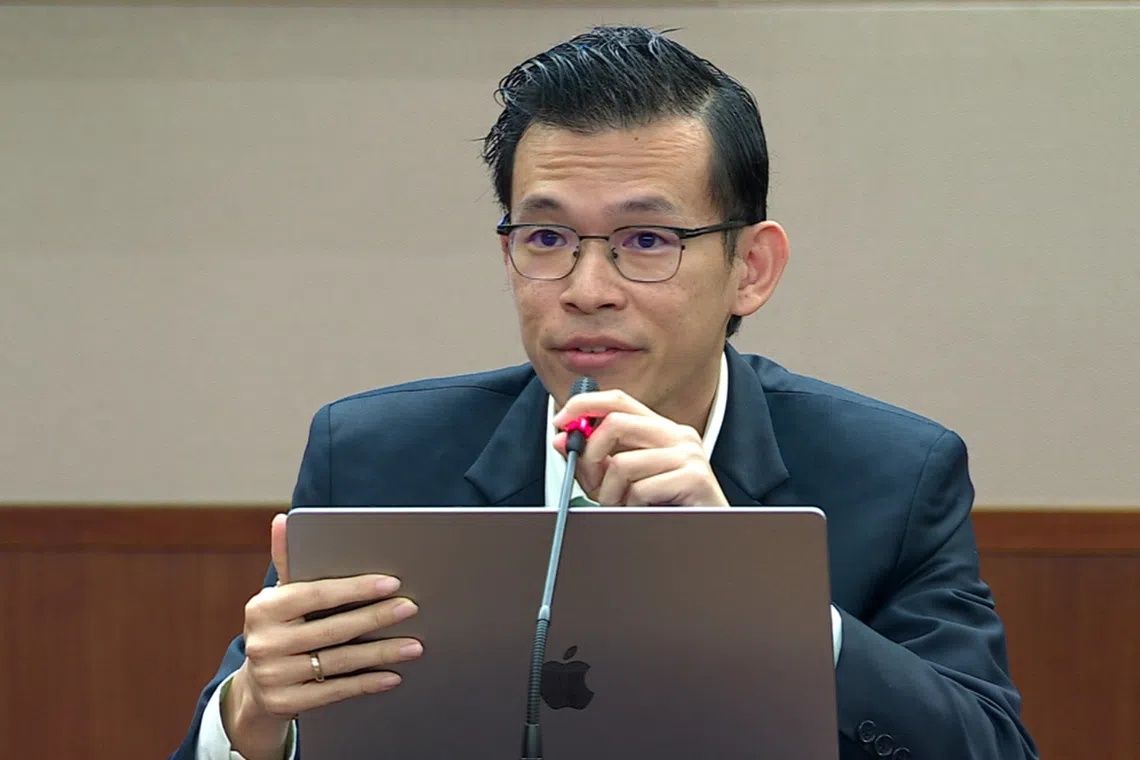
Singapore's Parliament has endorsed a motion addressing the country's economic direction, marking a significant parliamentary moment in which opposition and ruling-party perspectives on the nation's growth strategy collided. The debate, which consumed most of a working day with 23 speakers engaging across political lines, revealed deepening questions about whether Singapore's traditional economic model remains fit for purpose in an increasingly unstable global environment.
Minister for Trade and Industry (Energy and Industry) Tan See Leng framed the government's position around the principle that economic growth serves a broader purpose: creating opportunity and improving living standards across the population rather than enriching a narrow segment. He countered the Workers' Party (WP) motion by arguing that Singapore's approach has historically delivered employment quality, wage growth, and pathways for people to advance economically across generations. Yet his response also acknowledged that the government faces a new responsibility in an unfamiliar world—ensuring the existing model continues to function as external conditions shift unpredictably.
The Workers' Party MP Kenneth Tiong articulated a contrasting vision that challenges fundamental assumptions about Singapore's growth strategy. Rather than accepting the conventional sequence of rapid expansion followed by redistribution through vouchers and rebates, Tiong proposed embedding equitable distribution into the growth process itself. His argument rested on diagnosing weakness in the current model: reliance on large foreign multinational companies, he contended, has become a constraint rather than an engine, leaving young Singaporeans with fewer quality positions while simultaneously constraining local business development and entrepreneurial capability. The WP framed this not as anti-business positioning but as recognition that Singapore's historic strategy has exhausted its potential.
Tan's substantive response acknowledged considerable common ground across the parliamentary aisle, noting that speakers from both camps generally shared goals around career fulfillment, competitive remuneration, and the emergence of globally competitive Singaporean enterprises. This rhetorical move attempted to reframe disagreement as differences in approach rather than fundamental conflict over objectives. However, the WP's rejection of four amendments proposed by ruling-party MP Edward Chia, and the subsequent vote where all 12 opposition MPs dissented from the final motion, underscored that underlying divisions persisted despite shared rhetoric about outcomes.
The minister's personal entrepreneurial narrative—establishing Healthway Medical Group as a young doctor without formal business training—served as a case study in his economic philosophy. Tan described how multinational corporations became early clients for his emerging venture, effectively enabling rather than crowding out local competition. This anecdote functioned as a rebuttal to the Workers' Party's claim that the MNC-dominated model stunts local enterprise. For Tan, the lesson was reciprocal: government creates the institutional foundations, but entrepreneurs must execute while workers must continuously develop capabilities. This distribution of responsibility positions the state as enabler rather than guarantor, and by extension, shields government from accountability should ventures fail or workers struggle with transitions.
The government outlined several mechanisms designed to address what it identifies as gaps in Singapore's entrepreneurial ecosystem. The Startup SG Founder programme offers early-stage capital, guidance, and connection opportunities to serious entrepreneurs, attempting to lower barriers to initial venture testing. The Partnerships for Capability Transformation scheme facilitates collaboration between local companies and multinational corporations, enabling smaller firms to integrate into established supply chains and learn operational excellence from sophisticated international actors. When enterprises achieve traction, the Startup SG Equity scheme channels private investment into promising deep-technology companies moving toward scaling.
Tan highlighted the Enterprise Singapore Scale-Up programme, which works with fast-growing local companies to develop them into internationally competitive entities. The data provided—80 companies across seven cohorts generating S$2.5 billion in additional revenue within three years, with S$1 billion derived from overseas expansion—suggested tangible returns from government-supported capability building. Yet this evidence, while substantial, also indicates that government initiatives remain dependent on private-sector execution and market reception. The programmes function as infrastructure for ambition rather than guarantees of success.
The minister's framework for government economic intervention rested on five bridgeable gaps: moving from aspiration to first venture, translating research into commercial innovation, achieving initial customer acquisition, sustaining growth beyond early traction, and executing international expansion from a domestic base. Each category corresponds to specific programmes, reflecting a relatively sophisticated theory of entrepreneurial development. However, this enumeration also implicitly accepts that many Singaporeans will not experience the economy through entrepreneurship. The acknowledgment that most citizens will encounter economic life through employment rather than business ownership pointed toward unresolved questions about how wage workers fit into the government's growth narrative, particularly in sectors less amenable to innovation-driven scaling.
The parliamentary debate occurs against a backdrop of broader Southeast Asian economic uncertainty. Singapore's model of positioning itself as a global hub for finance, trade, and advanced services depends on maintaining openness and attracting mobile international capital. The Workers' Party's concerns about weakening local enterprise capacity and limited opportunity for young Singaporeans reflect anxiety about whether this positioning remains sustainable as geopolitical tensions rise, supply chains diversify away from regional concentration, and automation reduces labor demand in traditionally reliable sectors. The question is not whether Singapore should grow—both parties affirmed growth as essential—but whether the mechanism, pace, and distribution of that growth serve the population equitably.
Tan's closing assertion that government support must function as a springboard rather than a business model explicitly rejected the notion that state intervention should become a permanent crutch for struggling ventures. The rhetorical flourish—"Governments cannot and do not create champions by simply writing larger cheques"—carried implications about fiscal restraint and market discipline. Yet it also somewhat sidestepped the WP's deeper point about structural imbalance: if government truly cannot create champions through spending, how does Singapore compete against larger economies with deeper domestic markets and accumulated industrial bases? The question remains whether the government's framework addresses systemic constraints or merely provides superior support within existing structural limitations.
The parliamentary affirmation of the amended motion, despite Workers' Party dissent, suggests that while opposition concerns have gained sufficient currency to force extended debate and formal acknowledgment, the ruling coalition retains confidence in its strategic direction. Yet the nearly nine-hour deliberation itself signals that Singapore's economic model is no longer self-evidently justified. For regional observers, the debate illustrates how advanced Southeast Asian economies face similar questions: whether export-oriented, foreign-investment-dependent development remains adequate in an era of slower global growth, technological disruption, and shifting geopolitical alignments. Singapore's parliamentary conversation about economic futures will likely foreshadow more explicit policy contestation across the region.

