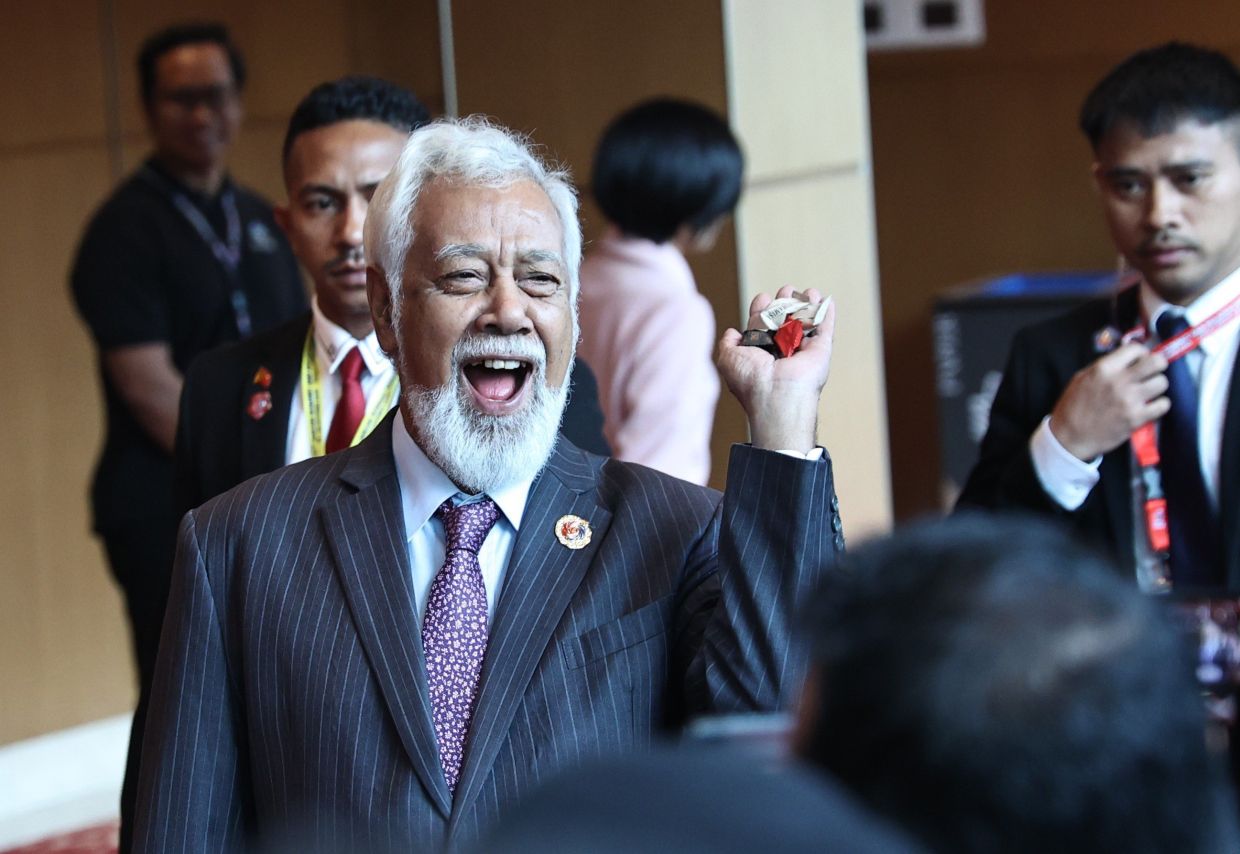
Singapore is recalibrating its approach to supporting Timor-Leste's integration into Asean, emphasising the importance of the Southeast Asian nation becoming a meaningful contributor to the regional grouping rather than a passive recipient of membership benefits. Prime Minister Lawrence Wong made this distinction clear following his two-day visit to Dili on July 3, underscoring a philosophical shift in how established members should engage with the bloc's newest addition. The distinction reflects a deeper understanding within Singapore's leadership that Asean membership carries reciprocal obligations, and that Timor-Leste's long-term success depends on assuming genuine responsibilities within the organisation's architecture.
Timor-Leste's path to full membership was notably protracted, having first lodged its application in 2011 before securing observer status in 2022 and finally attaining membership on October 26, 2025. This extended timeline underscores the complexity of Asean's expansion process and the rigorous scrutiny new members face. Singapore's decision to elevate its support package at this particular juncture signals recognition that Timor-Leste has now crossed a critical threshold, transitioning from applicant status to stakeholder responsibility. The timing of Wong's visit, notably the first by a Singapore prime minister to Timor-Leste, carries symbolic weight and reflects Singapore's strategic commitment to the island nation's development trajectory.
Central to Singapore's expanded assistance is preparation for Timor-Leste's intended assumption of the Asean chair in 2029. This represents a significant responsibility that demands institutional capacity, diplomatic expertise, and logistical sophistication. Wong candidly acknowledged that chairing Asean constitutes "a massive and significant responsibility and undertaking," drawing on Singapore's own experience managing the rotating position. The practical measures Singapore is implementing include tailored workshops for Dili-based officials focusing specifically on the duties and complexities of the chairmanship role, alongside opportunities for Timorese officials to attach themselves to Singapore's own chairmanship machinery when the city-state assumes the position in 2027. This two-year runway between Singapore's chair and Timor-Leste's planned tenure provides invaluable hands-on learning opportunities.
Beyond institutional preparation, Singapore and Timor-Leste have established a new bilateral consultation mechanism between their respective foreign ministries, mirroring arrangements Singapore maintains with other Asean members. This formalisation of regular dialogue channels reflects the elevation of the bilateral relationship within the broader Asean context. The mechanism creates a structured framework for addressing shared concerns, coordinating positions, and deepening cooperation across multiple sectors. Wong described this development as "adding substance" to the partnership, moving beyond ceremonial engagement to substantive cooperation on matters of mutual interest and regional significance.
The expanded partnership encompasses targeted areas where Singapore can provide meaningful technical assistance and knowledge transfer. Human resource development, education, and healthcare have been identified as priority sectors for enhanced collaboration. These domains align strategically with Timor-Leste's development ambitions and address genuine capacity gaps within the still-developing nation. Singapore's expertise in healthcare delivery systems, educational standards, and workforce development offers practical value that transcends mere financial assistance, embedding best practices and institutional learning that can yield long-term dividends for Timorese institutions and citizens.
Economic diversification emerges as another crucial dimension of the expanded partnership, with Singapore positioning itself as a potential facilitator and partner in Timor-Leste's strategic pivot away from oil and gas dependency. Wong acknowledged that Timor-Leste's development plans encompass broader economic horizons, including hospitality, infrastructure development, and the blue economy. These sectors represent growth opportunities where Singaporean business expertise and capital could play constructive roles. The prime minister noted that several "intrepid" Singaporean entrepreneurs have already established operations in Timor-Leste, demonstrating both the market's attractiveness and the willingness of diaspora businesspeople to take calculated risks in emerging economies.
Wong's remarks on Singapore business engagement reflected pragmatic realism about emerging market participation. He acknowledged that ventures in developing economies require businesses to "come in with their eyes open," recognising inherent complexities and the necessity of adopting long-term perspectives. Not all Singaporean enterprises in Timor-Leste have succeeded, Wong conceded, reflecting the genuine challenges that characterise frontier markets. However, he observed that many Singaporean business operators are "thriving," suggesting that appropriate firms with suitable strategies can find sustainable opportunities. Wong implied that government-facilitated business missions could help expand Singapore's commercial footprint by exposing additional companies to Timor-Leste's emerging opportunities.
The underlying economic narrative reflects Timor-Leste's position as a young nation with favourable demographics and untapped potential. Wong highlighted the country's youthful population, natural resources, and significant headroom for expansion beyond current economic baselines. However, he cautioned against excessive optimism untethered from realistic assessment of institutional and infrastructural challenges. For regional investors and multinational corporations considering Timorese market entry, Wong's comments provide measured encouragement tempered by acknowledgment of genuine complexities inherent in operating within less-developed institutional environments. This balanced perspective reflects Singapore's mature approach to emerging market engagement within Southeast Asia.
Singapore's historical commitment to Timor-Leste predates the nation's independence and Asean membership. Wong referenced Singapore's deployment of personnel for peacekeeping operations in 1999, shortly after the independence referendum, highlighting an enduring commitment spanning three decades. This historical context demonstrates that Singapore's current engagement represents evolution rather than initiation of a relationship. The decision to visit at this particular juncture reflects recognition that Timor-Leste's full Asean membership creates new collaborative possibilities and strategic alignments. Wong characterised his visit as arriving at a "natural point" in bilateral relations, suggesting this moment represents an opportune occasion to deepen partnerships across multiple domains.
Wong's closing remarks on cultural engagement and mutual learning underscore a philosophical dimension often overlooked in technical discussions of regional partnerships. He encouraged Singaporeans visiting or working in Timor-Leste to invest effort in understanding local cultures, norms, and languages rather than assuming unidirectional knowledge transfer from Singapore to Timor-Leste. This perspective reflects sophisticated understanding that meaningful partnership requires genuine reciprocal respect and willingness to learn from counterparts rather than approaching emerging markets through a lens of paternalism. The acknowledgment that Timorese have lessons to impart to Singaporeans reframes the engagement from charitable assistance to mutual enrichment.
The broader strategic significance of Singapore's enhanced commitment to Timor-Leste extends beyond bilateral relations to Asean's internal cohesion and functional capacity. Strengthening the newest member's institutional capabilities and integration into regional structures benefits the entire association. A Timor-Leste that effectively contributes to Asean deliberations and successfully chairs the organisation in 2029 enhances collective legitimacy and demonstrates that Asean can successfully absorb new members while maintaining functional effectiveness. Singapore's willingness to invest substantially in this outcome reflects recognition that Asean's future credibility depends on enabling all members, particularly newer additions, to participate meaningfully in the organisation's architecture and decision-making processes.
For Malaysian observers and policymakers, Singapore's approach to Timor-Leste offers instructive lessons about managing regional relationships within Asean's multilateral framework. The emphasis on building genuine capacity rather than maintaining dependency, the structured preparation for institutional responsibilities, and the recognition that partnership encompasses mutual learning rather than unidirectional assistance provide templates potentially applicable to Malaysia's own bilateral relationships throughout Southeast Asia. Timor-Leste's development trajectory and its integration into regional structures will significantly influence Asean's evolution over the coming decade, making Singapore's investment in this process a matter of strategic interest beyond Singapore's borders.

