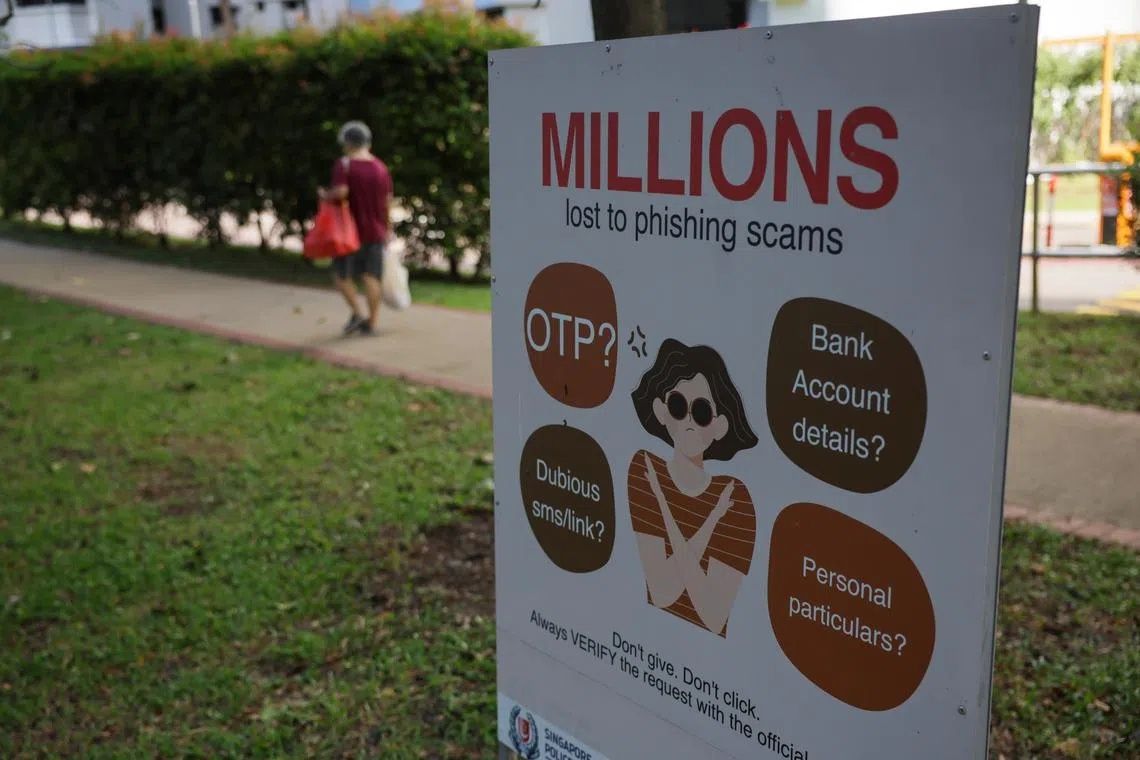
Singapore's police force has cast a wide net in combating organised fraud, detaining 230 suspects ranging from a mere 16 years old to a 77-year-old across a two-week enforcement campaign that concluded on July 1. The operation, which targeted participants across the entire criminal chain from orchestrators to money handlers, uncovered involvement in over 713 separate scam incidents resulting in documented losses totalling approximately S$9 million. The age spread of those apprehended underscores how scam networks have become entrenched across multiple generations, with young people increasingly drawn into roles as facilitators and intermediaries.
The arrested individuals comprise 159 men and 71 women suspected of operating within the scam ecosystem in various capacities. While some face allegations of being direct perpetrators who initiated contact with victims, others are accused of serving as money mules—the critical infrastructure that enables scammers to convert stolen funds into usable assets. The Commercial Affairs Department, along with all seven police land divisions coordinating across Singapore's geography, orchestrated the coordinated sweep between June 18 and July 1, reflecting the sustained focus on dismantling fraud networks at multiple levels simultaneously.
The scams uncovered during this operation encompassed virtually every major fraud methodology prevalent in Southeast Asia's digital economy. E-commerce deceptions, where victims are lured through fake online marketplaces, emerged alongside elaborate friend impersonation schemes that exploit social trust. Job scams continue their damaging prevalence, convincing desperate job seekers to transfer money for supposed employment opportunities. Government official impersonation scams, which falsely claim involvement from authorities, extract compliance through fear and perceived legitimacy. Investment fraud promises unrealistic returns, while rental scams target housing-hungry individuals with fake property listings—a particularly pernicious form given Singapore's acute housing costs.
The legal consequences facing these individuals are substantial and deliberately graduated to reflect culpability levels. Those convicted of cheating can expect sentences reaching a decade in prison alongside financial penalties, a deterrent calibrated to the serious harm caused to victims. Money laundering convictions carry similarly severe sentences of up to 10 years imprisonment, paired with fines reaching S$500,000, addressing the criminal infrastructure that transforms stolen money into deployable capital. The unlicensed payment services offence—a technically sophisticated charge reflecting how modern scams depend on financial system manipulation—attracts fines of S$125,000 and imprisonment terms of three years.
Beyond conventional sentencing, Singapore's approach includes mandatory caning for serious scam participants. Scammers and syndicate members face six to 24 strokes of the cane upon conviction, a distinctly Singaporean enforcement mechanism unavailable in most Commonwealth jurisdictions. Money mules enabling fraud operations face up to 12 strokes, acknowledging their role as facilitators while maintaining distinction from primary perpetrators. This multi-layered punishment structure reflects policymakers' conviction that conventional imprisonment alone has proven insufficient to deter participation in scam networks, particularly among younger individuals drawn by perceived quick returns.
Beyond criminal prosecution, authorities have implemented collateral restrictions targeting repeat or serious offenders in mule-related crimes. Convicted individuals face restrictions on accessing banking services and obtaining mobile line subscriptions, effectively removing their ability to participate in future fraud schemes that depend on access to financial infrastructure and telecommunications. These administrative sanctions, imposed independently of criminal sentencing, represent a recognition that prevention of recidivism requires structural barriers alongside punitive consequences.
The broader scam landscape in Singapore shows modest improvement according to official statistics released in February 2026. The total number of reported scam cases declined from exceeding 50,000 in 2024 to 37,308 in 2025—a 25 percent reduction suggesting that accumulated enforcement efforts, public awareness campaigns, and technological safeguards are gradually moving the needle against what remains a massive problem. Monetary losses similarly decreased from S$1.1 billion to S$913.1 million year-on-year, indicating that while scammers persist, their average returns per victim or per operation have declined.
E-commerce fraud maintains its position as the most prevalent scam category, with 6,703 recorded cases in 2025 and associated losses of S$16.7 million. This concentration reflects the rapid shift of commerce to digital platforms across Singapore and the region, creating both opportunity and vulnerability. The financial figures represent genuine hardship for victims—entire life savings lost to convincing false websites, deposits surrendered to non-existent sellers, investment portfolios decimated by fraudulent schemes. For Malaysia, where similar scam prevalence affects consumers across the border, the Singapore enforcement model provides insight into coordinated multi-agency responses and the importance of treating scam networks as organised crime requiring specialised investigation units.
Singapore has established dedicated resources for public reporting and awareness, with the ScamShield service accessible through the website www.scamshield.gov.sg and the helpline 1799 providing information and victim assistance. The police hotline 1800-255-0000 and online reporting portal at www.police.gov.sg/i-witness allow residents to provide intelligence on scam activity with guaranteed confidentiality. These mechanisms create pathways for public participation in law enforcement, transforming citizens into the frontline of detection and reporting.
The operation's inclusivity—targeting money mules and facilitators as rigorously as principal scammers—reflects mature understanding that organised fraud depends critically on distributed participation. Young people drawn into money mule networks, often through seemingly legitimate gig economy offers, face serious consequences that should give pause to anyone considering participation. The appearance of a teenager among the 230 suspects underscores how recruitment into these networks may occur through peer networks, social media, or deceptive job postings targeting financially pressured youth. For regional observers, the operation demonstrates that sustained, coordinated enforcement involving multiple police units and commercial crime specialists remains essential to managing scam proliferation across densely urbanised, highly digitalised societies.

