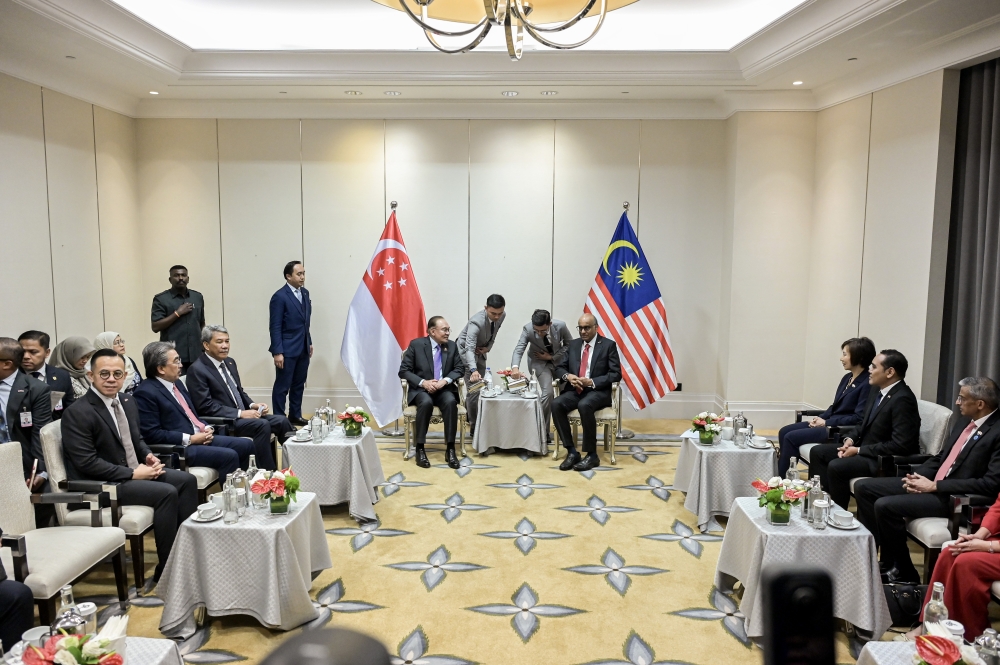
Singapore President Thalif Shahid sat down with Malaysian Prime Minister Datuk Seri Anwar Ibrahim on Monday for a 40-minute meeting in Kuala Lumpur, underscoring the continued importance both nations attach to their bilateral relationship. The encounter, which took place during Thalif's ongoing state visit to Malaysia, provided an opportunity for the two leaders to discuss matters of mutual interest and regional significance. The meeting reflected the depth of diplomatic engagement between Kuala Lumpur and Singapore, neighbours whose close economic and security ties have anchored stability in Southeast Asia for decades.
The timing of the presidential visit carries particular weight for Malaysia's government. As Anwar Ibrahim consolidates his administration and seeks to strengthen Malaysia's regional diplomatic posture, hosting Singapore's head of state underscores his commitment to maintaining robust relations with one of the country's most important partners. Singapore, as a financial hub and strategic node in regional commerce, remains crucial to Malaysia's economic interests and political influence in Southeast Asia. The meeting signals that despite occasional tensions over bilateral issues, both nations remain committed to cooperation at the highest levels.
Bilateral relations between Malaysia and Singapore have historically encompassed complex dimensions spanning trade, defence, maritime boundaries, and shared infrastructure projects. The two countries cooperate extensively through established frameworks including regular high-level visits, joint business councils, and defence partnerships. Water supply agreements, port operations, and air traffic coordination represent areas where practical cooperation sustains mutual prosperity. The presidential visit offers an occasion to reaffirm these foundational arrangements while addressing emerging challenges in an evolving regional environment.
The 40-minute duration of the meeting suggests substantive engagement beyond ceremonial pleasantries. Senior officials typically schedule presidential courtesy calls for periods allowing meaningful discussion of priority issues, whether centred on economic cooperation, regional security developments, or bilateral matters requiring leadership-level attention. The length indicates both parties prepared substantive agendas, reflecting the professional nature of Singapore-Malaysia relations despite periodic disputes over issues such as maritime boundaries and airspace management.
Thalif's state visit comes amid broader patterns of diplomatic activity across Southeast Asia. Regional capitals increasingly emphasise high-level exchanges as means of managing tensions and building consensus on shared challenges ranging from terrorism and human trafficking to maritime security and climate adaptation. Singapore, as a strategically positioned city-state with influence disproportionate to its size, leverages diplomatic visits to reinforce its role as a trusted partner and stability anchor. Malaysia, conversely, uses such meetings to position itself as a major regional voice deserving recognition and consultation on matters affecting Southeast Asian interests.
From Malaysia's perspective, the meeting reinforces the country's status as a significant ASEAN member capable of hosting presidential delegations and engaging in consequential bilateral diplomacy. Anwar's government, which assumed office in late 2022, has prioritised rebuilding Malaysia's regional standing following periods of political instability. Diplomatic engagement with Singapore at this level demonstrates Malaysia's capacity to manage complex neighbour relations professionally and advance shared economic objectives. The continuity of high-level contact also indicates that domestic political changes in Malaysia have not disrupted the fundamental architecture of Singapore relations.
Economically, the meeting occurs within a context of robust trade flows between the two nations. Singapore serves as a crucial transshipment hub for Malaysian goods destined for global markets, while Malaysian natural resources and agricultural products supply Singapore's industries and population. Investment flows move in both directions, with Singaporean capital supporting Malaysian infrastructure and Malaysian investors maintaining presence in Singapore's financial markets. Trade disputes or disruptions would impose costs on both economies, making the maintenance of diplomatic channels essential for preventing escalation of commercial disagreements into political friction.
Regional security considerations also shape the significance of Singapore-Malaysia high-level meetings. Both nations participate in multilateral security arrangements including ASEAN frameworks and Five Power Defence Arrangements involving Australia, Britain, and New Zealand. Coordination on counter-terrorism, maritime piracy prevention, and management of transnational crime reflects shared interests transcending bilateral relationships. Leadership-level discussions provide opportunities to align approaches to emerging security challenges, whether involving militant activities in Southeast Asia or broader geopolitical shifts affecting the region's security environment.
The meeting also carries symbolic importance for Malaysia's diplomatic community. State visits represent formal recognition of bilateral importance and provide ceremonial opportunities to celebrate friendship between nations. For Singapore, the visit demonstrates the city-state's continued engagement with ASEAN partners despite its unique economic position and different political system. For Malaysia, hosting the delegation showcases Anwar's government's diplomatic competence and capacity to maintain productive relations across the ideological and political spectrum.
Looking forward, the meeting likely produced specific commitments on areas requiring continued cooperation, whether involving trade promotion, tourism development, or coordination on regional organisations. Such meetings typically conclude with joint statements outlining agreed priorities and scheduling follow-up engagements at ministerial or technical levels. The substantive nature of the discussion suggests both delegations identified concrete opportunities for advancing shared interests while managing outstanding differences through established mechanisms rather than allowing disputes to undermine the overall relationship.
The presidential visit represents continuity in Singapore-Malaysia relations despite the dynamic nature of regional politics and the periodic friction that characterises all border relationships between neighbouring states. The 40-minute meeting between Thalif and Anwar reaffirmed that both nations recognise the strategic value of their partnership and remain committed to resolving differences through dialogue. For Malaysia's government, the engagement reinforces its diplomatic credentials while signalling to the international community that the nation remains a reliable partner capable of maintaining productive relations with its most strategically important neighbours.

