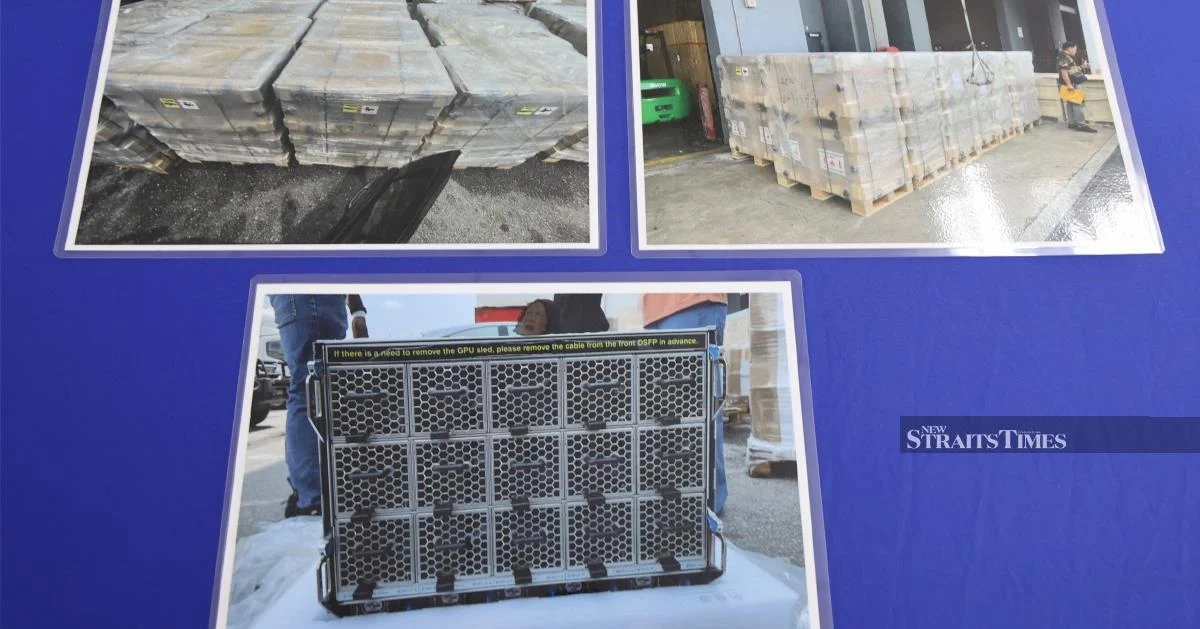
Singapore's police force announced the seizure of a high-value luxury bungalow, valued at more than US$40 million, as part of an ongoing fraud investigation centred on the suspected unlawful movement of artificial intelligence chips that contravened stringent United States export control regulations.
The property seizure represents a significant escalation in Singapore's enforcement actions against alleged breaches of US technology export restrictions, a matter of considerable concern to Washington given the region's role as a major transshipment hub for electronics and semiconductors. The confiscation underscores the intersection of international trade law, sanctions enforcement, and domestic criminal proceedings in Southeast Asia's most developed economy.
AI chip smuggling has emerged as a critical enforcement priority for both American authorities and regional governments alarmed by the potential diversion of advanced computing technology to jurisdictions subject to US restrictions. Advanced processors designed for artificial intelligence applications represent some of the most tightly controlled technology exports under current US foreign policy, with particular scrutiny applied to shipments bound for countries including China and other entities designated as strategic concerns by Washington.
Singapore's position as a global financial centre and sophisticated logistics hub has made it an attractive nexus for international trade flows, yet this same status has occasionally attracted those seeking to circumvent regulatory frameworks. The city-state's reputation for rigorous legal enforcement and its extensive bilateral law enforcement cooperation with the United States have positioned it as a preferred jurisdiction for investigating and prosecuting alleged violations of trade restrictions. Singapore has consistently demonstrated willingness to collaborate with American law enforcement agencies on technology transfer cases.
The investigation signals renewed vigilance regarding unauthorised AI chip movements through Southeast Asian ports and financial systems, a concern that has intensified as global competition for advanced semiconductors has sharpened. The alleged fraud case touches on broader geopolitical tensions surrounding technology access and the enforcement mechanisms deployed by Western governments to maintain strategic technological advantages. For Malaysian readers and businesses in the region, the seizure serves as a reminder of the complex regulatory environment governing high-technology trade.
Luxury property seizures in white-collar investigations are comparatively rare in Singapore, making this enforcement action particularly notable. The substantial asset value involved suggests either considerable sums allegedly derived from illicit activity or the targeting of property belonging to persons of significant wealth engaged in the suspected violations. Such aggressive asset-freezing measures are typically deployed in cases where authorities believe they have established serious criminal conduct warranting extraordinary remedies.
The investigation appears to reflect heightened coordination between Singapore's authorities and their American counterparts regarding technology export enforcement. Such collaboration has become increasingly sophisticated, involving real-time intelligence sharing, joint investigative teams, and coordinated asset tracing across multiple jurisdictions. For Southeast Asia's business community, particularly those engaged in legitimate electronics trade, the case underscores the importance of rigorous compliance protocols and thorough due diligence regarding supply chain partnerships.
US export controls on advanced semiconductors and AI-related technologies have become progressively more stringent over recent years, reflecting strategic policy decisions to maintain American technological leadership whilst constraining access by rival powers. These restrictions create complex compliance obligations for companies operating across multiple jurisdictions, particularly in global supply chain contexts where goods may be legitimately transshipped through Singapore to authorised end-users. The boundary between lawful commerce and prohibited transfer remains a matter requiring careful legal navigation.
The seizure may also prompt broader reflection within Singapore's financial and logistics sectors regarding their vulnerability to inadvertent involvement in illicit technology transactions. The city-state's attractiveness to international trade partly derives from its efficient systems and professional services providers, yet these same attributes can inadvertently facilitate misconduct by bad actors seeking to exploit Singapore's reputation and infrastructure. Legitimate businesses operating in sensitive sectors face mounting pressure to implement enhanced compliance frameworks.
For Malaysia and other ASEAN nations, Singapore's aggressive enforcement of US export controls offers important lessons regarding the extraterritorial reach of American sanctions regimes and their practical implications for regional commerce. Malaysian exporters and financial institutions with connections to Singapore should carefully review their own compliance frameworks, particularly when dealing with transactions involving sensitive technologies or entities located in jurisdictions subject to US restrictions. The regulatory environment has demonstrably hardened.
The investigation also reflects broader American concerns about technology diversion networks operating throughout Asia, particularly those potentially involving actors from countries designated as national security threats. Sophisticated smuggling operations typically employ complex financial instruments, multiple intermediary companies, and deliberate misclassification of goods to obscure their true destination and intended use. Law enforcement agencies across the region have accordingly enhanced their focus on detecting such schemes.
Singapore's willingness to deploy significant enforcement resources against alleged export control violations demonstrates the seriousness with which the city-state approaches its obligation to prevent unauthorised technology transfers. The seizure of substantial assets serves both as a practical enforcement tool and as a powerful deterrent signalling to potential offenders that Singapore offers no haven for those seeking to circumvent US technology restrictions. The message carries implications well beyond Singapore's borders, resonating throughout supply chains operating across Southeast Asia and beyond.

