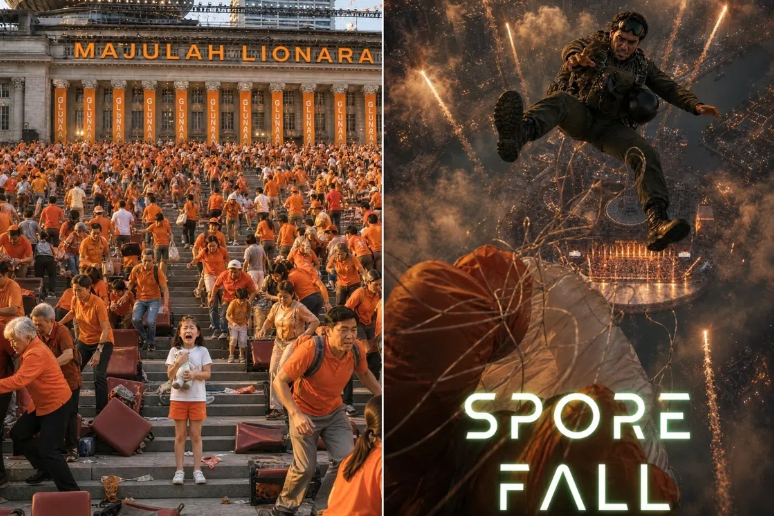
Singapore-based production studio Edenstone has unveiled a provocative four-minute short film that reimagines the nation's National Day Parade as the site of a catastrophic zombie outbreak, fully anticipating that the work will invite public controversy and divided opinion. The creative team has been transparent about expecting polarised responses to their ambitious project, signalling their willingness to engage audiences with challenging material despite the predictable backlash.
The film presents an apocalyptic scenario in which a lethal spore-borne pathogen transforms people into zombie-like entities, with the fictional setting of a country called Lionara serving as the narrative framework. However, the visual backdrop unmistakably evokes Singapore itself, featuring recognisable landmarks including the Marina Bay skyline and the iconic Merlion monument. This deliberate fusion of local geography with speculative fiction creates a visceral commentary that operates on multiple interpretive levels for viewers familiar with the actual setting.
The project represents a significant moment in Southeast Asia's adoption of artificial intelligence within the creative industries. Edenstone positions the film as part of a broader series exploring AI-assisted animation, demonstrating that regional studios are actively experimenting with emerging technologies rather than passively consuming content created elsewhere. This production potentially signals Singapore's ambition to establish itself as a hub for cutting-edge digital creative work, even when that work challenges conventional sensibilities around national symbolism.
Studio head Boh articulated the creative philosophy underlying this provocative choice in a formal statement, framing the dystopian imagery not as irreverent critique but as an expression of profound confidence in Singapore's national identity. According to Boh, the willingness to subject iconic national occasions to imaginative reimagining actually demonstrates faith in the robustness of Singaporean identity, arguing that the nation's character is sufficiently secure to withstand unfamiliar or unsettling interpretations. This rhetorical positioning transforms potential criticism from a position of defensive explanation into one that frames sceptics as doubters of national resilience.
The timing of this release occurs within a complex global context of intense scrutiny surrounding artificial intelligence's role in entertainment production. Regulators, industry bodies, and creative professionals worldwide are grappling with fundamental questions about AI's appropriate boundaries, ethical deployment, and relationship to human creative labour. This intensified focus creates both opportunity and risk for regional producers experimenting with the technology.
China has emerged as a significant early actor in establishing regulatory frameworks for AI-generated content. Chinese authorities have mandated that all artificially created media carry explicit labelling and embedded digital watermarks beginning September 1, reflecting government determination to maintain transparency and traceability within the digital content ecosystem. This regulatory approach prioritises consumer information and state oversight, setting a precedent that other jurisdictions may consider as they develop their own frameworks.
The United States entertainment industry has pursued a different regulatory strategy, with powerful creative guilds negotiating contractual protections rather than relying primarily on government mandate. Both the Writers Guild of America and the Screen Actors Guild-American Federation of Television and Radio Artists have secured binding agreements establishing strict parameters governing AI usage in production contexts. These contracts specifically protect human creators' employment opportunities and personal likenesses, reflecting organised labour's leverage in negotiating AI integration within established commercial structures.
Edenstone has proactively addressed these emerging ethical concerns through explicit statements about their production methodology and technology governance. The studio emphasises that human creative professionals retain complete control over narrative conception, scriptwriting, character development, emotional trajectory, and worldbuilding throughout the production process. According to their framework, artificial intelligence serves exclusively as an accelerant for visual production, deployed under strict human creative supervision rather than operating autonomously or superseding human decision-making authority.
This division of creative labour between human and machine represents a particular approach to AI integration that some industry observers view as responsible stewardship of emerging technology. Rather than treating AI as a replacement for human creativity, Edenstone positions the technology as a production efficiency tool that enables smaller teams to execute more ambitious visual projects. The distinction carries significant implications for employment and creative control within Southeast Asian production industries, where resource constraints often limit the scope of local creative ambitions.
Boh's framing of AI as an accelerant rather than a replacement reflects broader industrial considerations relevant to Malaysian and Southeast Asian filmmakers. Regional studios operating with more constrained budgets than their Hollywood or European counterparts face genuine pressure to maximise creative output relative to available resources. AI tools potentially offer these studios opportunities to execute projects previously constrained by production costs, though questions persist about whether such efficiency gains come at the expense of broader employment within creative sectors.
The studio's stated mission to position Singapore as globally competitive in the creative industries through technological adoption reflects a particular development strategy common across Southeast Asian economies. This approach assumes that embracing emerging technologies positions regional producers advantageously in international competition, rather than viewing technology adoption as potentially undermining local creative sectors or cultural autonomy. The assumptions embedded in this framing remain contested among industry participants and cultural observers across the region.
Moving forward, Edenstone's project will likely serve as a test case for audience receptivity toward AI-assisted content within Southeast Asian markets. Public response to the film will generate evidence about whether regional audiences view AI integration in entertainment as innovative opportunity or threatening development. The studio's willingness to court controversy with the National Day Parade concept suggests confidence that substantive creative vision can anchor audience engagement even when employing unfamiliar production methodologies.
The intersection of AI technology, creative expression, and national cultural symbols represented by this project demonstrates that Southeast Asian studios are actively participating in global conversations about technology's role in cultural production, rather than remaining passive observers of developments occurring elsewhere. How audiences, regulators, and industry professionals respond to Edenstone's work will likely influence subsequent creative projects across the region and inform emerging regulatory approaches to AI-generated content.

