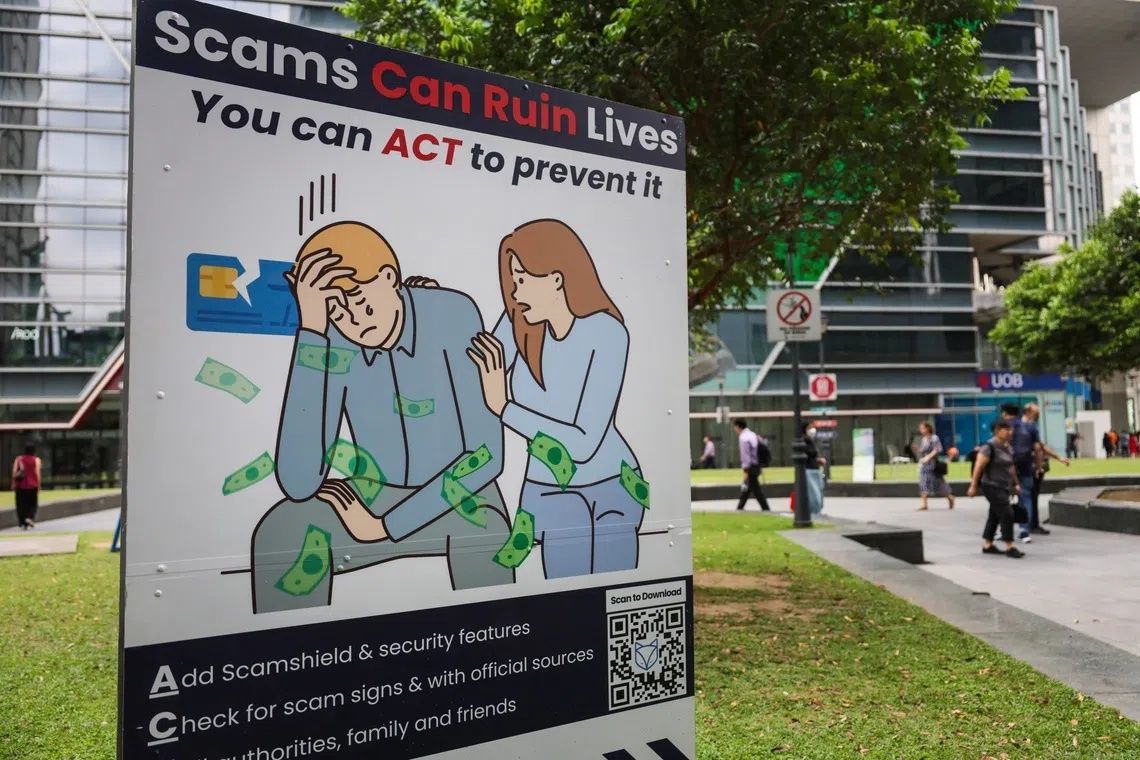
Singapore is moving to close significant loopholes in its fight against digital fraud by introducing legislation that specifically criminalises the creation and use of fake online accounts for scamming purposes. The Scams (Countermeasures) and Other Matters Bill, tabled in Parliament on Tuesday 4 August, represents a substantial escalation in the city-state's response to increasingly sophisticated scam networks that now constitute three out of every five police reports. The new framework addresses a critical gap: while existing laws target money mules and those selling SIM cards or Singpass accounts for criminal activity, there have been no specific offences covering the supply and use of fraudulent accounts on major platforms including Facebook, Instagram, WhatsApp, Telegram, TikTok and Carousell.
Under the proposed legislation, individuals who supply their personal information to create fake accounts, or who knowingly trade in such accounts for criminal purposes, will face substantial penalties. Those convicted face fines reaching S$10,000, imprisonment of up to three years, and corporal punishment of 12 strokes of the cane. This three-pronged approach reflects Singapore's determination to make account mule activities sufficiently costly and personally damaging to deter participation in scam ecosystems. The measures directly address the operational infrastructure that enables scammers to maintain a sprawling network of fraudulent identities across multiple platforms.
Beyond targeting individual mules, the Bill dramatically escalates pressure on technology platforms themselves. Service providers that fail to comply with codes of practice and government implementation directives now face maximum fines climbing from S$1 million to S$10 million, with daily penalties for continuing violations jumping from S$100,000 to S$300,000. This tenfold increase sends an unmistakable message that platform operators cannot treat scam prevention as a secondary concern. Meta has already been issued two implementation directives, in September 2025 and January 2026, demanding concrete anti-fraud measures. Singapore's police previously credited these directives with reducing impersonation scams on Facebook, providing evidence that regulatory pressure delivers measurable results.
The scale of Singapore's scam crisis makes these legislative moves urgent and consequential. In 2025 alone, fraud cost victims S$913.1 million, with cumulative losses since 2019 exceeding S$4 billion. Particularly troubling is the explosion in government impersonation scams, which more than doubled from 1,504 cases in 2024 to 3,363 in 2025, making it the fifth most prevalent scam variety. These figures underscore how scam operations have become embedded in Singapore's economy, diverting substantial resources from productive activity and eroding public trust in digital commerce and government communications.
Scammers have evolved their tactics to exploit the speed and scale advantages of digital platforms. Criminal syndicates now rapidly generate vast networks of fraudulent sites, accounts and advertisements faster than manual review processes can identify and remove them. This industrial-scale approach has been enabled by artificial intelligence tools that automate account creation, content generation and targeting strategies. Recognising this technological arms race, Singapore's legislation authorises the use of computer programmes and AI-enabled systems to issue anti-scam directives more efficiently than human reviewers could manage. The Bill includes safeguards designed to ensure algorithmic decision-making remains accurate and impartial, addressing concerns about automated enforcement of digital policies.
The legislation introduces three new orders that grant police authority to compel cooperation from service providers including banks, telecommunications companies and online platforms. A disclosure order requires providers to furnish information about specified accounts and scam-linked activities, supporting the development of Singapore's National Scams List. This centralised intelligence system will enable automatic, real-time information-sharing between government agencies and private sector partners including financial institutions. An account disabling order permits police to compel platforms to suspend specific accounts for up to 30 days, extendable once for a further 30 days, creating a crucial window for investigation and enforcement.
These mechanisms serve a vital function in disrupting cash flows essential to scam operations. By enabling banks to identify and suspend accounts potentially linked to fraud before money is transferred, stakeholders can arrest the proceeds of crime at critical chokepoints. During February's Ministry of Home Affairs budget debate, Minister of State Goh Pei Ming outlined how shared intelligence would include perpetrator identities, bank accounts, phone numbers and online accounts. This coordinated intelligence infrastructure transforms scam-fighting from isolated institutional efforts into a networked system where financial institutions, telecommunications providers and online platforms function as interconnected components of a unified defence.
Singapore has already begun implementing a facility restriction framework that places individuals suspected of mule activities under service limitations. As of 30 June, this framework encompassed 1,423 money mules, 1,439 SIM card mules and 53 corporate mules, with affected individuals facing restrictions on accessing financial services, telecommunications accounts and Singpass digital identity systems. The new Bill formalises and strengthens this approach through a service limitation order enabling police to restrict service provision to identified individuals for up to three years. Previously, such restrictions were implemented on a voluntary basis or through sector-specific arrangements; formalising them through legislation ensures consistent, enforceable application across all service providers.
The regional significance of Singapore's legislative approach extends beyond its borders. Southeast Asian economies increasingly serve as back-office hubs for international scam operations, with criminal networks exploiting cross-border gaps in regulation and enforcement. Singapore's comprehensive framework, combining individual criminal liability with platform accountability, AI-enabled detection, intelligence sharing and service-level restrictions, establishes a model that other regional governments may examine when updating their own fraud laws. Malaysian authorities and those in other ASEAN nations managing similar scam epidemics could find actionable insights in Singapore's multi-layered approach, particularly its emphasis on platform accountability and automated detection systems.
The Bill's provisions addressing AI-enabled scam operations acknowledge an emerging enforcement challenge that will intensify across Southeast Asia. Scammers increasingly deploy language models and voice synthesis to impersonate government officials, financial institution representatives and trusted contacts with high fidelity. By explicitly authorising computer programme-based anti-scam directions, Singapore's legislation attempts to match technological sophistication with equally advanced countermeasures. However, sustained success will require ongoing adaptation as criminal innovation outpaces regulatory response, necessitating close collaboration between government, platforms and technology providers to maintain the upper hand in this escalating digital arms race.

