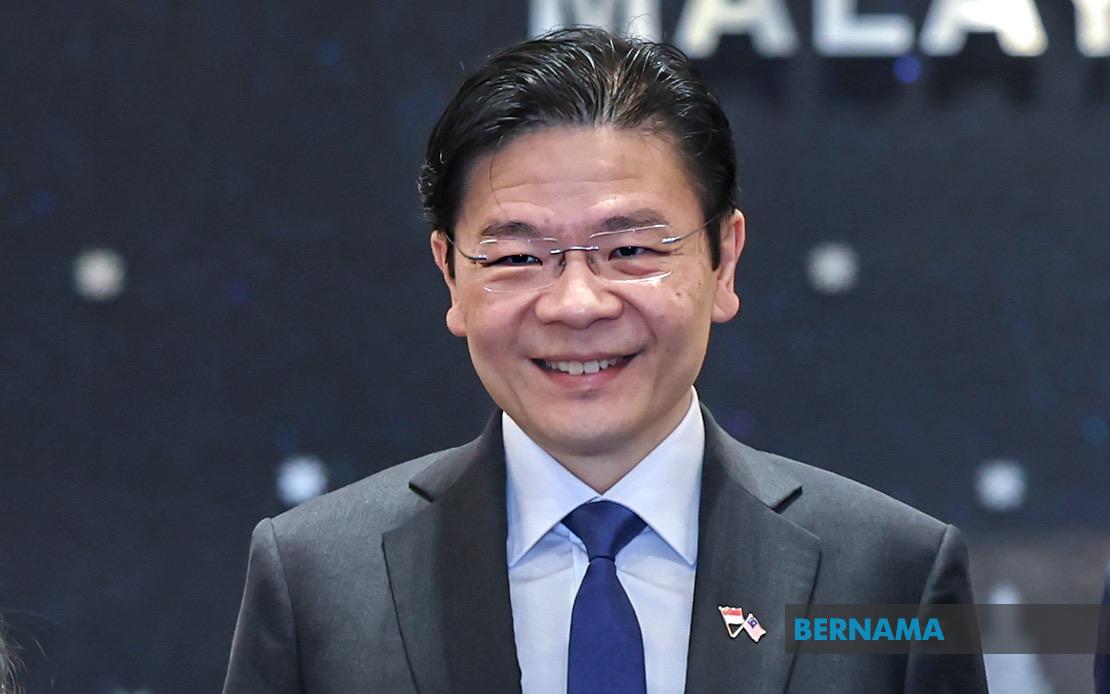
Singapore's government is preparing to introduce an expanded and restructured package of support measures designed to strengthen its approach to family welfare, Prime Minister Lawrence Wong disclosed in his National Day address released Saturday. The announcement signals a shift toward comprehensive life-stage assistance that moves well beyond traditional marriage and parenthood support, reflecting accumulated concerns among policymakers about demographic pressures and household economic strain across the island-nation.
Wong's statement comes as Singapore grapples with longstanding challenges affecting family formation and household sustainability. The premier framed the policy review as part of a broader national aspiration to create an environment where residents can confidently pursue their goals, nurture families without excessive anxiety, and contemplate the future with optimism. This rhetorical positioning underscores the political weight attached to family-oriented policies in Singapore, where demographic trends and the cost of living represent persistent electoral considerations.
Among the specific policy areas drawing government attention are the expenses associated with child-rearing, affordability and accessibility of infant care facilities, and childcare services. These represent well-documented pain points for Singaporean households, particularly among middle-income families where dual-income arrangements have become essential for maintaining living standards. By explicitly naming these cost concerns, Wong signalled that the government recognises the financial barriers families face in deciding whether to have children or additional children.
The expansion of family support across different life phases represents a notable conceptual reframing. Rather than concentrating assistance at discrete moments like marriage or birth, the renewed approach contemplates continuous support spanning multiple developmental stages. This reflects international best practice in family policy, where integrated, lifecycle-based approaches have demonstrated greater effectiveness in addressing household economic security than sporadic interventions.
Wong indicated that fuller details of these policy initiatives would be disclosed during the National Day Rally, a significant annual occasion where Singapore's leadership traditionally unveils major policy announcements. This staged approach creates political anticipation while allowing the government time to fine-tune messaging around specific measures. For Malaysian observers and policymakers, Singapore's family support review offers instructive comparisons, as both nations confront similar demographics patterns including ageing populations and declining fertility rates.
Beyond economic dimensions, Wong emphasised government commitment to establishing enhanced protections for children navigating digital environments. The premier acknowledged that parents across Singapore increasingly voice anxieties about social media's effects on younger generations, particularly regarding mental health implications, relationship quality, and overall developmental trajectories. This concern reflects broader regional and global patterns where digital platform usage among children has accelerated substantially, outpacing regulatory and parental oversight capacity.
The government's proposed digital safeguards framework appears positioned to address both technological governance and cultural adaptation. Wong's language suggested an intent to shape technological platforms themselves toward pro-social outcomes, rather than simply restricting children's access. This represents a more sophisticated policy approach than blanket prohibitions, recognising that digital tools are now integral to education, social connection, and economic opportunity in contemporary Singapore.
The policy timing reflects Singapore's broader strategic calculations. As a city-state competing for talent and investment in an increasingly uncertain global environment, the government recognises that family-supportive policies constitute a competitive advantage for attracting and retaining skilled workers and professionals. Countries that offer superior childcare infrastructure, parental leave arrangements, and family financial assistance create conditions that appeal to potential migrants and reduce brain drain among citizens considering relocation.
For the Southeast Asian region, Singapore's family policy evolution carries significance beyond its own borders. The island-nation frequently functions as a policy laboratory and trendsetter for other developed economies in Asia, with its welfare innovations often studied and adapted elsewhere. Malaysia, facing comparable demographic challenges, may find insights in Singapore's lifecycle approach to family support, particularly regarding how public systems can be reorganised to address cost barriers to family formation without unsustainable expenditure.
The announcement also reflects underlying tensions within Singapore's development model. The nation has successfully achieved high living standards and economic dynamism, yet these accomplishments have been accompanied by elevated costs of living that complicate family life for many residents. Family support policies represent one mechanism through which the government attempts to reconcile economic competitiveness with household welfare, though debates persist about whether such measures adequately address structural affordability challenges.
Wong's framing of family and digital safety as interconnected policy domains suggests government recognition that contemporary family life cannot be addressed through economic measures alone. Mental health, wellbeing, and healthy development now require attention to the digital ecology within which families operate. This integrated perspective may influence how other Southeast Asian governments conceptualise family policy beyond traditional economic support frameworks.
The National Day Rally announcement will prove consequential for understanding whether Singapore's family policy review represents incremental enhancement of existing programmes or more fundamental restructuring. Malaysian policymakers and family welfare advocates will likely monitor these details closely, as Singapore's approach may offer models adaptable to the Malaysian context, particularly regarding how targeted interventions can address specific cost barriers without creating dependency or unsustainable fiscal burdens.

