A 49-year-old Singapore resident has been arrested in connection with the Fun Coffee investment platform, marking the city-state's latest enforcement action against an increasingly sophisticated cryptocurrency-based fraud operation. The arrest on August 6 follows mounting complaints from investors across multiple jurisdictions who discovered they could not retrieve their funds despite promises of substantial returns. Police confirmed the development on August 8, revealing details of how the scheme operated and the tactics used to ensnare participants across the region.
The arrested woman played a central promotional role in the Fun Coffee ecosystem, actively recruiting new participants and convincing them to join the scheme. Her involvement exemplifies how these operations rely on network effects, leveraging personal connections and trust to drive expansion. Participants were directed to download a mobile application, through which they transferred Tether (USDT), a stablecoin cryptocurrency pegged to the United States dollar, into wallet addresses provided by the platform. This technological layer added apparent legitimacy while obscuring the true destination of funds and making tracking considerably more difficult for investigators.
The investment scheme's core appeal rested on marketing materials promoting unrealistic returns coupled with enticing recruitment incentives. The dual-income model is characteristic of pyramid structures: participants earned not only from their purported investments but also from commissions generated by new recruits they brought into the network. Such arrangements inevitably collapse as the supply of new participants dwindles, leaving late joiners with substantial losses. Singapore investors who participated in Fun Coffee discovered they were unable to withdraw their money through the application despite repeated attempts, effectively trapping their capital within the system.
The woman now faces charges under Singapore's Multi-Level Marketing and Pyramid Selling (Prohibition) Act, legislation specifically designed to combat such schemes. If convicted, she faces potential imprisonment of up to five years, a financial penalty not exceeding $200,000, or a combination of both. These provisions represent Singapore's legal framework for addressing network-based fraud and demonstrate the authorities' commitment to prosecuting organizers and active promoters of such operations. The severity of potential penalties reflects the significant harm these schemes inflict on individual investors and broader financial ecosystem confidence.
Fun Coffee, officially registered in Phu Quoc, Vietnam, projected an image of legitimacy through claims of possessing assets exceeding US$1 billion (approximately S$1.28 billion) and commanding a team of more than 5,000 personnel. The organization branded itself as a "lifestyle brand combining coffee, wellness and digital innovation into a community experience," blending legitimate-sounding business activities with speculative investment opportunities. This hybrid positioning enabled the scheme to attract participants who viewed it as established commercial operation rather than a financial fraud. The timing of Fun Coffee's expansion into Singapore in 2025 coincided with the broader infiltration of cryptocurrency-based frauds into Southeast Asian markets, where regulatory frameworks remain varied and investor awareness inconsistent.
Regional law enforcement coordination has yielded significant enforcement actions. Hong Kong and Macau authorities arrested eight individuals collectively linked to Fun Coffee operations within a single week, indicating coordinated crackdowns across multiple jurisdictions. The damages revealed by these investigations are substantial: approximately 200 victims in the two territories lost nearly HK$100 million (approximately S$16.3 million) collectively. These figures represent only confirmed cases reported to authorities; actual losses likely exceed reported amounts given the underreporting typical in investment fraud cases where victims fear legal consequences for unregistered trading or embarrassment.
Individual loss narratives illustrate the real human impact of such schemes. One Singapore victim disclosed investing approximately $400,000 in Fun Coffee with zero financial recovery despite extended waiting periods and repeated assurances from platform operators. This substantial personal loss reflects the targeting of middle-income individuals with sufficient capital to invest meaningfully but insufficient expertise in cryptocurrency markets to immediately recognize fraudulent characteristics. The psychological toll accompanying such losses extends beyond financial dimensions, creating reputational damage and eroded family trust.
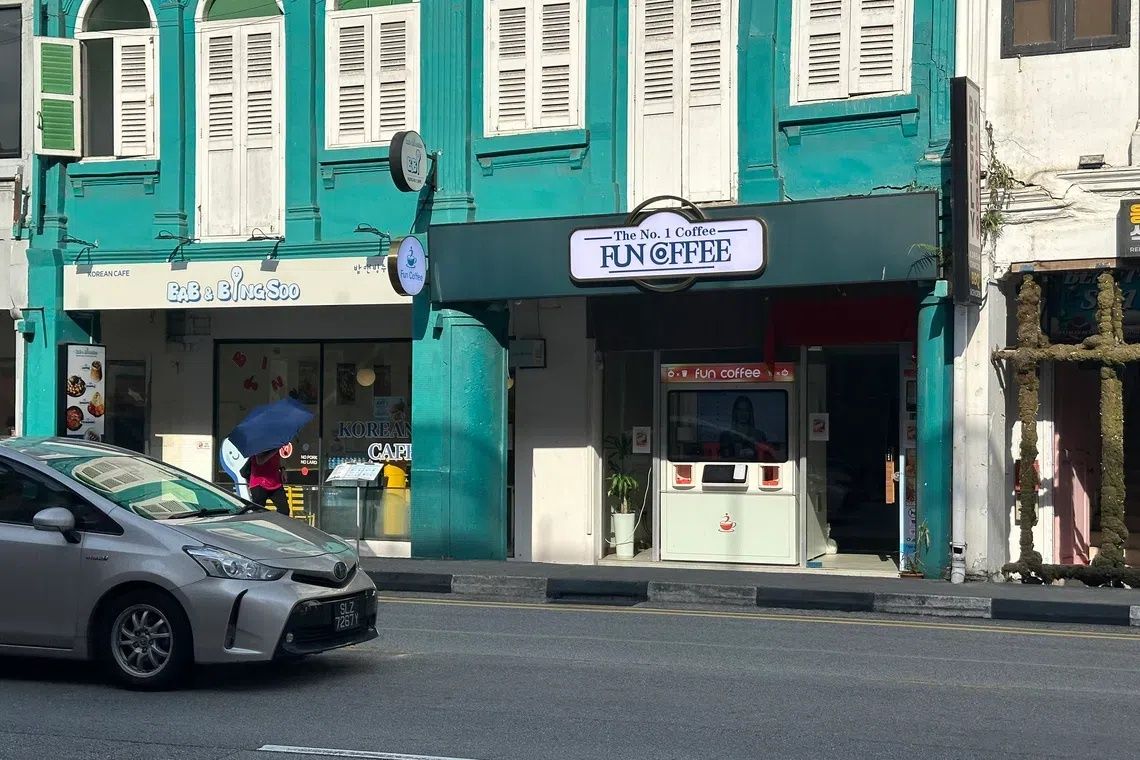
The physical presence investigators discovered during their August 7 visit to Fun Coffee's registered address at 202 Jalan Besar—a coffee vending machine with handwritten operational instructions—suggested operational sophistication mingled with carelessness. The vending machine served as the company's visible presence, maintaining the lifestyle brand narrative while funneling payment through digital QR code scanning mechanisms. This hybrid physical-digital model created the appearance of legitimate commercial activity while enabling cryptocurrency payments channeled through the platform's systems.
Singapore's police issued specific public warnings regarding payment red flags, cautioning citizens against transferring funds via private PayNow QR codes, personal mobile numbers, or overseas accounts. These mechanisms bypass formal banking oversight and create irretrievable transaction trails. The advisory explicitly cautioned the public against making further payments regardless of claims from individuals purporting to represent Fun Coffee or directives originating from the platform's application itself. Such warnings underscore the challenge authorities face when fraudsters maintain operational control of compromised applications even after law enforcement intervention.
The Fun Coffee case exemplifies evolving fraud sophistication within Southeast Asia's rapidly digitalizing financial landscape. Cryptocurrency's pseudonymous nature, combined with blockchain technology's irreversibility, creates structural advantages for fraudsters while presenting persistent law enforcement challenges. The scheme's cross-border architecture—Vietnamese registration, Singapore operations, recruitment across Hong Kong and Macau—demonstrates how digital networks enable rapid geographic expansion beyond effective single-jurisdiction regulatory reach. For Malaysian readers and investors, the case underscores the necessity of approaching unsolicited investment opportunities, particularly those emphasizing cryptocurrency transfers and recruitment commissions, with heightened skepticism.
The coordination demonstrated between Singapore, Hong Kong, and Macau authorities suggests emerging regional mechanisms for combating transnational cryptocurrency fraud. However, enforcement success requires sustained public awareness about scheme characteristics and victim reporting mechanisms. Investment frauds persist because they exploit fundamental human desires for financial improvement and community belonging. Fun Coffee's lifestyle branding combined such appeals with technological complexity that obscured underlying illegitimacy, creating multiple barriers to victim recognition. As Southeast Asian economies deepen cryptocurrency integration, regulatory harmonization and public education efforts warrant parallel acceleration to protect vulnerable investor populations.

