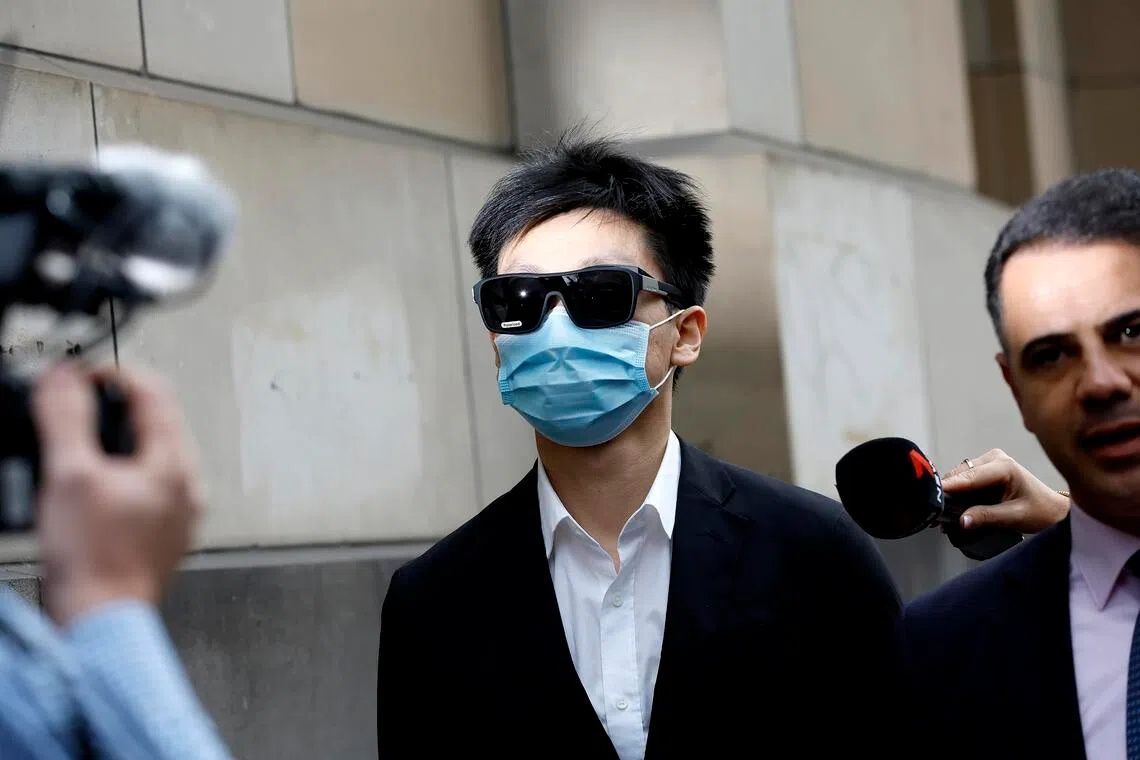
A 28-year-old trainee doctor from Singapore has pleaded guilty to one of Australia's most serious workplace harassment cases, admitting in Melbourne's Magistrates Court to secretly recording hundreds of his colleagues in intimate settings across three major hospitals. The case has shocked the Australian medical community and raised urgent questions about institutional safeguarding in healthcare workplaces, with implications that may extend to hospitals across Southeast Asia as awareness of such vulnerabilities grows.
Ryan Cho entered guilty pleas to 13 consolidated charges at the Melbourne Magistrates Court on Thursday, including stalking, installing optical recording devices, and producing intimate images without consent. The charges relate to conduct spanning between 2021 and 2025 while Cho worked at Austin Hospital, Royal Melbourne Hospital, and Peter MacCallum Cancer Centre. Australian health regulators suspended his medical registration in 2025, effectively ending his professional career in his adopted country before it had properly begun.
The scale of the offending emerged gradually as police investigations deepened following the discovery of a recording device in a staff toilet at Austin Hospital in July 2025. Officers who subsequently searched Cho's residence uncovered a staggering digital archive: more than 10,000 video and image files involving over 500 identifiable victims. Among the seized devices—a laptop, hard drive, and mobile phone—authorities discovered 4,500 videos alongside thousands of photographs, suggesting a systematic and sustained operation rather than isolated incidents of poor judgment.
Victorian police initially laid 910 individual charges reflecting the scale of captured content, but the court agreed with prosecution and defence submissions to consolidate these into 13 representative counts. Magistrate Michelle Mykytowycz confirmed her satisfaction that sufficient evidence existed for conviction before asking Cho to confirm his pleas. He responded with single-word affirmations to each charge, a moment that observers noted reflected the gravity of admissions spanning years of calculated violation of workplace boundaries and personal privacy.
Cho's family circumstances added a poignant dimension to proceedings. His father, Wilson Cho, a logistics manager from Singapore, attended court but sat separately from his son. In previous appearances, the father stated his shock at discovering his son's alleged conduct and the suspension of his medical license. The family has committed to maintaining physical presence in Melbourne throughout the legal process, with both parents pledging to live in Australia during proceedings to ensure their son complies with bail conditions and receives necessary support.
The defendant remained on conditional bail guaranteed by a A$50,000 surety lodged by his parents in 2025, extended through to a three-day pre-sentence hearing commencing November 23 at Melbourne's County Court. Bail restrictions imposed by the court severely constrain Cho's daily life: he must report to police three times weekly, maintain no contact with witnesses, surrender his passport, avoid hospitals except in genuine emergencies requiring prior police notification, and refrain from accessing photographic or recording equipment outside his home. Additionally, he faces an obligation to undertake psychological treatment addressing what his own legal representatives have characterised as complex mental health vulnerabilities.
Cho has lived in Australia continuously since 2017 and obtained permanent residency status in April 2025—just months before his arrest in July that same year. He completed medical training at Monash University, positioning himself within Australia's medical establishment before his conduct derailed his professional trajectory. The revelation has prompted soul-searching within Australian medical education and hospital management about vetting procedures, workplace culture monitoring, and the effectiveness of safeguarding mechanisms intended to protect vulnerable staff members in institutional settings.
Beyond criminal proceedings, the case has triggered civil action through human rights channels. Approximately 100 victims, predominantly female staff members, have lodged complaints with the Australian Human Rights Commission against the three hospitals, alleging sexual harassment and workplace discrimination. Tony Carbone, managing partner at Carbone Lawyers representing complainants, indicated to The Straits Times that his firm expects the victim cohort to expand as additional affected employees become aware of the formal complaint process and its potential for compensation and institutional accountability.
The implications extend beyond Australia's borders to Southeast Asia, where hospital workplace cultures and institutional oversight structures often mirror Australian standards. Malaysia's healthcare sector, with its mix of public and private hospital providers, may examine whether comparable vulnerabilities exist in institutional design, staff monitoring systems, and psychological screening of medical professionals. The case underscores how rapidly digital technology can enable privacy violations at unprecedented scale, with hidden recording devices becoming simultaneously more sophisticated and more affordable, outpacing institutional security awareness.
Cho's barrister, Julian McMahon, described his client during bail proceedings as a "complicated young professional man" presenting "complex psychological issues" that would likely require sustained clinical intervention. This characterisation suggests defence arguments may centre on mental health factors during sentencing, though such considerations rarely substantially reduce penalties for crimes involving systematic violation of others' intimate privacy. The court's pre-sentence hearing will examine victim impact statements, providing testimony from those whose privacy was systematically violated across multiple years.
The case also raises questions about institutional responsibility. The three hospitals employ hundreds of staff working in emotionally demanding environments treating seriously ill patients. Yet surveillance vulnerabilities in staff facilities—toilets and showers—remained undetected for years despite multiple opportunities for discovery. Post-incident reviews will likely examine staff reporting mechanisms, environmental security audits, and psychological profiling during recruitment and ongoing employment.
For Malaysian healthcare administrators, the case provides cautionary lessons about balancing staff privacy protection with security oversight. Hospitals require secure facilities where employees can safely use changing rooms and washrooms without surveillance concerns. Yet institutional governance must encompass regular security assessments, staff awareness training regarding hidden recording devices, and clear reporting pathways when suspicious activities are observed. The psychological toll on victims extends far beyond the immediate violations, potentially affecting career trajectories and workplace confidence among healthcare professionals already facing substantial occupational stress.
Cho's sentencing, scheduled for November, will provide guidance on penalties for systematic workplace privacy violations in Australian jurisdictions, potentially influencing sentencing frameworks in other Commonwealth jurisdictions including Malaysia. Given the scale of offending, duration of conduct, and number of identifiable victims, courts will grapple with appropriate custodial sentences that reflect the systematic nature of the violations while considering rehabilitation prospects. The outcome will resonate across healthcare sectors worldwide as institutions confront uncomfortable realities about vulnerabilities within their ranks.

