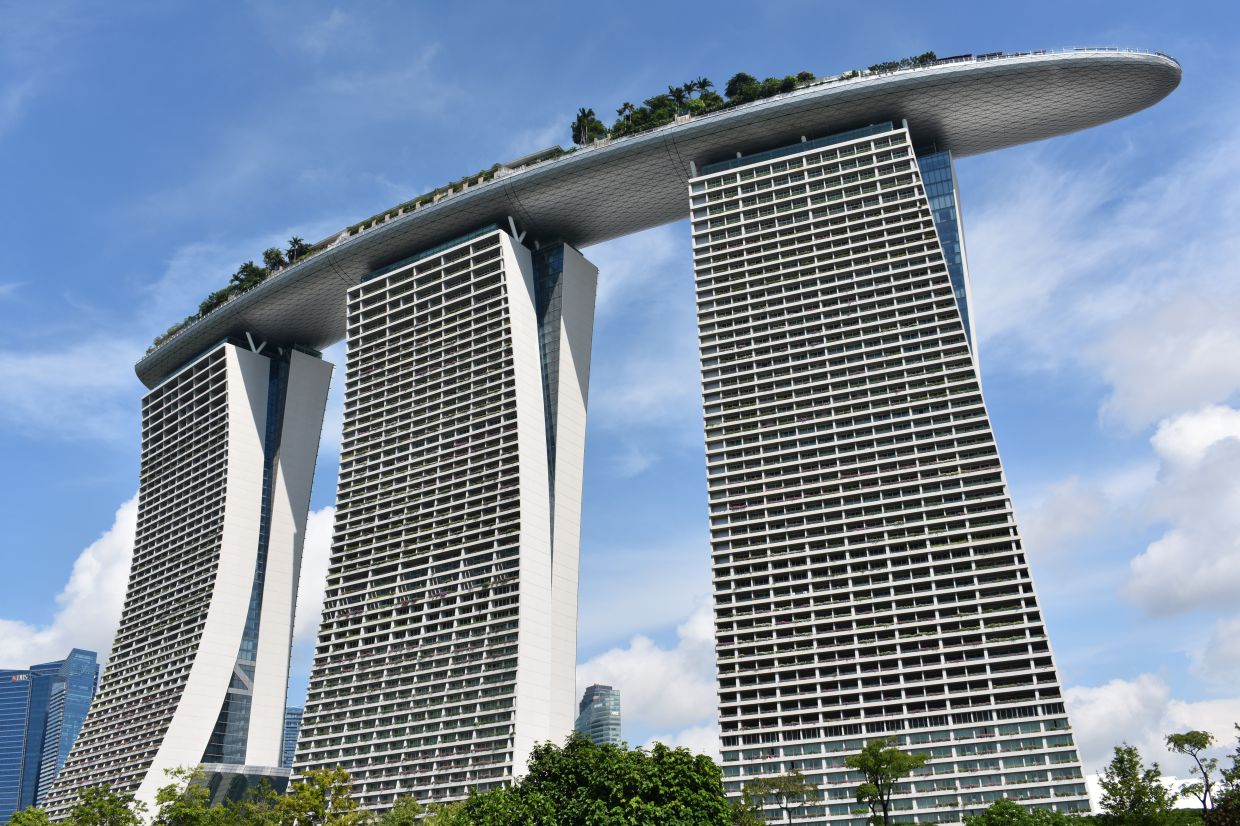
The competitive balance in Singapore's gaming industry has shifted markedly in recent years, with Marina Bay Sands securing a commanding lead over its rival Resorts World Sentosa. This widening gap became apparent in superficial ways—last Lunar New Year, Sentosa's lucky draw for high-stakes gamblers offered a bottle of Martell Cognac as the grand prize, while Marina Bay Sands bestowed a Mercedes-Benz CLA 200 on its winner—but the financial reality beneath tells a far more sobering story for the Sentosa operator.
The disparity in casino revenues has become stark. During the first half of 2026, Marina Bay Sands generated gaming revenues exceeding S$2.1 billion, while Resorts World Sentosa achieved less than one-third of that figure. This performance gap has caught the attention of Singapore's Gambling Regulatory Authority, which in November 2024 labelled Sentosa's tourism performance as "unsatisfactory" and issued a shortened two-year casino license instead of the standard three-year term. That license, which took effect in February 2025, expires in February 2027, triggering a renewal assessment process that will determine the venue's operational future in the highly regulated Singapore market.
Singapore's recovery from the pandemic has unleashed significant wealth creation and increased visitor numbers, particularly from neighbouring countries and mainland China. The city-state has benefited from shifting gambling patterns as Chinese government enforcement actions against casino junkets and illegal money-exchange operations have constrained Macau's traditional dominance. For many high-value gamblers from China, Singapore offers a compelling alternative—visa-free entry for mainland tourists and, critically, perceived greater privacy protection than Macau, where concerns about data sharing with Chinese authorities have made some wealthy gamblers hesitant to engage. These favourable conditions have created a substantial opportunity for Singapore's gaming operators, but Marina Bay Sands has captured the lion's share of this windfall.
The regulatory pressure on Resorts World Sentosa represents more than routine oversight. Zheng Feng Chee, a consumer analyst at DBS Group Holdings, characterises the shortened license term as a deliberate signal: "This is a soft threat to pressure Resorts World Sentosa to improve its performance." Yet the reality facing Genting Singapore Ltd., which operates the Sentosa property, is constrained by the limited competition in the market. Few gaming operators globally possess the financial resources to acquire and operate a casino licence in a jurisdiction as tightly regulated as Singapore, effectively insulating even an underperforming operator from acquisition risk. The Gambling Regulatory Authority's assessment of Sentosa's renewal application will evaluate the entire integrated resort experience, not merely gaming floors, and that evaluation looms over the coming months before the February 2027 deadline.
The critical arena where Marina Bay Sands dominates is the VIP segment—the high-roller market that generates disproportionate returns despite representing a smaller customer base. These are customers who must typically deposit or spend at least S$100,000 initially, then accumulate further spending through wagering to secure club membership, gaining access to private gaming suites, complimentary accommodation, dining privileges, and exclusive event invitations. Data from DBS research reveals the scale of Sentosa's decline: in 2023, Sentosa held a larger share of the VIP market, but that collapsed to approximately 20 per cent in the first quarter of 2026 before partially recovering to 36 per cent more recently. Although VIP customers represent a smaller proportion of total casino visitors, they generate outsized contributions to revenues and profitability—making this segment loss particularly damaging to the operator's financial performance.
VIP customers have voiced specific complaints about Resorts World Sentosa's operational and physical shortcomings. Those familiar with the property report that high-value gamblers have cited outdated infrastructure, inadequate responsiveness to customer feedback, and cumbersome processes for exchanging cash and chips as factors diminishing their experience. In contrast, Marina Bay Sands' VIP offerings include butler service in luxury suites, complimentary tickets to theatrical productions, and dining credits at premium restaurants, supplemented by the resort's broader amenities—three 57-story hotel towers featuring an architectural centrepiece of a boat-shaped rooftop, an art museum, and an upscale shopping mall. The integrated resort's premium positioning and consistency in delivering luxury experiences have resonated strongly with the high-value customer demographic.
Genting Singapore has acknowledged these challenges and announced initiatives to address them. The company stated in April that it maintains close engagement with regulatory authorities and believes itself "well positioned for the next assessment cycle." A Resorts World Sentosa spokesperson told Bloomberg News that over the preceding 18 months, the property has introduced new attractions and experiences whilst enhancing hospitality and gaming offerings, with aspirations to position itself "for sustainable growth over the next decade," noting that "early signs of progress are encouraging." However, such statements must be contextualised against the concrete market share losses and the regulatory signal embedded in the shortened license term.
Both casino operators are investing substantially in facilities and amenities to sustain and expand their operations. Resorts World Sentosa is undertaking a S$6.8 billion comprehensive renovation programme that will include construction of an all-suite luxury hotel, expansion of its oceanarium, and the addition of Super Nintendo World to Universal Studios Singapore, with completion targeted for 2030. Marina Bay Sands, meanwhile, has launched an S$8 billion expansion and renovation initiative that will add a 55-story hotel tower and a live entertainment arena. These parallel capital investments reflect the high stakes in Singapore's gaming market and both operators' commitment to capital-intensive upgrading, though Marina Bay Sands' head start in premium positioning may enable it to attract the most desirable customers to its expanded facilities.
Recent market movements suggest Sentosa's competitive position may be stabilising, at least temporarily. In the second quarter of 2026, Resorts World Sentosa recovered some market share from Marina Bay Sands, which posted weaker VIP revenue—a decline attributed partly to some high-value customers redirecting spending toward the World Cup. This fluctuation illustrates the volatility of the premium gaming segment and suggests that Sentosa's recovery is possible, though market analysts remain sceptical about the magnitude and durability of any rebound.
Ben Lee, managing partner at IGamiX, a Macau-based gaming consultancy, offered a candid assessment: "I see them losing the battle, and even more market share." Lee contends that Resorts World Sentosa has been unable to replicate the "luxuriate experience" that Marina Bay Sands delivers—a competitive deficiency that resonates particularly strongly with VIP customers whose expectations for premium service and environment are exacting. Vitaly Umansky, a Hong Kong-based senior analyst at Seaport Research Partners, offered a similar evaluation, noting that Marina Bay Sands has "made the property more premium, more appealing to higher-value customers," whilst Resorts World Sentosa faces substantial work to regain lost market share.
The structural advantage enjoyed by Marina Bay Sands within Singapore's regulated casino duopoly raises questions about competitive sustainability and regulatory balance. Singapore's licensing framework permits only two casinos, with entry restricted to international tourists and a restricted class of Singapore citizens and permanent residents who must pay a daily entry fee of S$150. This controlled market structure, designed to limit problem gambling and protect the local population, has the secondary effect of creating a duopoly where competitive dynamics are heavily influenced by brand positioning, customer service excellence, and capital investment in facilities. The regulatory pressure now being applied to Resorts World Sentosa through shortened licensing terms reflects an implicit expectation that the operator must elevate its competitive performance or face consequences, yet the fundamental economics of the market favour the operator that has already achieved premium positioning and accumulated the customer loyalty and infrastructure investment that accompanies it.

