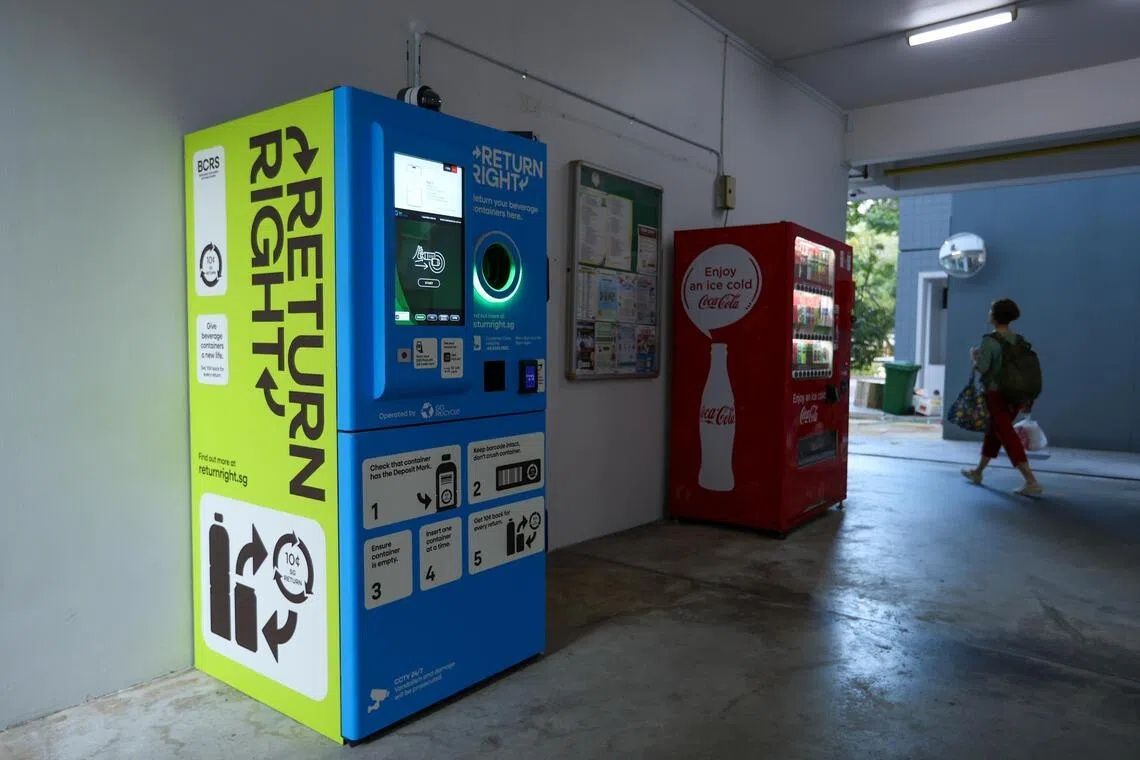
Singapore's National Environment Agency has firmly dismissed allegations of misappropriation and corruption surrounding the country's beverage container recycling initiative, attributing the controversy to misunderstanding how the refund system operates. In a statement released on August 15, the NEA addressed public confusion that had emerged from parliamentary remarks, insisting that accusations levelled against the scheme are unfounded and based on faulty interpretation of the data released by government officials.
The controversy stems from comments made by Senior Minister of State for Sustainability and the Environment Janil Puthucheary during parliamentary proceedings on August 5. He reported that between April and July, the Beverage Container Return Scheme successfully processed more than one million refund transactions for 5.5 million used bottles and cans deposited into reverse vending machines. However, some online observers misread this statement to mean that only one million containers out of the 5.5 million had actually received their refunds, suggesting that approximately 4.5 million containers had been returned without compensation—a claim that sparked accusations of financial impropriety.
The NEA's clarification reveals the source of the misunderstanding. The agency explained that the statistics conflated two different metrics: the number of individual return transactions versus the number of containers processed. Consumers do not return containers one at a time; instead, they can deposit multiple items in a single transaction at these automated machines. This fundamental distinction in how the data should be interpreted resolved the apparent discrepancy entirely. On average, each transaction involved approximately 5.5 containers, meaning that the one million-plus transactions accommodated the full 5.5 million beverage items reported by Janil.
With the calculation verified, the financial figures also align logically. Since each beverage container carried a 10-cent deposit, the total refunded amount reached approximately S$550,000 (US$429,822), representing full compensation for all returned items. This transparency in the numbers underscores that no financial leakage or unexplained gaps existed in the system. The NEA categorically stated that any claims of misappropriation or corruption are therefore fundamentally without merit and rest upon a misinterpretation of publicly disclosed information.
The Beverage Container Return Scheme itself represents Singapore's attempt to incentivise consumer participation in recycling efforts. Launched on April 1, the initiative requires customers to pay an additional 10 cents when purchasing canned or bottled beverages, with the deposit refundable upon returning the empty container to a reverse vending machine. This deposit-refund model has proven effective in many jurisdictions worldwide, creating a financial motivation for consumers to participate in resource recovery programmes rather than discarding containers in regular waste streams.
Despite the scheme's environmental objectives, the rollout was not without operational hiccups. Some early users encountered technical difficulties with the reverse vending machines, experiencing delayed refunds due to machine malfunctions. Others reported that the equipment rejected legitimate returns, preventing them from retrieving their deposits. These isolated incidents compelled some consumers to contact the scheme's operator directly via email to resolve their claims manually, adding inconvenience to what should have been an automated process. Such friction points, while limited in scope, nonetheless generated frustration among early adopters and may have contributed to the broader scepticism about the scheme's integrity.
Janil addressed these technical challenges during his August 5 parliamentary statement, noting that the vast majority of transactions and returns had proceeded smoothly. He acknowledged that a small number of issues had occurred at individual machines but emphasised that the scheme operator worked collaboratively with equipment manufacturers to identify and rectify problems swiftly. This hands-on operational response appears to have improved system reliability, though the damage to public confidence had already been done by the time the misinterpretation of refund statistics surfaced online.
The controversy highlights a broader challenge facing digital governance: the ease with which statistical data can be misunderstood or misrepresented in public discourse. Online communities, particularly social media platforms where information spreads rapidly without editorial gatekeeping, can amplify interpretive errors into narratives of institutional failure or malfeasance. What began as a simple misreading of parliamentary remarks—conflating transaction counts with container counts—escalated into serious allegations questioning government honesty and programme management.
For Southeast Asian observers, the incident offers instructive lessons about public administration in the digital age. Governments rolling out complex systems involving technology, financial incentives, and consumer participation must anticipate how metrics might be misconstrued by non-specialist audiences. Proactive, detailed public communication strategies can mitigate such misunderstandings before they metastasise into broader credibility challenges. Singapore's relatively swift response in clarifying the figures demonstrates this defensive posture, though the lag between the parliamentary statement and the agency's clarification allowed confusion to compound.
The NEA's regulatory framework also provides context for scrutiny. The Beverage Container Return Scheme operator is required to submit annual financial reports and accounting documents to the NEA, establishing a formal oversight mechanism. This statutory accountability structure, while not perfect, does create avenues for independent verification of financial flows and operational metrics. The existence of such reporting requirements should theoretically reassure the public that funds are being tracked and audited, though the current episode suggests that awareness of these safeguards may not be widespread.
Moving forward, the incident underscores the importance of transparent communication in environmental policy implementation. Recycling schemes depend on sustained public participation and trust. When governance narratives become muddled—particularly when accusations of corruption circulate, however groundless—the underlying programme's legitimacy can suffer lasting damage. Maintaining clarity about how data is measured and reported becomes not merely a matter of administrative hygiene but a prerequisite for programme viability.

