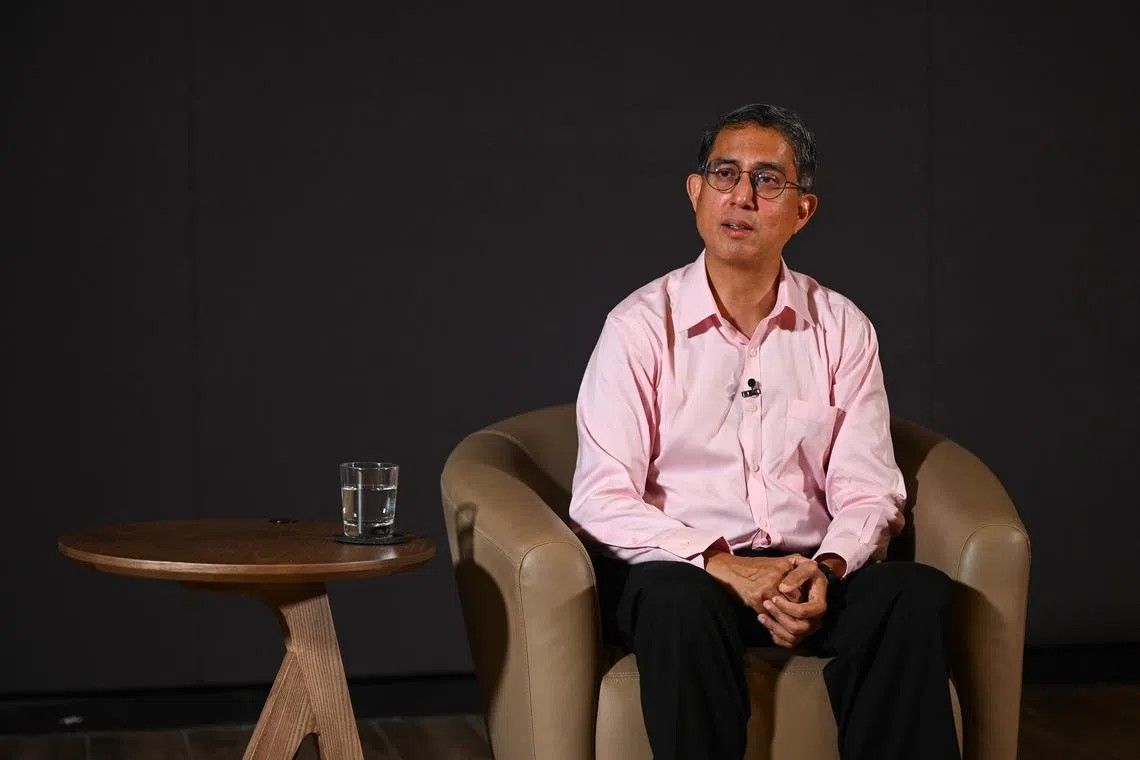
Singapore's Online Safety Commission has taken swift action against social media misinformation, ordering the removal of a TikTok post that wrongly identified a fitness instructor as the woman at the centre of former Acting Minister-in-charge of Muslim Affairs Faishal Ibrahim's sudden resignation from politics. The action underscores the city-state's aggressive approach to combating online harms in its nascent digital safety framework, with the newly-formed commission already demonstrating its enforcement capacity just weeks after launching operations.
The controversial post, which was flagged by a complainant on 28 July, had made unfounded claims linking the fitness instructor to circumstances surrounding Faishal's departure from political office. By the evening of that same day, the OSC had determined that online harmful activity had occurred and successfully compelled its removal from the platform. The speed of response reflects the commission's mandate to serve as a centralised authority capable of delivering rapid content takedowns and restricting offending accounts, a significant shift from relying on ad-hoc platform moderation.
The fitness instructor at the centre of the false claims, Rasidah Caudal, moved quickly to clear her name through social media. On 27 July, she posted a statement on Instagram categorically rejecting the allegations, noting that her sole interaction with the former minister had been professional and limited to two fitness events held at Kampong Ubi Community Centre. She supplemented her denial with a screenshot of the incriminating Telegram message, revealing how an unknown person had weaponised her photograph to spread malicious misinformation.
The broader context of Faishal's resignation adds weight to the commission's intervention. The former minister stepped down on 20 July after acknowledging inappropriate interactions with an unidentified woman, a disclosure that immediately triggered rampant speculation across social media platforms. In the absence of official details, online users and rumour-mongers filled the vacuum with conjecture, leading to the misidentification of innocent individuals who became collateral damage in the rush to assign blame.
Acting Minister-in-charge of Muslim Affairs Zaqy Mohamad addressed the fallout with a Facebook statement on 27 July, explicitly condemning the harassment directed at the wrongly-identified woman. His message carried moral authority and served as a formal acknowledgement that innocent parties had been subjected to unwarranted abuse rooted in baseless speculation. Zaqy, who assumed the ministerial role on 20 July following Faishal's departure, urged the community to refrain from inflicting similar pain on others during a period of collective hurt and disappointment.
The incident provides a real-world test case for the Online Safety Commission, which only commenced formal operations on 29 June after being established as a single-window agency dedicated to victim support and rapid enforcement. Already, the commission has fielded approximately 200 reports of online harm within its first month, revealing the substantial scale of digital abuse affecting Singapore's online communities. These cases range from the circulation of children's personal information to non-consensual intimate imagery, underscoring the breadth of harms the commission must address.
The commission's current operational scope focuses on five categories deemed most prevalent and damaging: intimate image abuse, image-based child abuse, doxing, online harassment and online stalking. This targeted approach reflects pragmatic prioritisation, with eight additional harm categories including online impersonation and deepfake abuse flagged for later implementation as the commission builds institutional capacity and develops appropriate enforcement methodologies.
The machinery of enforcement available to the OSC grants it considerable leverage over content platforms and perpetrators alike. Upon determining that online harm has occurred, the commission can issue binding directions requiring content removal, account restrictions, or both. These directives extend to major platforms including Facebook, Instagram, TikTok, X and YouTube, which can be compelled to disable access to identical copies of offending material distributed across their networks. This multi-platform enforcement capability represents a structural advantage over victim-initiated reporting to individual platforms.
Victim-centred processes form the foundation of the commission's accessibility framework. Individuals can submit reports directly through the OSC website, providing identity information, incident descriptions, offender details including usernames, and supporting documentation such as screenshots. The commission also permits third-party submissions on behalf of victims, with parents and guardians required to demonstrate their relationship and other representatives mandated to supply signed authorisation and victim identification documents. This flexibility lowers barriers to reporting while maintaining accountability safeguards.
Transparency in case handling has been built into the OSC's operations. Victims receive regular updates on case progress and any enforcement actions initiated, ensuring they remain informed throughout proceedings. The commission has also engaged with law enforcement and social service agencies to establish referral pathways, ensuring that victims who encounter police or welfare representatives are directed to appropriate digital safety resources. This institutional coordination represents a systemic upgrade in Singapore's online harm response capacity.
For Southeast Asian observers, Singapore's Online Safety Commission offers a regional benchmark for tackling digital misinformation and harassment. The framework demonstrates how rapidly-deployable institutional mechanisms can counter the velocity of social media-driven rumour, though it also raises questions about definitional boundaries and the scope of permissible speech. The Faishal case illustrates both the commission's enforcement utility and the underlying challenge: preventing the weaponisation of social media against individuals caught in the collateral damage of public controversies.

